Cast against the line
The two strongest casts are opposites: the person who very obviously thinks they are that guy, or the gentlest person you know delivering it with full confidence. Ask them first, and only use photos of people who agreed.
Video trend
The line is a put-down, so the video only works when the audience knows who it is aimed at. Most of the effort is in the setup around the clip, not the clip itself. These are suggestions for posting it on Reels, TikTok or Shorts; nothing here changes the template.
The two strongest casts are opposites: the person who very obviously thinks they are that guy, or the gentlest person you know delivering it with full confidence. Ask them first, and only use photos of people who agreed.
Name the target, not the speaker. "Me to my brother after one gym session." "POV: you told the group chat you're getting into crypto." "When the new manager says 'let's circle back'." The clip delivers the punchline, so the caption should only set it up.
The first two seconds show only the torso, which is the best place for a line of text. Keep it in the upper middle: the bottom of the frame is busy with the outfit and later the chin, and app buttons cover the right edge.
Use a frame around 4 to 5 seconds, when the face fills the screen mid-word. Avoid the first two seconds (no face) and the last three (only a mouth), which read as a mistake in a grid.
The video keeps the original meme audio, so there is no need to add the sound in the app; adding it twice causes an echo. At 9 seconds it loops naturally, and the mid-sentence ending helps people watch twice.
Mark the post as AI-generated where the platform allows it, and say so in the caption. The line is mocking, so keep it pointed at friends who are in on it, never at strangers, colleagues who did not agree, or anyone who could take it as harassment.
Add a photo for each role shown below. All roles need a photo.
Add one clear photo of yourself or of someone who agreed to appear. A sharp, front-facing face with the mouth and chin clearly visible works best, because the last three seconds are a close-up of the lower face. The outfit in the photo is the one you wear.
Choose 480p, 720p or 1080p and review the quote. It includes the full video and the photo preparation.
Watch your face on "you're not that guy, pal" around 3 seconds, the closed-lip pause near 5.5 seconds and your mouth in the final close-up, then download your vertical MP4.
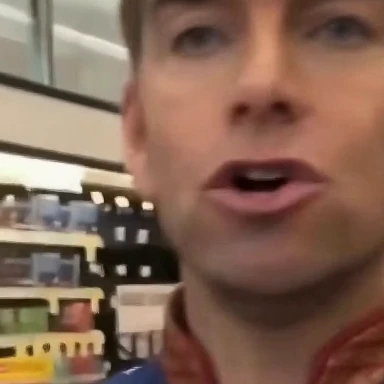
From about 2 seconds your face rises into the camera frame and fills it by 5 seconds. From 6 seconds the phone drops to an extreme close-up of your mouth and chin for the rest of the clip, so your lips, stubble or beard and skin carry the last three seconds.
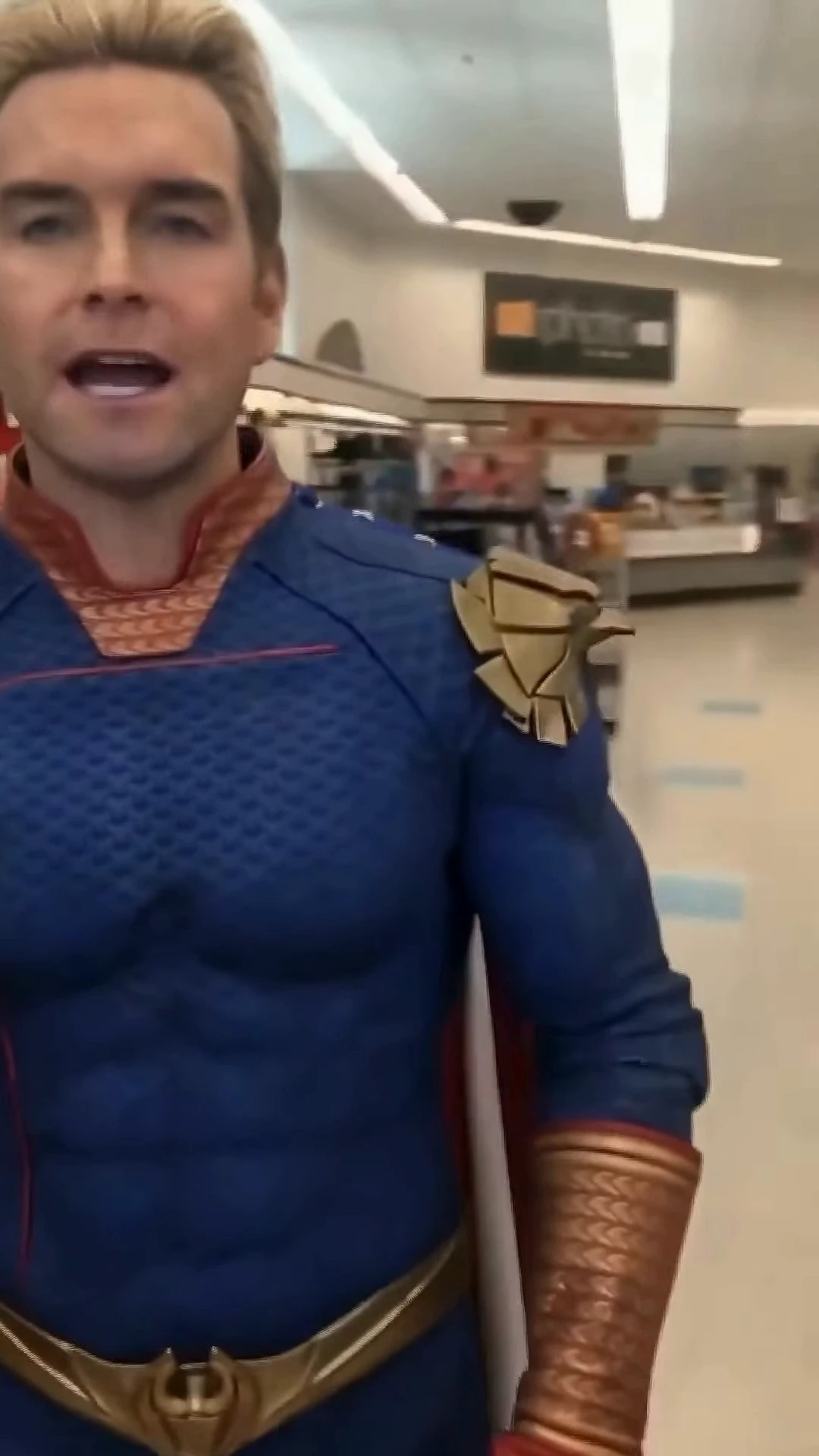
The reference performer wears a blue superhero suit with a red cape. That costume is not part of the template: you wear the outfit in your photo, and the cape, armour and gloves are left out.
"You're not that guy, pal. Trust me, you're not that guy." Your video keeps the clip's original audio and timing; you do not record anything, and your photo does not change the voice.
One continuous 9-second handheld shot through a bright pharmacy, no cuts. The preview is the reference clip, not an Oakgen result.
It is a 9-second vertical AI video built on the "You're not that guy, pal" meme audio. One person faces an offscreen camera operator in a pharmacy as the camera tilts up and moves closer. The visible person says "you're not that guy, pal, trust me, you're not that guy", ending in an extreme close-up of their mouth and chin. Oakgen's template puts the person from your photo in it and keeps the store, the camera moves and the audio.
"You're not that guy, pal" is a meme from a viral 2020 video filmed in a store, later reused as a sound and a catchphrase for telling someone they are less impressive than they think. The reference clip pairs that audio with a man dressed as Homelander from The Boys. This template is an unofficial fan-style format, not connected to the show, the meme's original video or any store.
No. The suit, cape, shoulder armour and gloves in the reference are not kept. Your photo replaces the whole person, so you wear the outfit in your photo. A plain T-shirt or a work shirt often makes the line funnier.
No. The video keeps the clip's original audio, so you are heard in the meme's voice. You do not record anything.
Yes, one, and it is required. The person in the reference is never kept, so your photo always takes the role.
That is the joke of the clip: the phone gets so close that only the lower face is left in frame for the last three seconds. Your face is fully on screen from about 3 to 6 seconds; after that the template keeps the same extreme close-up.
Use photos of yourself or of people who agreed to be in the video. Do not upload photos of actors, celebrities or anyone who has not consented, label AI videos clearly when you share them and keep the put-down obviously a joke.
The template sends the clip's audio and the tracked mouth movement of the reference with your photo, and the original audio is restored at the end. These are instructions to a model, so check the close-ups before posting and re-run if the lips clearly drift.
The template is written for a person talking into a phone. An animal photo is not blocked, but the result is untested and the mouth close-up may not look right.
9 seconds in portrait 9:16, one continuous handheld take with no cuts.
No. It is the reference clip the trend comes from, not an Oakgen result. Review the face, the mouth close-up and the hands in your video before sharing.
1,798 credits per 720p video. The quote includes the photo preparation and the complete video. Check it before generating.
Plan a story, keep your character recognizable, and make the finished clip your own.
Make the You're Not That Guy, Pal AI video step by step: pick who to cast and which photo, read the quote, check the mouth close-up and post your 9-second clip.
Where "you're not that guy, pal" comes from, why the superhero version took off, why it gets funnier on a real friend and how the AI template rebuilds the clip.
Upload 1 photo. Everything else is set.