01Who is La Catrina?
She began as a satirical zinc etching by the Mexican printmaker José Guadalupe Posada, usually dated to about 1910–1912, a satire of the upper class of the Porfiriato era. Diego Rivera's 1946–47 mural Dream of a Sunday Afternoon in the Alameda Central later made her a national emblem. Today she and her male counterpart, the Catrín, are popular Día de Muertos figures, often recreated with calavera (skull) face paint.
02The makeup, roses, candle and marigolds
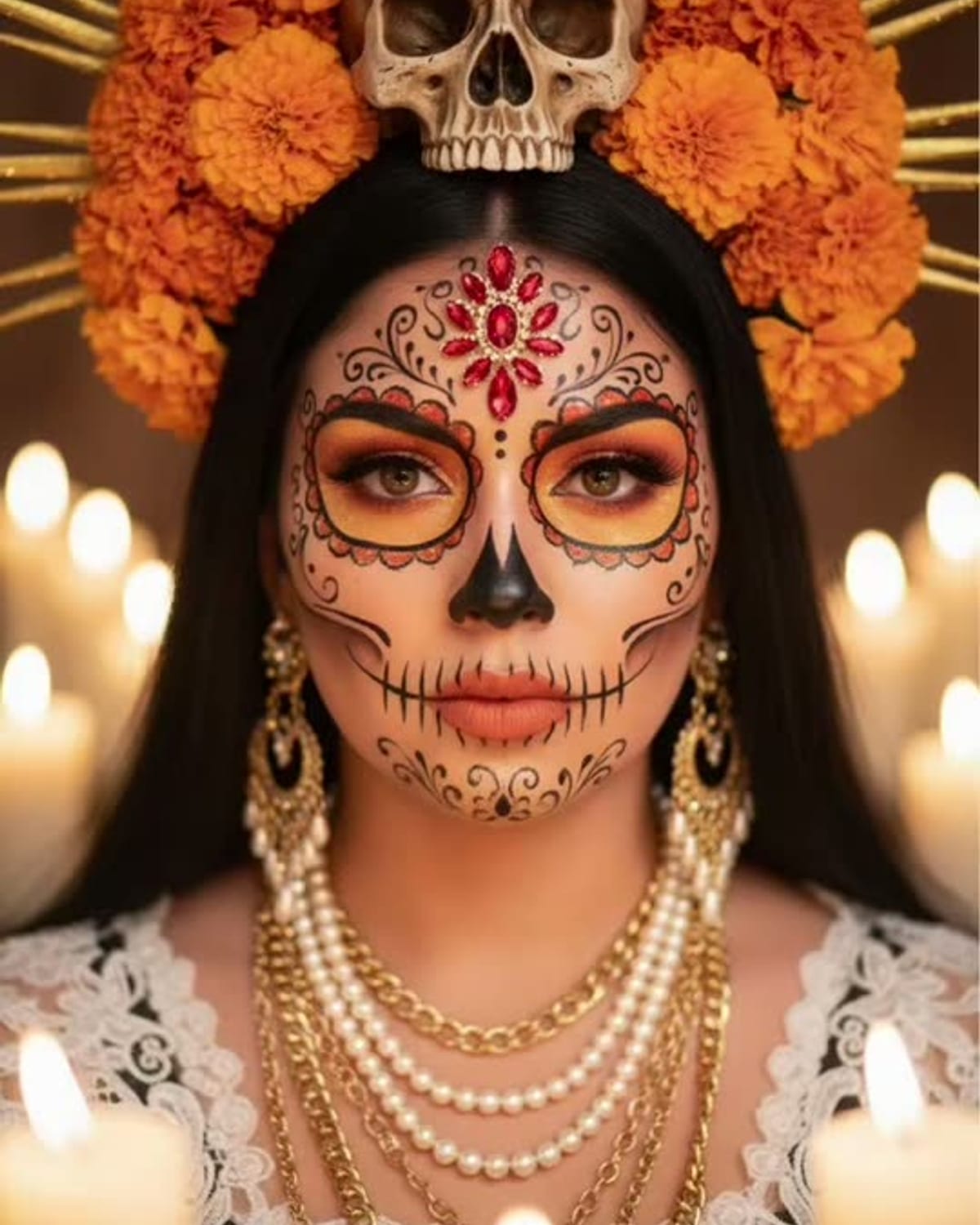
In this portrait your face is painted white, with dark red-and-black eye sockets edged in petals and dots, a darkened nose, a stitched smile line and delicate floral swirls across the brow and chin. Red roses ring your head like a crown, and both hands hold a lit white candle in front of your chest. Orange marigolds and small candles glow out of focus behind you, echoing the petals and candles UNESCO describes families laying along the path that guides returning souls home.
03What the image is, and is not
It is an AI-made, Catrina-inspired portrait of you, not a photograph of real makeup and not a ritual object. It does not include an ofrenda, photographs of loved ones or any religious practice. Día de Muertos, recognised by UNESCO as intangible cultural heritage, is a time for remembering the dead, so it is worth posting the portrait as an appreciation of that tradition rather than as a scary costume.