01What the reference setting looks like
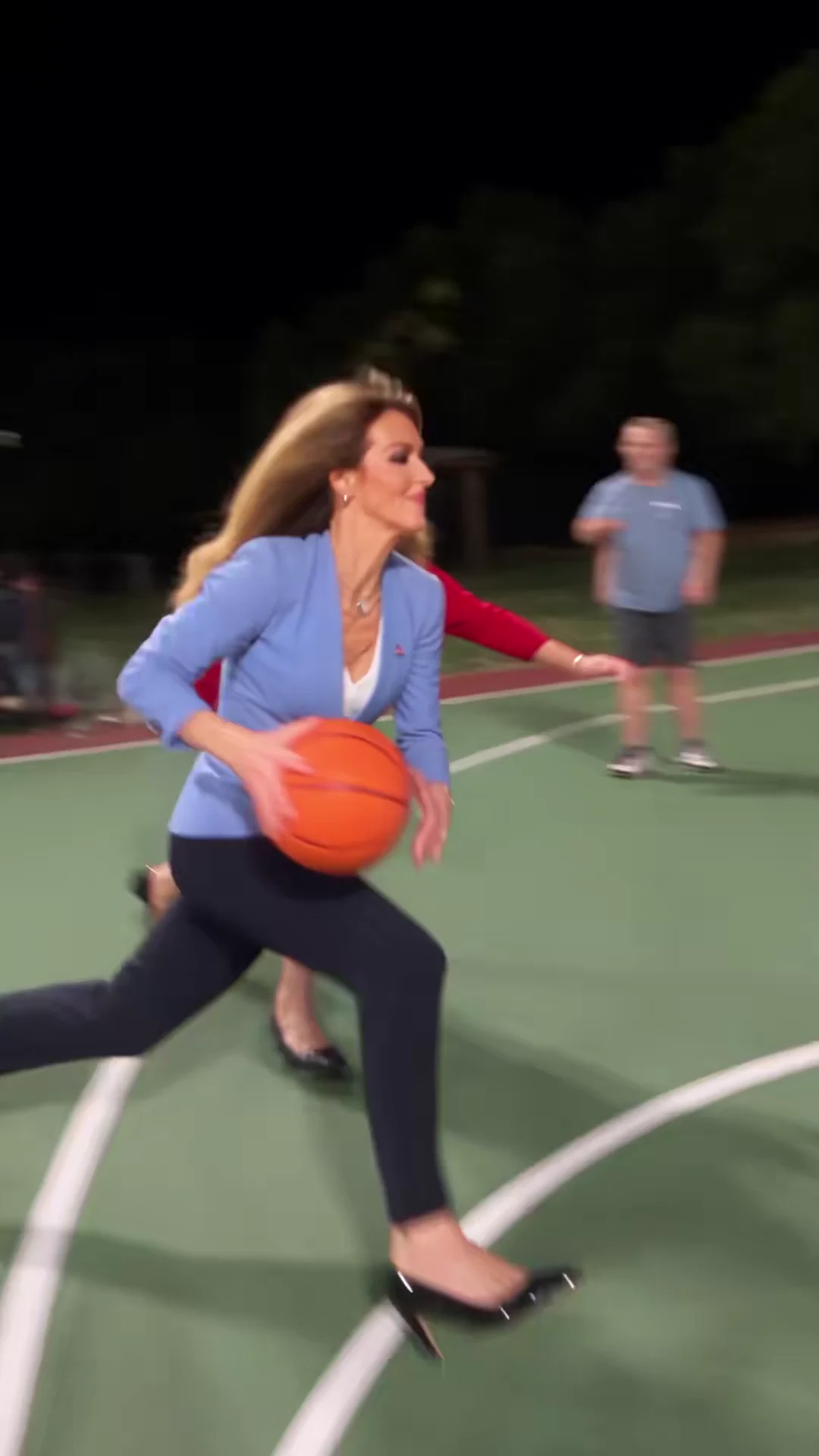
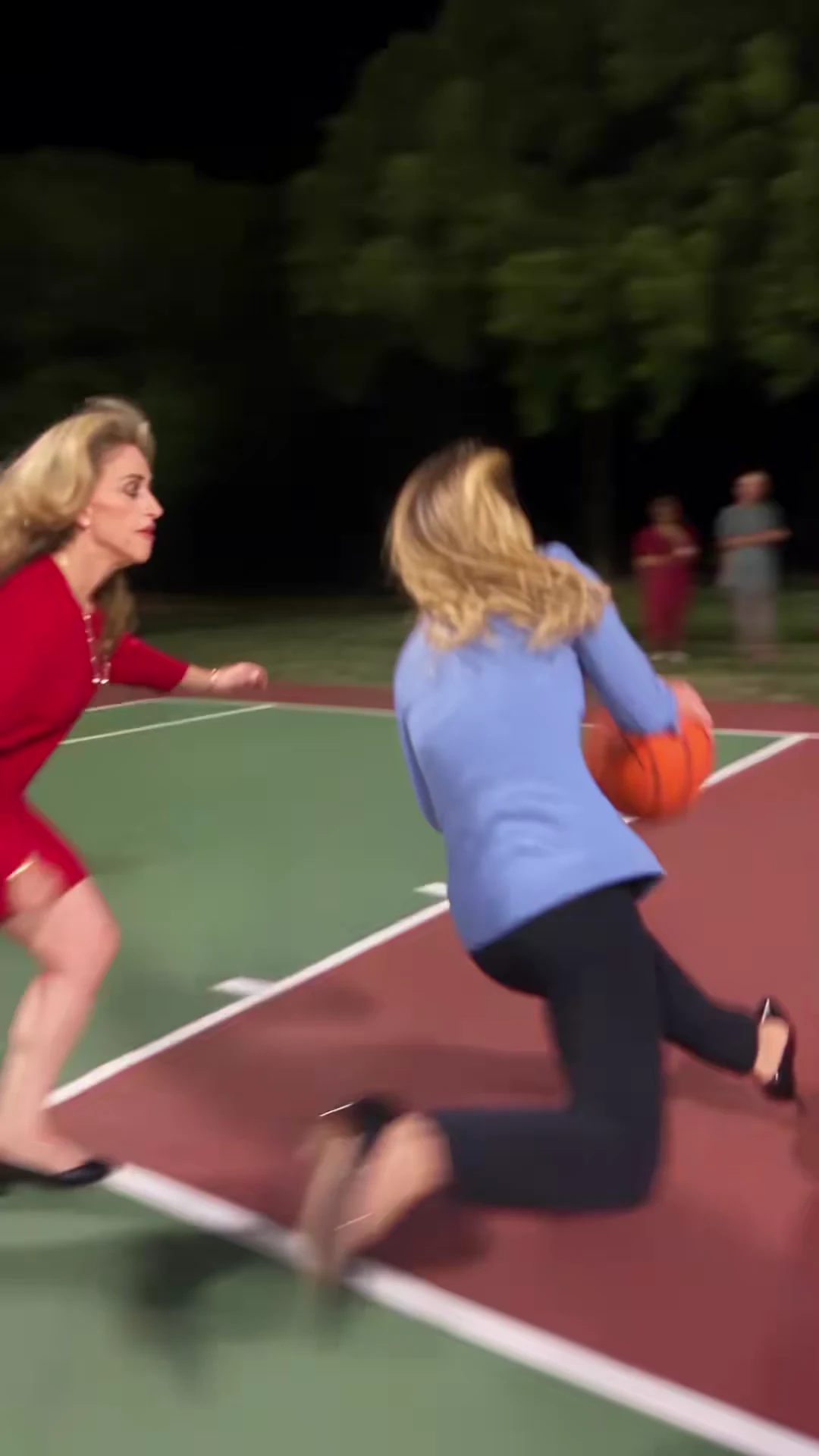
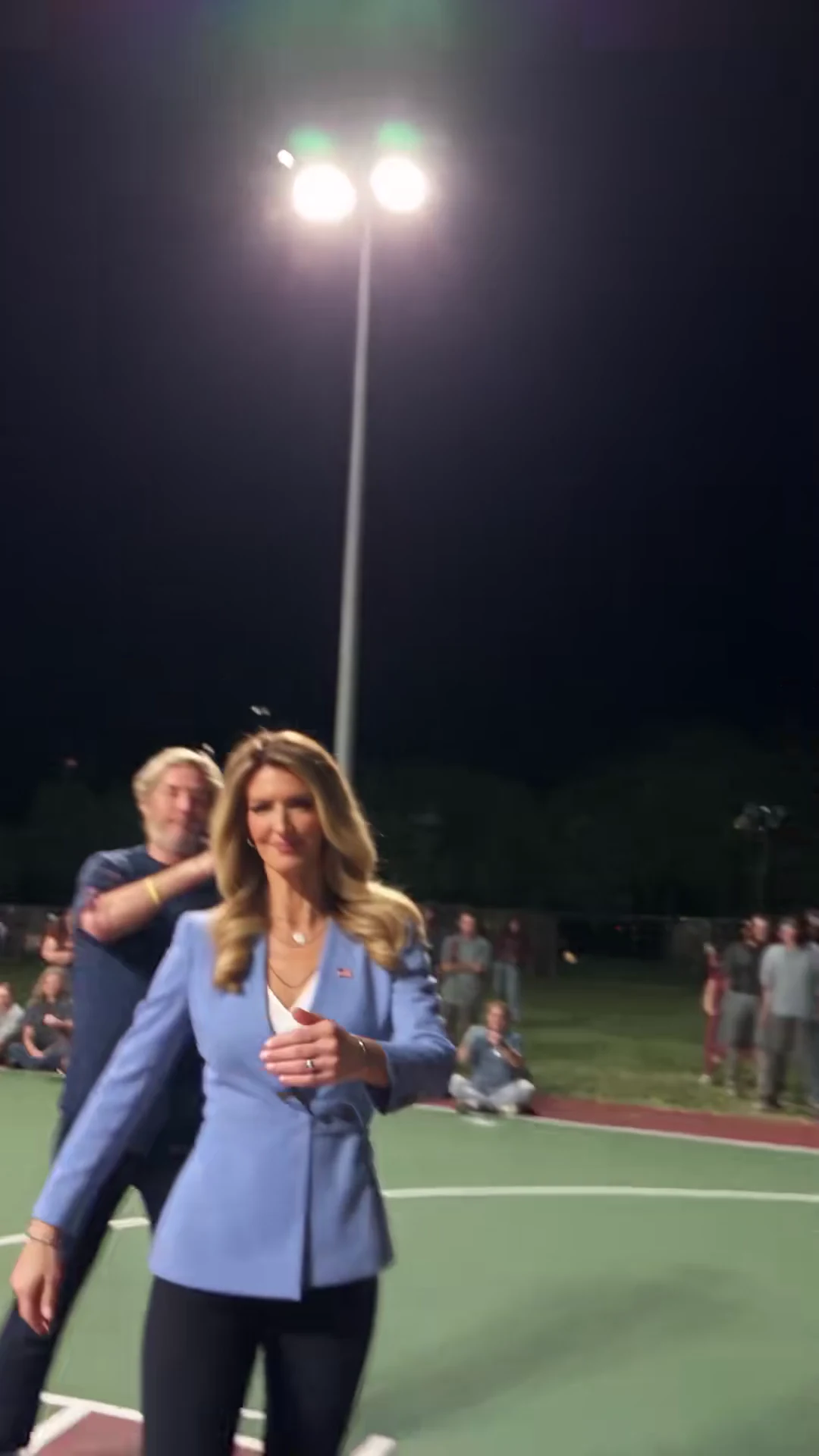
The reference is an outdoor court at night under tall floodlights. The playing area is green inside white lines with a maroon outer surface, the hoop is a glass backboard on a grey pole, trees fill the background and a line of young spectators stands behind the baseline. The camera sees this setting from three main angles: wide from behind the defender during the drives, low under the hoop during the dunks, and straight on toward the baseline during the celebrations. A location photo has to stand in for all three.
02What the Court slot replaces and what stays
The location photo replaces the environment. The template is set up to keep the two players, the ball, the hoop and the action, so an office version should still have a hoop to dunk on and a slow-motion dunk from about 7.2 to 10.3 seconds, played among desks instead of on painted asphalt. That is an instruction to the model, not a guarantee: check that the hoop stands in the room and that the spectators, if any, make sense there. The setting is the only optional slot; the attacker and defender photos are always required. A location photo adds no character preparation to the quote.
03Choosing a location photo
Pick a wide shot taken at roughly standing eye level with plenty of open floor in the middle, because both drives cover ground and the dunks need height above the players. A photo with no people in it is easiest, since anyone in the photo competes with the two players. Avoid tight corners, heavy filters, fisheye distortion and text-heavy signs. A portrait or square photo usually maps more easily to the 9:16 frame than a very wide panorama.
04Setting ideas that suit the play
Places with a natural reason for a hoop work well: a school gym, a driveway or garage door, a park, a beach court. Places where a hoop is absurd are funnier: an open-plan office, a warehouse aisle, a living room, a wedding venue. The source creator's own office version used a portable hoop on a wheeled base among the desks. Whatever you choose, keep the floor visible; a photo of a wall or a desk close-up gives the template nowhere to run.
05Light and the closing whip-pan
The reference is lit at night by floodlights, and its final second whips the camera up to those lights and back down to the attacker walking toward the lens. With a daylight or indoor photo, that beat has to point at whatever light the new place has. A photo with a visible light source, such as ceiling panels, a window or a street lamp, gives that moment something to land on. We have not reviewed a generated result in every kind of setting, so watch the last second of yours.
06Leaving the court as it is
If you leave the Court slot empty, the floodlit night court stays. That is the right choice when the people are the joke and the setting would be a distraction. The template asks for plain spectator banners in the background rather than the reference's emblems; check the background in your result. Use location photos you took or have the right to use, and do not upload a private place you do not have permission to show.