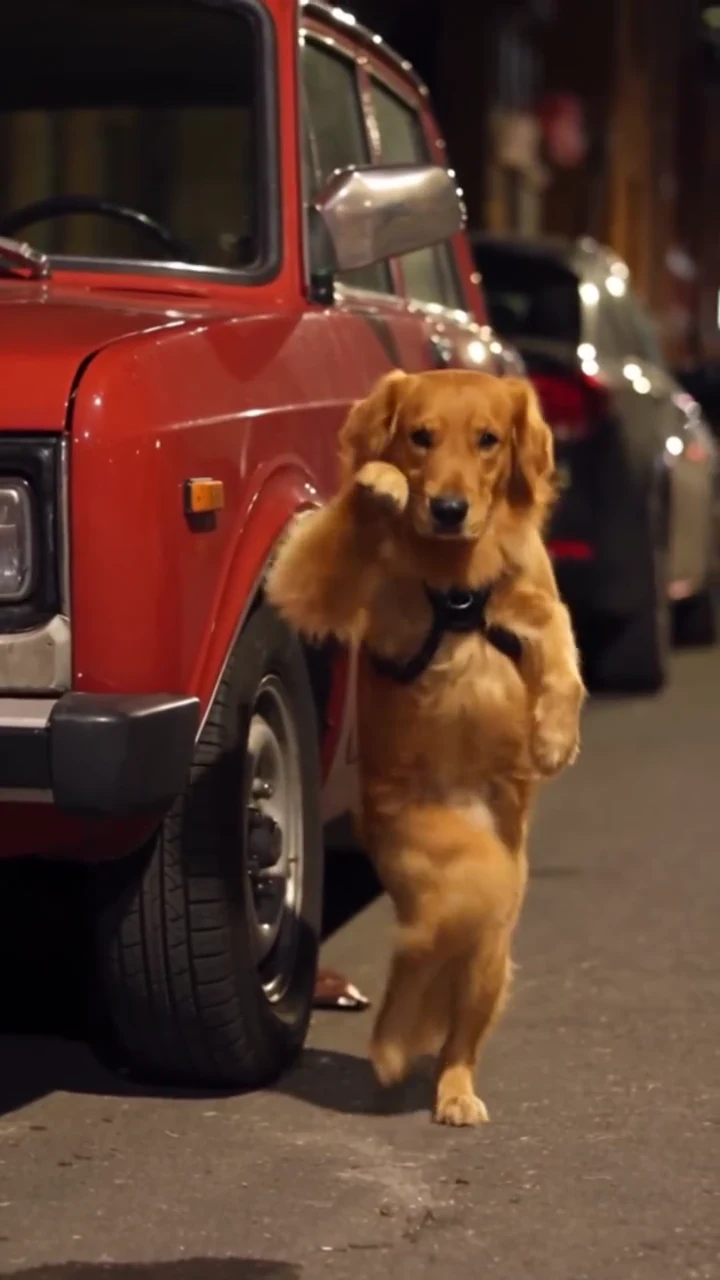
01Show the whole body
Unlike close-up trends, this dancer is on screen from head to hind paws for the entire clip, standing upright beside the car. A photo that shows the full body, including legs and tail, gives the template the proportions, leg colour and tail shape it needs. A head-only crop leaves it to guess the rest of the body, and the guess shows most in the strut between 4 and 8 seconds.
02Face toward the camera, eyes and nose clear
The dancer faces the camera for almost the whole routine, and the wave at about 3 seconds is the closest look at the face. Choose a photo where your pet looks at or near the lens, with both eyes, the nose and both ears visible. Avoid shots where the face is turned away, half in shadow or blurred by movement.
03Even light, not night light
The video is set at night, but the photo should not be. A well-lit daytime or indoor photo shows true coat colour and markings; the template applies the street's warm night lighting itself. Dark, orange-tinted or flash-washed photos can shift the coat colour in the result.
04Markings, coat and what makes your pet yours
Make sure the features people recognise are sharp: a white chest blaze, spotted ears, a curly coat, a docked or plumed tail. These details are what keep a generated pet from looking like a generic dog. If your pet's most distinctive feature is on its back or side, choose a photo that shows it, since the dancer is mostly seen from the front.
05Harnesses, collars and clothing
The source dog wears a black harness, and the template replaces it with whatever your photo shows. The template is told to use what your photo shows, so a harness, sweater or bandana in the photo is meant to carry into the dance; if you want a plain look, use a photo without one, and check the result either way. Avoid tags or clothing with printed words, since small text rarely reproduces cleanly.
06Cats, small dogs and other pets
The template is told to keep the species, so a cat should dance as a cat and a short-legged dog should keep its proportions. Bodies far from a retriever's are the least predictable part: check how the upright stance, the paw on the fender and the tail come out. Treat these as experiments, crop to one animal, and review the result before posting. Only one dancer fits in the scene, so a photo with two pets makes the template guess which one you meant. The cat and person page covers non-dog dancers in more detail.