01Watch once at normal speed with sound
Play the whole six seconds before pausing. Note any moment where the face changes, an arm bends oddly or a foot slides. Then go back to those moments. A checklist helps you judge an output; it does not mean the template has already passed a quality test.
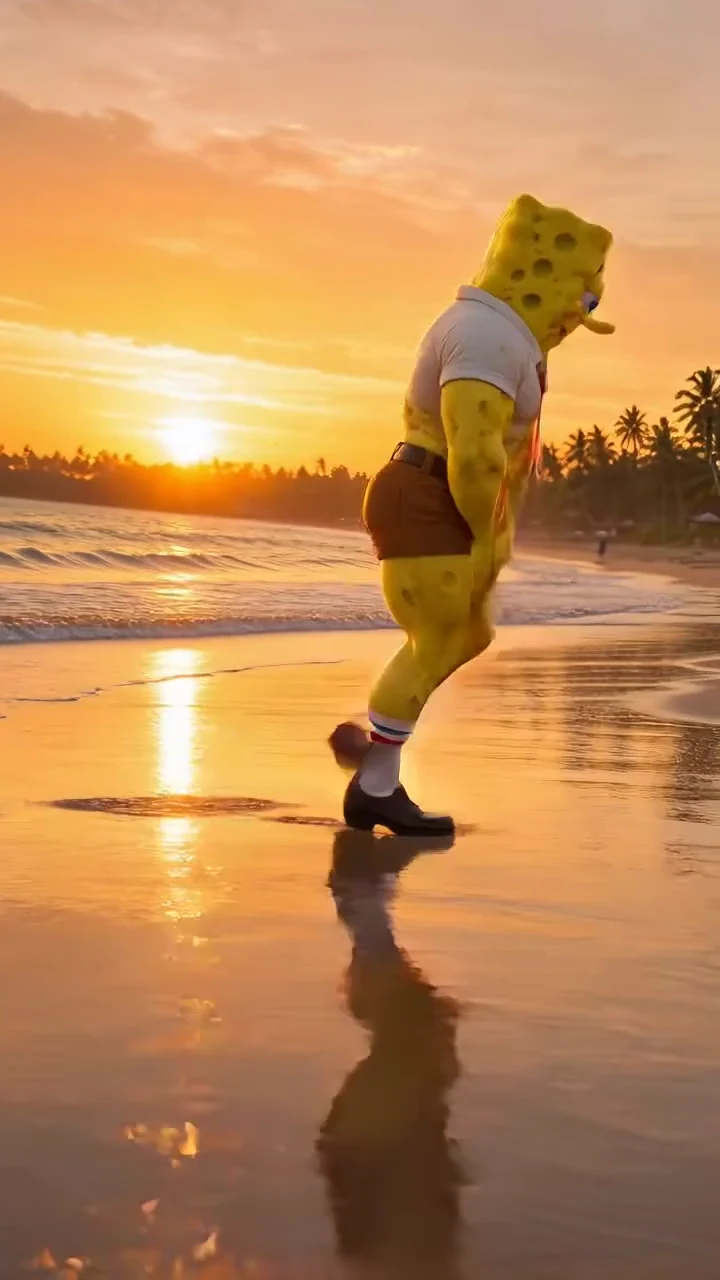
02Profile walk: arms and outfit
In the opening profile walk the figure is largest in frame, with the head near the top edge. Check that the head is not cut off, that the pumping arms keep a consistent size and that the clothing stays on the body. Look at the far arm, which is partly hidden: it may disappear behind the torso, and that is fine if it returns where you expect. As the figure shrinks after about three seconds, check that it does so smoothly.
03Bend and turn: the same person throughout
Around four to four and a half seconds the character bends forward with the head down and turns to face screen-right, then rises in a three-quarter view. This is where the body changes shape fastest. Step through it and confirm the face, hair or ears and clothing stay consistent as the angle changes. Watch for a tie, logo or jersey number that changes shape, or a face that briefly looks like the source character instead of yours.
04Squat flex: hands, knees and feet
In the final frontal squat, the hands rest on the thighs. Count fingers, check that hands do not merge into the legs, and look at the knees and shoes. The feet should stay planted in the wet sand rather than sliding. The squat only lasts about the last half second, but it is the punchline and the frame most viewers will screenshot.
05Reflections and background
The wet sand reflects the figure. Check that the reflection moves with the body and matches its colors, and that the palm trees and horizon do not wobble behind the character. A reflection that lags or shows a different outfit is a visible giveaway at phone size.
06Final grin, then decide
The final grin is the only time the face looks straight at the camera, and the figure is smaller there than at the opening, so pause on it and check that the character still reads as yours at that size. Write down the time and the issue, for example “squat, left hand merges into knee,” and separate photo problems from motion problems. A clearer photo can help identity; it does not guarantee fixing a hand. Read the current quote before any new attempt. No sample result or measured failure rate is implied here.