ChatGPT
 Claude
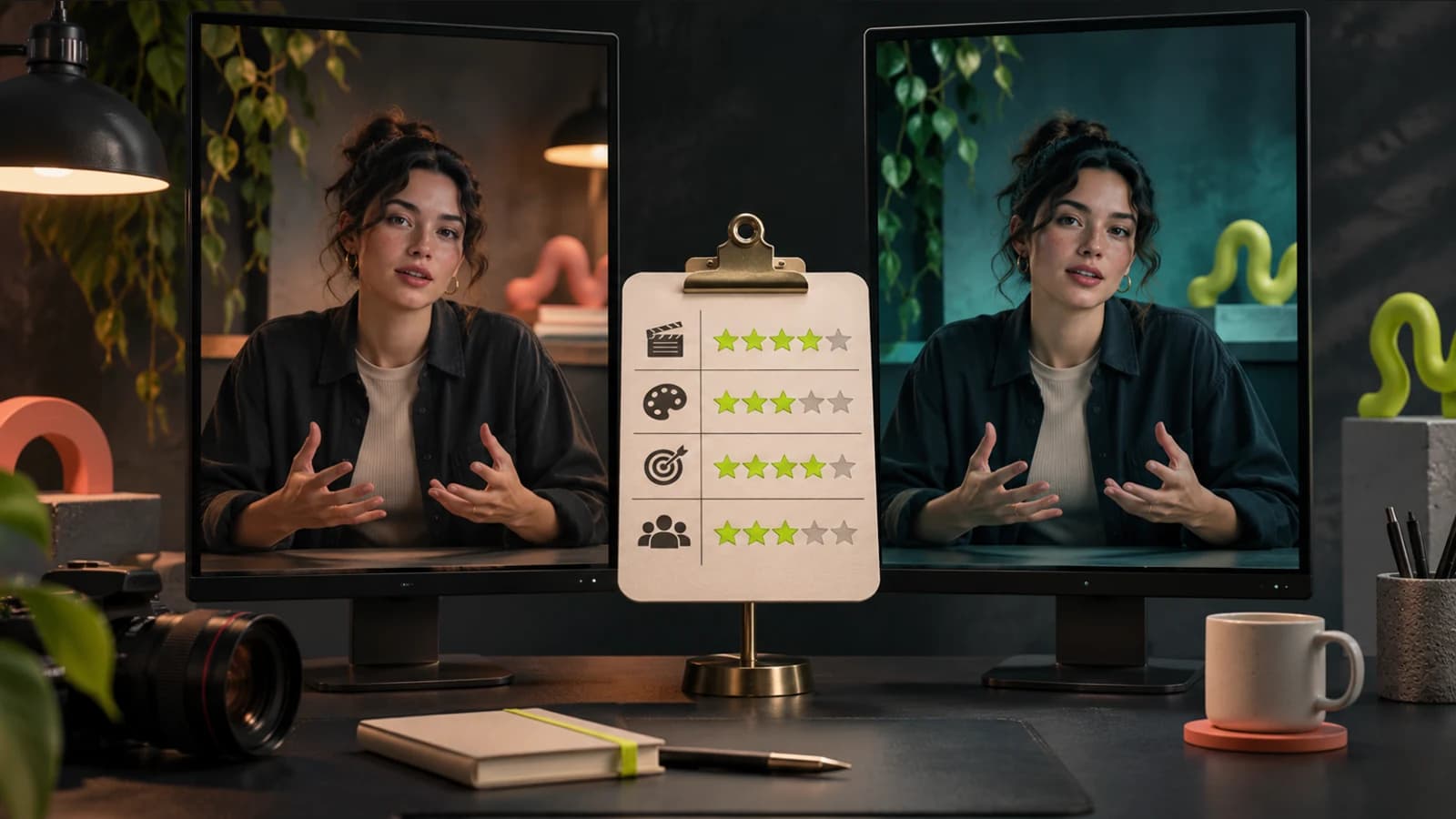
Kling 4.0 vs Seedance 2.5 comes down to sound and price. For a vertical UGC ad where a presenter speaks to camera, use Seedance 2.5. It makes the voice and the picture in one pass, and on Oakgen, Kling 4.0 returns silent video. For silent beats, product B-roll and micro drama shots you will voice later, Kling 4.0 costs about a third as much per second at 720p on Oakgen, and about a seventh at 1080p. Both make clips up to 30 seconds and both do 9:16.
Quality is the open question, and we cannot settle it for you. We did not run our own test. Three third-party same-prompt tests disagree, and most of them shot 16:9, not 9:16. So this post gives you the specs, the prices and what those testers found, then a 9:16 protocol to run on your own product.
Disclosure: Oakgen is our product, and both models run on it. We cover where each model's own app, and other platforms, do things Oakgen does not.
Run your first 9:16 test with Kling 4.0
3 to 30 second clips at 720p or 1080p, the same per-second price in every mode.
Kling 4.0 vs Seedance 2.5 at a glance
Vendor specs come from Kuaishou's Kling 4.0 user guide and ByteDance's Seedance 2.5 launch post. Oakgen specs come from Oakgen's two model pages and the generator, all read on November 4, 2026. Prices are as of November 2026 and can change.
| Kling 4.0 on Oakgen | Seedance 2.5 on Oakgen | What it means for 9:16 work | |
|---|---|---|---|
| Maker and launch | Kuaishou, October 15, 2026 | ByteDance, July 31, 2026 | Kling is three weeks old, so fewer people have tested it |
| Clip length | 3 to 30 s | 4 to 30 s | Either can hold a full 30-second ad |
| Resolution | 720p or 1080p, same price | 480p, 720p or 1080p, price rises with each | Seedance has a cheap 480p draft tier |
| 9:16 | Text and reference modes. Image mode follows the start image | Text and reference modes. Image mode follows the start image | Make start images 9:16 first |
| Sound | Silent output | Native audio, on by default, can be switched off | The deciding row for talking UGC |
| References | Up to 10 images, 5 clips, 7 elements | Up to 30 images, 10 videos, 10 audio files | Seedance takes bigger packs |
| Other modes | Start and end frame, video edit | Start and optional end frame | Kling can fix one detail in an existing clip |
| Oakgen price, 10 s | 531 credits | 746 (480p), 1,599 (720p), 3,935 (1080p) credits | Kling is the cheaper draft at 720p and above |
| Best fit | Silent product shots, B-roll, cast-locked drama beats | Talking presenters, dialogue scenes, big reference packs | Many teams will use both |
Kling's own app does more than Oakgen's version. Kuaishou's guide lists two-channel stereo audio, voice references, up to 10 keyframes, 4K and multi-shot on by default. On Oakgen, Kling 4.0 is silent and tops out at 1080p. If you need Kling with sound, use Kling's app or a platform that passes its audio through.
Who this comparison is for
This is for people who post vertical video for a living and need to pick a default model this month:
- A performance marketer who needs 20 UGC-style hooks a week and wants to know which model to spend credits on.
- A creator or small studio making a micro drama series, where the same lead has to appear in episode 1 and episode 12.
- An agency editor asked to "use the new Kling" or "use Seedance" for a client's Reels and TikTok ads, who needs a reason either way.
If you only make 16:9 brand films, the third-party tests below are closer to your use case than to ours. Read them directly.
How we checked this
We read Kuaishou's Kling 4.0 user guide and launch release, ByteDance's Seedance 2.5 launch post, and fal's pricing pages for both models on November 4, 2026. We read Oakgen's Kling 4.0 and Seedance 2.5 model pages the same day. We took the Seedance 2.5 credit prices from Oakgen's generator quote for each setting. That is the same estimate a user sees before pressing generate, and nothing was spent.
We did not generate clips for this article. We make no claim about which model looks better, moves better or follows prompts better. Every quality finding below belongs to the team that ran it, with their method and their conflicts named. The worked budget near the end is list-price arithmetic, not a result we observed.
Seedance 2.5 price per second, and what Kling 4.0 costs
Price is where the two models differ most, so get these numbers right before you plan a week of ads.
| Clip length | Kling 4.0 (720p or 1080p) | Seedance 2.5, 480p | Seedance 2.5, 720p | Seedance 2.5, 1080p |
|---|---|---|---|---|
| 5 s | 266 | Not quoted | 800 | Not quoted |
| 10 s | 531 | 746 | 1,599 | 3,935 |
| 15 s | 796 | Not quoted | 2,399 | Not quoted |
| 30 s | 1,592 | Not quoted | 4,797 | Not quoted |
| Per second, rounded | About 53 | About 75 | About 160 | About 394 |
Kling 4.0 figures are from Oakgen's Kling 4.0 model page. Seedance 2.5 figures are the generator's quotes for a 9:16 text-to-video clip, read November 4, 2026. "Not quoted" means we did not request that quote, not that the setting is missing. Switching Seedance's audio off did not change the quote for 10 seconds at 720p, so you do not save credits by making it silent.
Two things change the Seedance figure. Higher resolution costs more, and attaching reference video clips changes how the provider bills the job. Read the estimate in the generator after you add your references.
Outside Oakgen, fal lists Seedance 2.5 at about $0.2205 per second at 480p, $0.4730 at 720p and $1.164 at 1080p, for a 16:9 clip. fal bills by tokens, so "the token formula is authoritative" and other frame shapes cost slightly more or less. fal lists Kling v4 reference to video at $0.157 per second. On fal's list prices, Kling costs about a third of Seedance's per-second price at 720p, the same ratio as on Oakgen.
The per-second price is not the number that matters. A cheaper model that needs four takes can cost more than an expensive one that works first time. Our guide to cost per usable clip shows how to track that.
What third-party same-prompt tests found
Three teams published same-prompt tests of Kling 4.0 against Seedance 2.5 in late October 2026. Each ran one take per model per prompt. Each has a stake, and each shot mostly 16:9.
CellCog, October 29. Ten reference-to-video tests at 720p and 16:9 with sound on, Kling 4.0 run on fal. CellCog's own picks went to Seedance 2.5 in all ten, "for texture, physics and a less plastic look". Its strict frame-by-frame review was closer, Seedance 7 tests to 3 and 408 points to 401 out of 700. Kling won the pancake flip, the sign text and the 21:9 camera direction in that review. Neither model played a supplied voiceover verbatim. CellCog says it makes every one of its own videos on Seedance 2.5.
Fuser, October 23. Five prompts across four tests at 720p. Fuser found Kling 4.0 "the more reliable of the two". It held a character from reference photos, made the requested camera move and kept two fighters apart at speed. Seedance 2.5 "gave the more atmospheric long take" but lost the ferryman in the first test. In the one 9:16 test, Seedance declined two generated portraits of an invented woman because they "may contain likenesses of real people". Fuser runs both models in its own product.
VdoBloom, October 27. Eight text-to-video prompts at 720p and 16:9 with audio on. "No model swept all eight tests." VdoBloom picked Kling 4.0 for on-screen text and hand detail, with a tie on dialogue, and Seedance 2.5 for fast action and physics. Kling's content filter refused the wine glass prompt as sensitive, which VdoBloom thinks was because the red liquid looked like blood. VdoBloom also sells access to both models.
Read together, the pattern is consistent enough to plan around, though not to bet a budget on:
- Seedance 2.5 tends to win on texture, physics, mood and action.
- Kling 4.0 tends to win on following the brief. That covers reference faces, text on signs, hands and the camera move you wrote.
- Both models sometimes cut a "one continuous shot" into several shots, refuse a harmless prompt, or drop a beat.
Most of these clips ran Kling with audio on other platforms. On Oakgen, Kling 4.0 is silent, so its dialogue results do not carry over.
Kling 4 vs Seedance for UGC ads
UGC ads split into two jobs, and the models split the same way.
The presenter talks to camera. In the classic UGC hook, a person holds the product and says a line. Use Seedance 2.5. It writes the voice into the same generation, and its 4-to-30-second range covers a 15-second hook or a 30-second testimonial. Oakgen's AI UGC ad generator uses Seedance 2.5 Reference for its Natural takes, where the presenter, the product in hand and the voice come from one shot. Natural takes come in 9:16 or 1:1. The model picks the voice, so you cannot choose or clone one in that mode.
Silent shots you voice later. Product close-ups, unboxing hands, a before-and-after cut, a lifestyle B-roll beat. Use Kling 4.0. You pay about 53 credits a second instead of 160 at 720p, and VdoBloom's test favoured it on hands and on-screen text. Add the voiceover in an editor such as Compose, or use the UGC studio's default mode, which lip-syncs a presenter photo to a voiceover you choose.
Here is where this breaks. If the ad depends on a specific brand voice, Seedance's Natural take will not give it to you, and Kling on Oakgen gives you no voice at all. That job needs a voiceover track, made once and reused. Our Seedance 2.5 UGC ads guide covers the Seedance prompts for presenter hooks in more detail.
Make a talking UGC ad in one take
The UGC studio's Natural mode runs on Seedance 2.5 Reference, with presenter, product and voice in one generation.
Which model fits micro drama episodes?
Micro drama needs two things that pull against each other. You need the same faces in every episode, and you need a lot of short beats on a budget.
Kling 4.0 suits the silent beats. Fuser's test is the clearest evidence that it holds a face from reference photos, and Oakgen's reference mode takes up to 7 elements, enough for a cast plus props. At 53 credits a second, you can regenerate a failed 5-second reaction shot for 266 credits. Our Kling 4.0 guide has a full beat template and a costed 30-second episode plan.
Seedance 2.5 suits the scenes where people talk. Dialogue, ambience and footsteps come out in sync, so you skip a round of voice work. It also takes the bigger reference pack, up to 30 images, 10 videos and 10 audio clips per ByteDance's launch post. That helps when one scene has three characters, two locations and a voice reference. Watch the refusal Fuser hit. If your cast is photoreal and generated, test one reference before you build a season around it.
A split that works for many series:
- Cold opens and cliffhanger frames go to Kling 4.0 in image mode with a 9:16 start frame, so the first frame matches the thumbnail.
- Silent action and reaction beats go to Kling 4.0 in reference mode with the cast as elements.
- Spoken scenes go to Seedance 2.5 with audio on.
- For voice continuity, keep one voice per character for the whole run and add it in the edit for Kling beats.
If you would rather not stitch two models by hand, Oakgen's AI micro drama generator runs the script, cast and storyboard as one workflow. For posting cadence and where to put the cliffhanger, see our guide to running a YouTube Shorts series for micro drama.
A 9:16 test protocol you can run in one afternoon
The published tests are mostly 16:9. Your ads and episodes are 9:16, with captions on the bottom and buttons on the right. Run this before you commit a month of credits to either model.
- Pick three briefs that match your real work. One talking hook (a presenter says one line holding the product). One silent product beat (hands open the box and turn the label to camera). One drama beat (two recurring characters, one line each, in a fixed location).
- Build one reference pack and reuse it. A front and three-quarter photo of each character, a product photo with a readable label, and one location still. Make every image 9:16.
- Lock the settings. 9:16, 10 seconds and 720p for both models. Use reference mode on both. Keep Seedance's audio on for the talking hook and the drama beat.
- Write one prompt per brief and send it to both models unchanged. Give each reference a role, write timed beats (0 to 3 s, 3 to 7 s, 7 to 10 s), and add "one continuous shot" and "no subtitles".
- Run three takes per model per brief. One take tells you about luck. Three tell you about the model.
- Score each take on the same sheet, below. Do it with sound on, on a phone, at full screen.
- Divide credits spent by takes you would publish. That is your cost per usable clip, the only price that matters.
Score sheet. Mark each row pass or fail per take.
| Check | What a pass looks like |
|---|---|
| Face match | You would accept the lead as the same person as in the reference |
| Product label | The label reads correctly in the frames where it faces camera |
| Safe zone | Face and product stay in the center of the frame, clear of the right edge and the bottom fifth |
| Beats in order | Every timed beat happens, in the order written |
| Hands | No extra fingers or melted grips on the product |
| Cuts | No unrequested cut when you asked for one continuous shot |
| Spoken line | The exact line is spoken, by the right person, in sync (Seedance only on Oakgen) |
| Publishable | You would post it with captions and nothing else changed |
Budget for this protocol at Oakgen list prices, as of November 2026. This is arithmetic, not a result.
| Kling 4.0 | Seedance 2.5 (720p) | |
|---|---|---|
| One 10 s take | 531 credits | 1,599 credits |
| 9 takes (3 briefs, 3 takes each) | 4,779 credits | 14,391 credits |
| Both models together | 19,170 credits |
To cut the cost, run Seedance's first round at 480p (746 credits per 10-second take on Oakgen's quote) and only move the winning brief to 720p. Kling's price is the same at 720p and 1080p, so there is no draft discount there. Draft short instead.
Run the Seedance half of the test
4 to 30 seconds, 480p to 1080p, native audio, with the credit estimate shown before you generate.
Common mistakes when choosing between them
- Comparing 16:9 results and posting 9:16. A model that frames a wide shot well can still cut a face in half in a vertical frame. Test in the shape you publish.
- Judging from one take. All three published tests used one take per prompt and said so. Treat their verdicts as tendencies.
- Paying for Seedance audio you then mute. On Oakgen the quote did not drop with audio off. If the clip will be silent, Kling is the cheaper choice.
- Expecting Kling-app features on Oakgen. Stereo audio, voice references, 10 keyframes and 4K are in Kling's own app, not in Oakgen's Kling 4.0.
- Building a cast around a reference the model refuses. Fuser's photoreal portraits were declined by Seedance 2.5. Test one reference per character first.
- Counting cost per generation. Count cost per clip you would publish. The cheaper model is the one with the lower number there.
When another tool fits better
Kling's own app is the better choice when you need Kling 4.0 with sound, voice-bound characters, more than two keyframes in one pass, or 4K. Oakgen's version is silent and stops at 1080p.
ByteDance's own apps, Jimeng and Doubao Pro, are where Seedance 2.5 launched, and ByteDance's post describes multi-round extensions and timestamp editing. Check those apps if you need a video longer than 30 seconds in one continuous story.
If you only need cheap drafts, neither model is the cheapest option. VdoBloom found MiniMax H3 won or tied four of its eight tests at the lowest price of the three. If you want 4K from one model, our Seedance 2.5 vs Kling 3 vs Veo 3.1 comparison covers which older models offer it.
Use Oakgen when you want both models on one credit balance, with the price shown before each run, next to the image tools for start frames and the UGC ad generator for finished ads. If you are testing creative angles for Meta, our guide to the Meta creative diversity score explains why varied hooks matter more than one perfect clip. Check pricing for what each plan includes.
Start with the cheaper model. Run the protocol above with Kling 4.0 on Oakgen for your silent beats, then put Seedance 2.5 on the briefs where someone has to speak.
Start your Kling 4.0 test round
Set 9:16, add your references and generate three takes of your first brief.
Frequently asked questions
Is Kling 4.0 or Seedance 2.5 better for UGC ads?
On Oakgen, Seedance 2.5 is the one for a UGC ad where the presenter speaks, because it makes picture and sound in one pass and Oakgen's Kling 4.0 returns silent video. Kling 4.0 is the cheaper pick for silent product shots, B-roll and hooks you will voice over later. We did not run our own test, so run the 9:16 protocol in this article on your own product before you commit a budget.
What is Seedance 2.5's price per second?
On Oakgen, the generator quoted 746 credits for 10 seconds at 480p, 1,599 at 720p and 3,935 at 1080p on November 4, 2026, which is about 75, 160 and 394 credits per second. Audio on or off did not change the quote. On fal, the list price is about $0.2205 per second at 480p, $0.4730 at 720p and $1.164 at 1080p for a 16:9 clip, billed by tokens.
How much cheaper is Kling 4.0 than Seedance 2.5?
On Oakgen as of November 2026, a 10-second Kling 4.0 clip lists at 531 credits at 720p or 1080p. A 10-second Seedance 2.5 clip is 1,599 credits at 720p and 3,935 at 1080p. That makes Kling about three times cheaper at 720p and about seven times cheaper at 1080p, but Oakgen's Kling 4.0 has no audio and Seedance 2.5 does.
Can both models make 9:16 vertical video?
Yes. On Oakgen, Kling 4.0 offers 9:16 in text and reference modes, and so does Seedance 2.5. In image mode, both follow the shape of the start image, so make that image 9:16 before you upload it.
Which model is better for micro drama?
It depends on the scene. Fuser's same-prompt test found Kling 4.0 held a character from reference photos more closely, and its per-second price makes many short beats affordable. Seedance 2.5 makes dialogue and ambience in the same pass and takes far more references, up to 30 images, 10 videos and 10 audio files. Many series will use both, Kling for silent beats and Seedance for spoken scenes.
What is the best AI video model in November 2026?
No single model won every test we read. CellCog picked Seedance 2.5 in all ten of its tests but its own strict review scored it 7 to 3. VdoBloom found no model swept its eight tests. Fuser found Kling 4.0 more reliable for reference lock and camera moves. The best AI video model in November 2026 is the one that passes your own 9:16 test at a cost per usable clip you can afford.
Did Oakgen test Kling 4.0 and Seedance 2.5 for this article?
No. We did not generate clips for this article and make no claim about which model looks better. Specs come from Kuaishou, ByteDance and fal, prices come from Oakgen's model page and generator, and quality findings are attributed to the third parties who ran them.
Sources
- Kling AI, Kling 4.0 User Guide (read 2026-11-04)
- Kuaishou Technology, Kling AI Officially Launches Next-Generation Kling 4.0 (read 2026-11-04)
- ByteDance Seed, One-take Creation, Flexible Referencing: Introducing Seedance 2.5 (read 2026-11-04)
- fal, Seedance 2.5 Text to Video API and pricing (read 2026-11-04)
- fal, Kling v4 reference to video pricing (read 2026-11-04)
- CellCog, Seedance 2.5 vs Kling 4.0: We Ran 10 Head-to-Head Tests (read 2026-11-04)
- Fuser, Kling 4.0 vs Seedance 2.5: Same-Prompt Test (read 2026-11-04)
- VdoBloom, Kling 4.0 vs Seedance 2.5 vs MiniMax H3: 8 Same-Prompt Tests (read 2026-11-04)
- Oakgen, Kling 4.0 model page (read 2026-11-04)
- Oakgen, Seedance 2.5 model page (read 2026-11-04)