ChatGPT
 Claude
If your Earn tab lists "Unsatisfying or off-putting content", YouTube has suspended your channel from the Partner Program for a pattern it sees across your uploads. It has not judged one bad video. The policy targets videos that run on "emotionally manipulative formulas", feel interchangeable, or exist "to shock or surprise viewers for the sole purpose of getting views". Your videos stay up. You stop earning. You have 21 days from the suspension to appeal, and YouTube reviews the channel as it stands, so do not delete videos first. If the appeal fails, you can reapply after 90 days.
This post covers what to do next. It shows how to audit a channel one episode at a time against YouTube's wording, and how to build a video appeal. It also explains the new 30-day spam lock, which is a different process from demonetization and calls for the opposite first move. Oakgen makes AI video tools, so we have a stake in channels that use AI. Every rule below comes from YouTube's own pages, read on November 4, 2026.
Rebuild the channel around a story
Thumbnails, B-roll, narration and series episodes for YouTube channels, made in one studio.
Which notice do you have, and what is your deadline?
Each YouTube process has its own clock. Find your row first.
| What you see | Rulebook | What it does | Your window | First move |
|---|---|---|---|---|
| "Your channel isn't earning right now" with the reason Unsatisfying or off-putting content | Channel monetization policies | Removes YPP earnings. Videos stay public | Appeal within 21 days of suspension. Reapply after 90 days | Do not delete videos. Audit, then appeal |
| A notice that your channel is scheduled to be suspended from YPP | Channel monetization policies | Suspension pauses if you appeal in time | 7 days, before the suspension date | Appeal now |
| YPP application rejected | Channel monetization policies | You never join | Appeal within 21 days. Reapply after 30 days on a first rejection, 90 days after that | Audit before you reapply |
| Channel locked for 30 days | Spam policy, an experiment since October 29, 2026 | Channel hidden, no uploads or comments | 30 days, then termination if you do nothing | Fix or remove flagged videos, remove all videos, or appeal |
The "isn't earning" wording is what creators report seeing in Studio. YouTube's Help pages call it a YPP suspension.
The two rows that matter most for AI channels pull in opposite directions. In a YPP appeal, YouTube says "your channel will be assessed in its current state", so you leave the videos alone. In the spam lock, fixing or removing the flagged videos is how you get the channel back. Mixing them up can cost you the channel.
Who this is for
This guide is for three kinds of channel owner:
- You were in the Partner Program and the reason on your Earn page changed to unsatisfying or off-putting content. Dexerto reported one 18-year-old appliance channel whose reason switched from "inauthentic content" to this one.
- Your YPP application was rejected with this reason and you want to know whether to appeal or rebuild.
- You run a faceless or AI-assisted channel and want to check it before a reviewer does.
For the full list of policies that catch faceless channels, read what YouTube demonetizes on faceless AI channels. This post covers one section and what to do about it.
How we checked
On November 4, 2026 we read YouTube's channel monetization policies, the appeal page for YPP suspensions, the rejection FAQ, the "Monetization is disabled" page and the Spam policy on YouTube Help. We also read the October 29, 2026 entry in YouTube's official experiments thread on the Help Community. We used Tubefilter, TechCrunch, Engadget, Dexerto and SubSub as secondary reports and checked each claim against YouTube's text.
We did not run a channel through review or file an appeal. The audit sheet and appeal outline are our templates, built from YouTube's wording.
What YouTube's unsatisfying or off-putting content wording actually says
The section appeared when YouTube split its monetization guidance into named sections in mid-July 2026. Tubefilter reported it on July 13, and TechCrunch said it rolled out on July 16. Both say the rules did not change, only the explanation. The policy page itself carries no dated note for this change. Its newest note is still the July 15, 2025 rename of "repetitious content" to "inauthentic content".
The definition has three triggers. Content "relies heavily on emotionally manipulative formulas", or "mimics existing formats or stories to a degree that the videos feel interchangeable", or "appears designed to shock or surprise viewers for the sole purpose of getting views". Any one is enough.
The allowed side sets the bar. "What's important is that the substance of the video feels original and provides a satisfying experience for the viewer." And "if you use automated tools or templates to help create your content, the final product must still demonstrate your creative vision and provide educational or entertainment value."
YouTube's four examples of what fails are, in short:
- Disturbing themes such as violence or loss used again and again "without building a cohesive narrative".
- Generic templates or emotionally manipulative themes, like "repetitive scenarios of animals in exaggerated distress or peril".
- Videos that "stitch together unrelated or inconsistent AI clips to surprise or shock viewers".
- Realistic visuals that trick viewers into believing "a fake celebrity death or natural disaster has occurred".
In TechCrunch's report, Halprin described a video of an animal in distress that someone then rescues, and said viewers "find it off-putting". He said such channels leave YPP whether or not the content is AI-generated. The policy is aimed at the format, not the tool.
SubSub reports that the Studio notice quotes a shorter definition, "content that may be emotionally manipulative, disturbing, nonsensical, shocking, or otherwise similarly unsatisfying to viewers without delivering significant creative, educational, or other value." We could not find that sentence on YouTube's Help pages. Write your appeal against the policy page, which is the text YouTube links from the notice.
How to audit your channel episode by episode
YouTube says reviewers may focus on your main theme, most viewed videos, newest videos, the videos with the biggest share of watch time, video metadata and your About section. Start your audit with exactly those, about 20 videos for most channels.
For each video, watch the first 30 seconds and the ending, and check the title and thumbnail, which reviewers also see.
The audit sheet
| Check | YouTube wording it maps to | Pass sign | Fail sign |
|---|---|---|---|
| Does this video tell a story with a start, middle and end? | "cohesive storyline" | You can say what happens in one sentence, and it is not the same sentence as the last video | The video is a run of moments with no link between them |
| Would the video work without the shock? | "sole purpose of getting views" | The shock serves a point the video makes | Remove the shock and nothing is left |
| Is the emotional hook the same as in the last 5 uploads? | "emotionally manipulative formulas" | The feeling changes with the story | Same peril, same rescue, same music cue, every time |
| Do the clips belong to one world? | "unrelated or inconsistent AI clips" | Same characters, same setting rules, shots that cut together | Faces, styles or places change between shots for no story reason |
| Could a viewer think this really happened? | "fake celebrity death or natural disaster" | Fiction is framed as fiction, and realistic AI scenes carry YouTube's AI disclosure | A realistic event that never happened, presented as news |
| Does the title or thumbnail promise something the video does not show? | Metadata is on the reviewer's list | Thumbnail shows a real frame or the real subject | "Something terrible just happened" over a video where nothing does |
| What did you add that a template could not? | "demonstrate your creative vision" | Your script, your voice, your characters, your research | A prompt filled from a trend list |
Score each video as keep, rework or retire. Keep passes every row. Rework fails one or two rows and needs a new edit, title or thumbnail. Retire exists only for the hook.
Then read the sheet as a whole. If most of your most viewed videos are rework or retire, that pattern is what the reviewer saw, even if your newest uploads are better.
A worked example, clearly illustrative
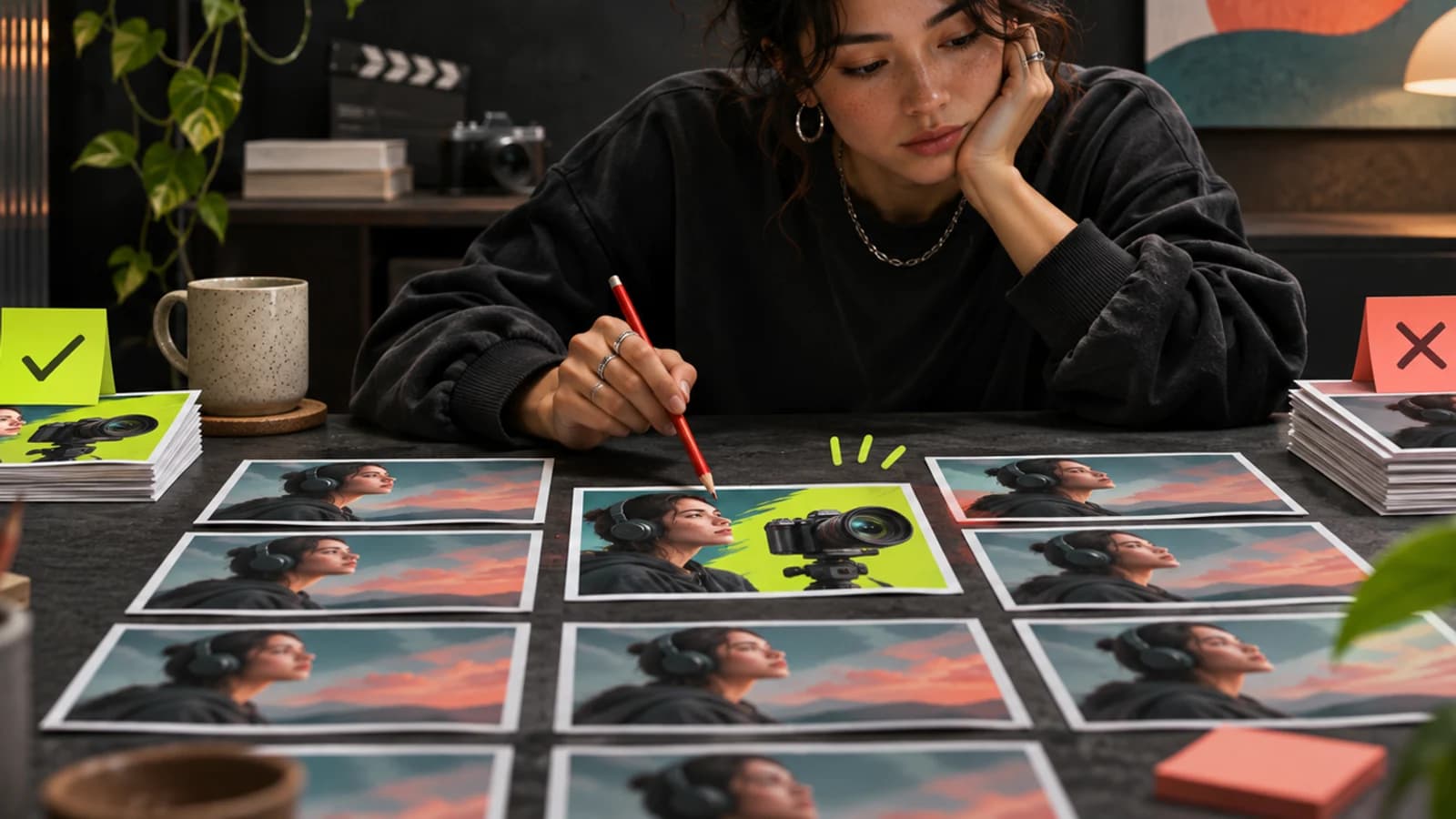
Here is how the sheet reads on a made-up channel. It posts AI animal Shorts. Its 10 most viewed Shorts all show a kitten trapped somewhere dangerous, a worried soundtrack, then a rescue in the last two seconds. The thumbnails are close-ups of the kitten crying.
Most rows fail on at least 8 of the 10. The hook, outcome and thumbnails repeat, and the kitten looks different in each shot. This channel should not appeal. It matches YouTube's second example almost word for word.
Now a second made-up channel. It runs an AI-animated series about one stray cat named Pickle who lives behind a bakery. Each episode has a new problem, some funny and some sad, and the ending changes. The creator writes the scripts and narrates. Two older Shorts used a rescue hook with a fake "breaking news" thumbnail. This channel has a case. It should leave those two Shorts up for now, appeal within 21 days, and show the series in the appeal.
How to write a YouTube inauthentic content appeal that gets read
Appeal only if your audit says most of the channel passes. If it does not, the 90-day reapply route gives you time to rebuild, and a failed appeal does not shorten that wait.
YouTube's appeal page sets the format for a video appeal. It must be a new upload on the channel you are appealing, set to unlisted, and under 5 minutes. It must be narrated in a supported language, or carry English subtitles that are not auto-generated. Put nothing in the description. You submit the unlisted URL from the Earn page in YouTube Studio. Some channels get the option to appeal through Creator Support instead.
YouTube asks for your channel URL in the first 30 seconds, specific policy references with examples, a view of the whole channel, and a look at how you make the content.
Appeal video outline (a template, not a guarantee)
- 0:00 to 0:30. Say your channel name and show its URL on screen. In one sentence, say what the channel is. "A weekly animated series about one cat and the people on her street" works. "Relaxing animal content" does not.
- 0:30 to 1:30. Quote the policy line you meet. "Content with a cohesive storyline that doesn't rely solely on shock value" and "using AI to visualize a unique character and narrative you invented" are both on YouTube's allowed list. Show two or three episodes that prove it.
- 1:30 to 3:00. Show your process on screen. Open your script document, your character references, your voice recording and your edit timeline. If you use AI tools, show where your decisions go in. A reviewer looking for a pipeline is reassured by human choices they can see.
- 3:00 to 4:00. Address the weak videos from your audit by name. Say what you would change. Do not delete them before the decision.
- 4:00 to 4:40. Close with what the channel will post next and how it stays varied.
Leave out "the algorithm made a mistake". It does not speak to the policy. YouTube says it replies within 14 days. If it accepts the appeal, it re-admits the channel within 30 days.
Show a series a reviewer can follow
Lock a cast and their voices, approve a storyboard, then film each vertical episode shot by shot.
Is your YouTube channel locked for 30 days for spam?
This is a different rulebook. On October 29, 2026, Team YouTube posted in its official experiments thread that it is testing "a new option for creators facing immediate termination due to certain Spam policy violations." Tubefilter reported the change on November 3. We confirmed the details on YouTube's own post.
An eligible channel enters "a 30-day locked period" and the owner is told by email and in YouTube Studio on desktop. "Certain actions, such as uploading new videos or posting comments, will not be available while your channel is locked." There are three ways out:
- Fix or remove specific videos, using Studio tools such as the video editor.
- Remove all videos, which YouTube says releases the lock at once.
- Submit an appeal if you believe the channel complies.
"Failing to address the issues within 30 days, or taking no action, will lead to channel termination." If your cleanup is rejected, you can still remove all videos within the window. YouTube says this keeps "your subscribers, channel handle, and YPP status."
The Spam policy explains why AI channels should care. One of its named examples is "Automated or synthetic mass-production: Using automated tools or AI to churn out high volumes of similar content with minimal changes." Its example channel uses "the exact same background music and repetitive AI generated imagery across many videos, with each video reading out an AI-generated script." The policy also says "posting a few variations of a video is ok". The line is volume and sameness, not the tool.
YouTube calls this an experiment and says only eligible channels get it. It has not said which spam violations qualify. If you are terminated outright, the lock does not apply to you. Use the normal termination appeal instead.
So the first moves differ. For a YPP suspension, keep the videos and appeal. For a 30-day lock, clean up before day 30. If you are not sure which one you have, read the email. A lock notice mentions a locked period and spam. A YPP notice mentions the Partner Program.
What to do if you decide not to appeal
Use the 90 days before you can reapply to build a different format, not a cleaner copy.
- Retire the hook, not just the videos. A new batch with the same peril and rescue hook fails the same check.
- Build a cast you reuse. YouTube allows "a series following a set of characters across episodes" where each video has a distinct storyline. A stable cast also fixes "inconsistent AI clips".
- Put your voice in. Your own narration is the plainest proof of "creative vision". Clone your own voice if you like, never someone else's.
- Rewrite the metadata. Use a real frame from the video as the thumbnail.
- Do not open a second channel to keep earning. YouTube's policy says you "should not create new (or use existing) channels to get around these restrictions" during a suspension.
Our hub on YouTube monetization requirements for 2027 covers the thresholds you will face when you reapply after February 1, 2027. For the series format itself, read running a YouTube Shorts series as a micro drama.
Where Oakgen fits in a rebuild
Oakgen does not review channels, file appeals or post to YouTube. It helps at the rebuild step, where the policy asks each video to be different while the cast and style stay the same.
- One cast across episodes. In AI Influencers you create a character once, then bring their face and voice into any image, video or voiceover by typing @ and their name.
- Story episodes. The micro drama studio works one vertical episode at a time. You set the cast and voices, approve a storyboard, film shot by shot and redo only the shot that missed.
- Clips that match. Kling 4.0 on Oakgen makes silent clips of 3 to 30 seconds at 720p or 1080p, including 9:16, per its Kling 4.0 model page. Reference mode takes up to 10 reference images, which helps keep one character in every shot. Our Kling 4.0 how-to covers prompts and modes.
- Your own voice. Voice cloning lets you narrate in your own voice. The form asks you to confirm consent before it clones.
A tool cannot make a formula original. A better model gives you a better-looking version of the same peril and rescue. For what AI video costs once the hype is removed, see what AI video money videos leave out.
If you want to try the rebuild, start with one character and three episode ideas that end differently, and make them in the AI toolkit for YouTubers.
Keep one character in every shot
Create a character once and bring their face and voice into any Short with @ and their name.
Common mistakes after an unsatisfying content notice
- Deleting videos before a YPP appeal. YouTube assesses the channel as it stands and says not to delete first.
- Mixing up the two processes. Cleanup is right for a 30-day spam lock and wrong before a YPP appeal.
- Appealing a channel that fits the examples. If your top videos match one of YouTube's four examples, the 90 days are better spent on a new format.
- Arguing about AI. The policy does not ban AI. Halprin told Creator Insider, as Engadget reported, that YouTube is "agnostic" about tools. Your appeal should be about story and process.
- Missing the 21-day window. The date shows next to the Start Appeal button in Studio. After it passes, reapplying is the only route.
- Using a new channel to keep earning. It risks termination of every channel you run.
When another route fits better
AI generation is not the right fix for every flagged channel.
- If you can film yourself, do it. "Content that primarily features the uploading creator" is on YouTube's list of what monetizes under the reused content section, and filming costs nothing per clip.
- If you need a human expert on camera, AI is the wrong tool. YouTube's AI personas section bars AI "experts" on health, legal, finance or politics from monetizing.
- If you are starting over, our guide to faceless YouTube videos that still get views covers niche and format choices from scratch.
What to do today
Note the date beside the Start Appeal button. Run your 20 most viewed, newest and highest watch time videos through the audit sheet. If most pass, record the appeal this week and leave every upload in place. If most fail, use the 90 days to build one cast and one story that ends differently each time.
When you are ready to make the new episodes, the YouTube creator toolkit groups thumbnails, B-roll, narration and series tools by job.
Plan the rebuilt channel
Make the characters, episodes and narration a reviewer reads as your own work.
Frequently asked questions
What does unsatisfying or off-putting content mean on YouTube?
It is one of the sections of YouTube's channel monetization policies. YouTube defines it as content that "relies heavily on emotionally manipulative formulas, mimics existing formats or stories to a degree that the videos feel interchangeable, or appears designed to shock or surprise viewers for the sole purpose of getting views." A channel judged to fit it is not eligible for the YouTube Partner Program. The videos stay up. The channel stops earning.
My Studio says your channel isn't earning right now. Can I appeal?
Yes, if YouTube suspended you from the Partner Program. YouTube Help says you can appeal within 21 days of the suspension, by video or through Creator Support, from the Earn page in YouTube Studio. YouTube says it responds within 14 days. If the appeal fails, you can reapply 90 days after the suspension date.
Should I delete videos before I submit a YouTube inauthentic content appeal?
No. YouTube's appeal page says your channel is assessed in its current state and that you should not delete videos before submitting your appeal. Deleting first can also remove the videos that show your process. Delete or rework videos after the decision, if you decide to reapply.
How long do I have to appeal a YouTube Partner Program suspension?
21 days from the suspension. If YouTube warned you that a suspension was scheduled, you have 7 days to appeal before it takes effect, and the suspension pauses while YouTube reviews. The deadline also shows in YouTube Studio next to the Start Appeal button.
Why is my YouTube channel locked for 30 days for spam?
Since October 29, 2026, YouTube has been testing a 30-day locked period for some channels that would otherwise be terminated for certain Spam policy violations. During the lock the channel is hidden and you cannot upload or comment. You can fix or remove the flagged videos, remove all videos, or appeal. Doing nothing for 30 days ends in termination. It is an experiment and YouTube has not said which channels qualify.
Is the 30-day spam lock the same as demonetization?
No. Demonetization for unsatisfying or off-putting content comes from the channel monetization policies and only removes earnings. The 30-day lock is a step before termination under the Spam policy, which is part of the Community Guidelines. The Spam policy names automated or synthetic mass-production, so a templated AI channel can face both.
Can I start a new channel while my channel is suspended from YPP?
YouTube's monetization policies say you should not create new channels, or use existing ones, to get around a demonetization, or apply to YPP with related channels during the suspension. Doing so could lead to termination of all your channels.
Sources
- YouTube Help, YouTube channel monetization policies (read 2026-11-04)
- YouTube Help, Appeal a YouTube Partner Program suspension or application rejection (read 2026-11-04)
- YouTube Help, My channel was rejected for monetization FAQs (read 2026-11-04)
- YouTube Help, Monetization is disabled for my channel (read 2026-11-04)
- YouTube Help, Spam Policy (read 2026-11-04)
- YouTube Community, YouTube test features and experiments, October 29 2026 entry on cleanup options for terminated channels (read 2026-11-04)
- Tubefilter, YouTube is giving some creators a 30-day fix-it period before terminating their channels, Nov 3 2026 (read 2026-11-04)
- Tubefilter, YouTube clarifies that creators can't monetize generic or repetitive content, unsatisfying or off-putting content, or fake AI experts, Jul 13 2026 (read 2026-11-04)
- TechCrunch, YouTube clarifies policies around AI slop and upsetting videos, Jul 20 2026 (read 2026-11-04)
- Engadget, YouTube explains its AI slop policy and why some creators won't get paid, Aug 5 2026 (read 2026-11-04)
- Dexerto, YouTube cracks down on unsatisfying or off-putting videos with demonetization, Jul 15 2026 (read 2026-11-04)
- SubSub, Mass YouTube channel reviews: demonetization for unsatisfying or off-putting content, Sep 19 2026 (read 2026-11-04)