ChatGPT
 Claude
Moiré is a false pattern that can appear when repeating details such as fine stripes or a screen interact with the image sampling grid. An image may already contain it, or it may only become obvious after enlargement. Preserve a copy of the source and compare scaled views before assuming the fabric or screen really has the colors you see.
Separate real detail from display artifacts
Take the example of a shirt photographed against a plain wall. At one zoom level the shirt shows red ripples although the actual stripes are gray. Export a small crop and view it in another app at its native pixels. If the colored bands only show at one zoom, screen sampling may be contributing. If the bands remain fixed in the same place across applications, they're likely represented in the file and an upscaler may preserve or strengthen them.
Avoid sharpening the false pattern
Compare a simple size increase with an AI output using the same crop geometry and final dimensions. Look along buttons, seams, and shadow transitions rather than judging the entire picture from a thumbnail. A small reduction of color detail in the affected area can make a false rainbow less visible, but applying global blur can also erase real stitching. Prefer a locally applied correction, or use a better original when the garment pattern is important.
Run a check at the shipping size
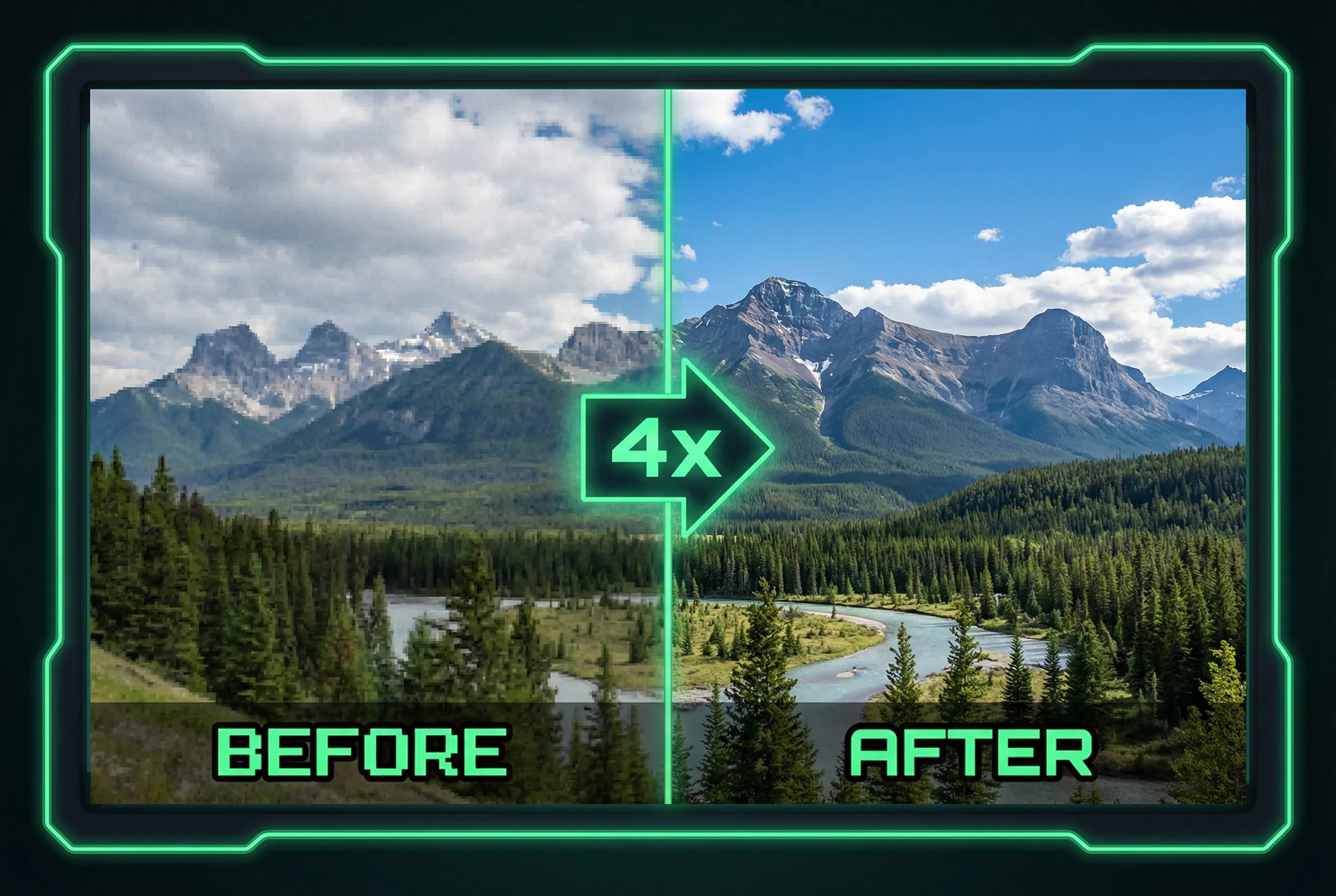
Use the AI image upscaler to compare one candidate against your original. Inspect the image where readers will actually see it, such as a product zoom or embedded article. If the striped region sparkles or changes color as you zoom, the enlargement is less suitable than a milder version. Retain the product's actual stripe spacing and color as the acceptance criteria.