ChatGPT
 Claude
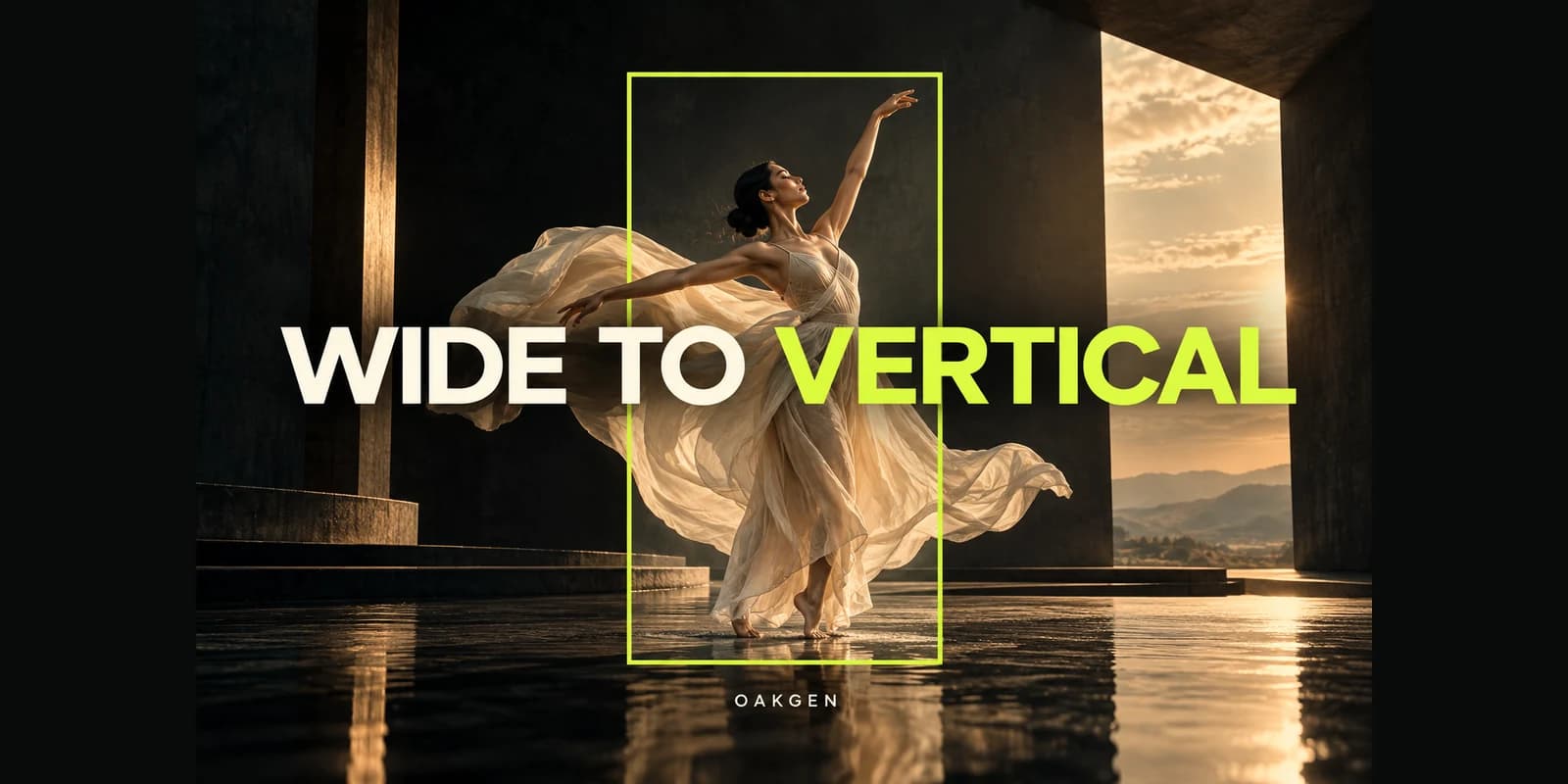
Turn a square image into a taller feed composition by choosing between an ordinary crop, padding, and an image extension. Use outpainting when the subject already fits and you need more believable scene area above or below it. Crop when the sides have spare space. Pad when an inserted panel or solid background suits the design.
Work backward from the frame
A 1,080 × 1,080 source needs another 270 pixels of height to fill a 1,080 × 1,350 artboard without scaling. Putting all of it below a centered subject may make the photograph appear to float. Distribute the extra area based on the weight of the existing composition. A portrait with a high eye line might need more space below the chin, but a product resting on a table may need additional headroom instead.
Use a scene-aware extra strip
For a still life showing stacked books, a table edge near the bottom is a stronger cue than an arbitrary color. Extend the visible surface in the same perspective and preserve its shadow. If the photo's bottom edge clips the entire tabletop, consider adding more at the top, where a plain wall is easier to continue. Avoid rebuilding the books simply to create a taller frame.
Keep one dependable copy of the original
Open the AI image extender if the scene needs a continuation. Place your output in the actual portrait artboard before delivery because an AI extension does not by itself guarantee precise export dimensions. Inspect the join at full size, then inspect the entire composition at feed size. Keep the candidate only if object positions and material edges stay convincing in those two views.