

 ChatGPT
 Claude
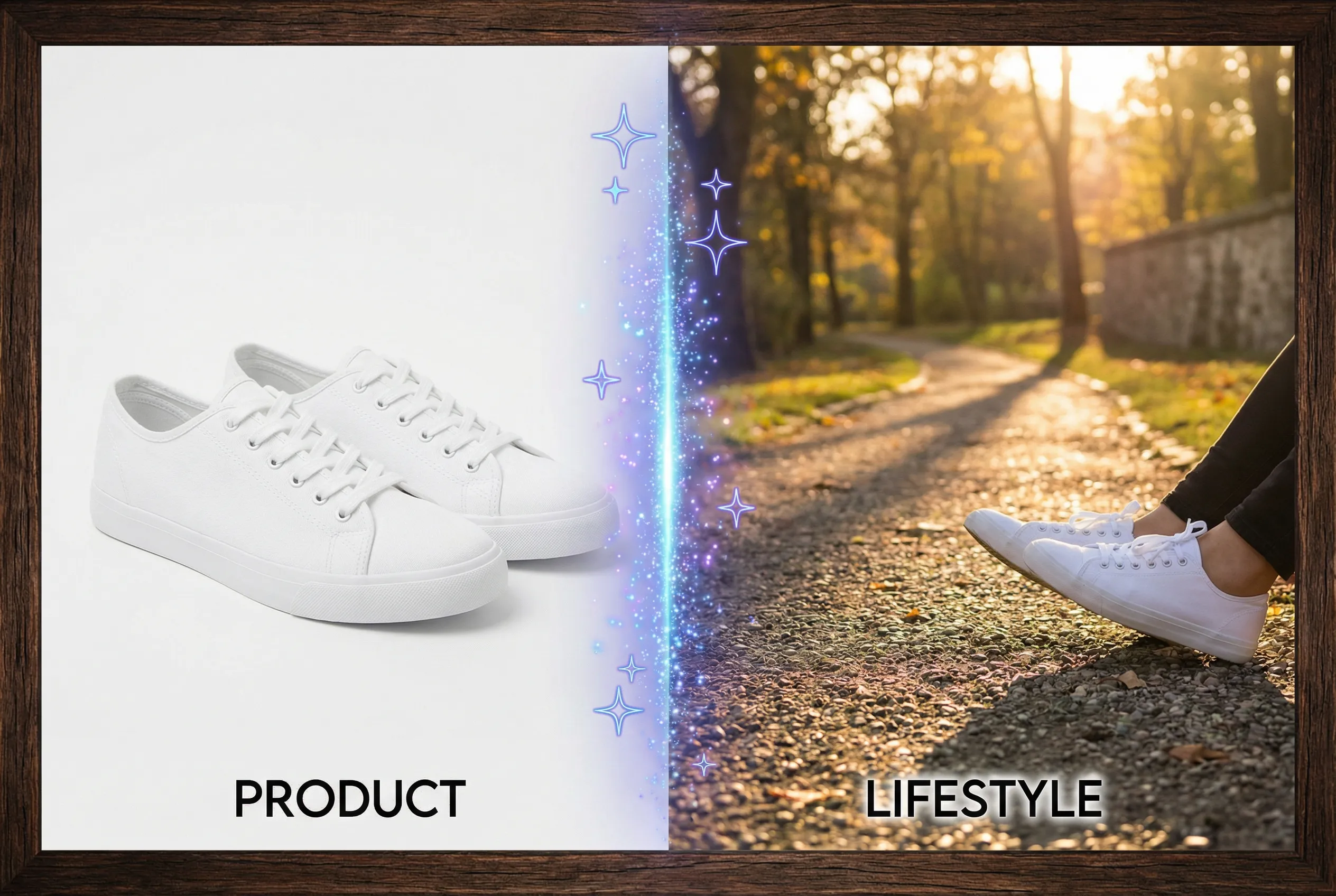
Grass often overlaps the lower edge of a shoe in an outdoor photo. A cutout can keep visible blades that look wrong on a studio background or invent parts of a sole that were never visible. Choose how much of the original sole is actually shown and decide whether a better source is available.
Check overlap at the frame's base
Consider a trail shoe with a few grass blades crossing the front of the sole. Save a high-resolution crop and identify where the true rubber edge remains visible. The toe can remain readable even if some tread is hidden. If the entire sole is buried in long grass, a clean reconstructed tread would be a guess. Use a clear side-view product photo for accurate tread details.
Evaluate the transition on a simple background
Try the first cutout on neutral gray. Inspect any green fragments near the shadow and compare the actual height of the outsole against the original. A mask that's tightened too far can shave the outer tread or round the toe. A few local edits around identifiable grass can work when the actual edge is visible. Preserve the shoe's proportions and avoid drawing missing features if this is a catalog image.
Deliver only the visible facts
The background remover can help separate a person or object from an outdoor backdrop. Compare the accepted clip at thumbnail and full size. If a shopper could mistake a missing lug or invented tread for a real design feature, use the original alongside a separate studio image or replace the original source altogether.

