ChatGPT
 Claude
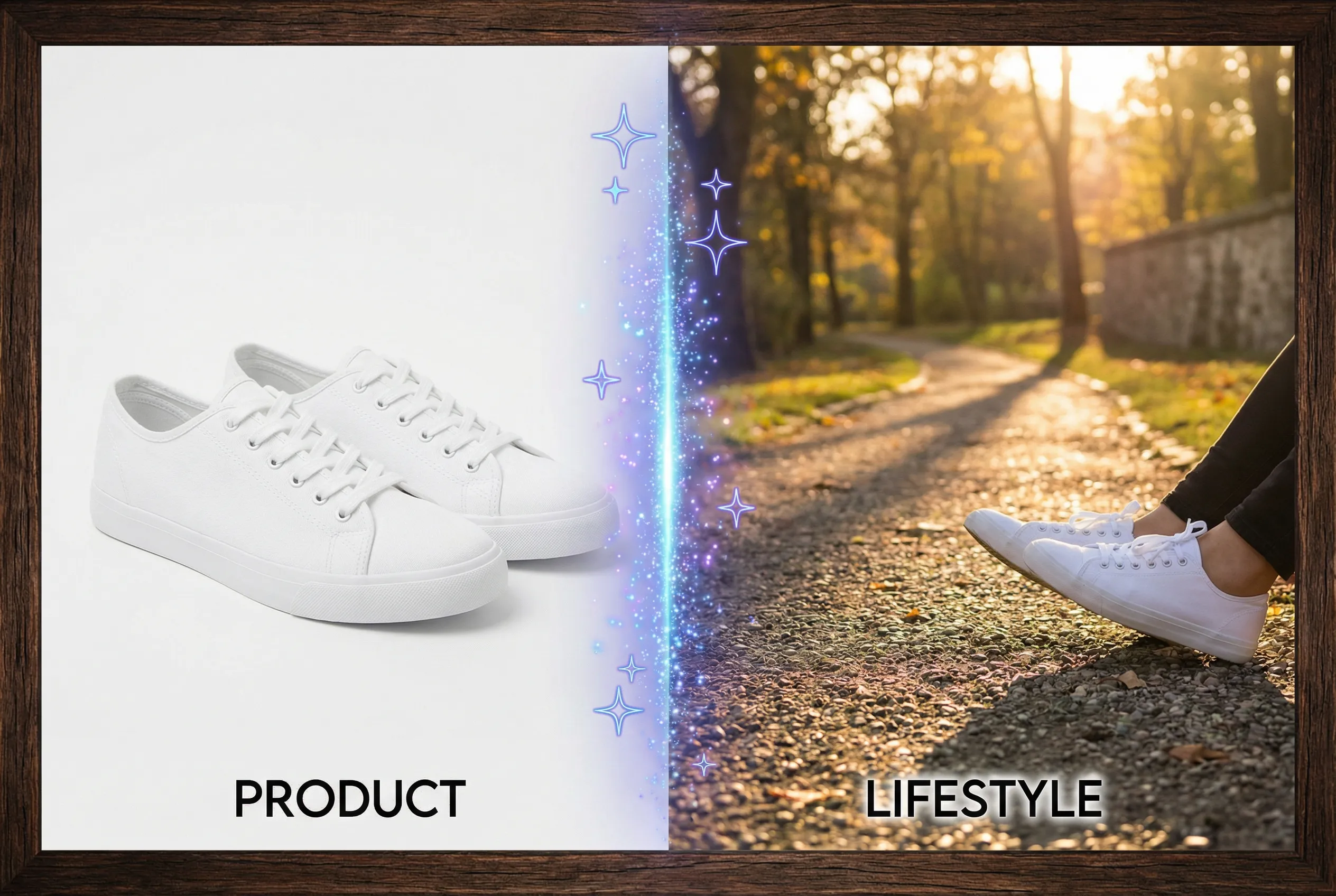
An attractive product photo doesn't automatically communicate size. When exact dimensions matter, use a known scale object or include the measurements as part of the layout. A visual comparison is easiest to interpret when both objects share the same distance from the camera and plane of focus.
Plan a dependable reference
For a compact candle, choose an ordinary ruler or a reference object with known dimensions and identify the part of the candle you are measuring. Place both on the same surface. A prop far behind the candle can make it look larger because perspective compresses the object farther away. Compare height and width separately if perspective is still obvious. For a styled hero, use a second technical photo to show exact size.
Check the generated changes
When creating a scene around a known product, keep the relative size and placement of the product and its reference grounded in the original photo. A generated ruler may have false markings or numbers, so add actual measurement graphics in an editor if you need a numerical claim. Avoid using approximate everyday props at mismatched focal distances to imply precise dimensions.
Publish complementary views
Try the product photography tool for the lifestyle image and use the true measurement as copy or a verified second view. A display-size proof should show the visual scale cue without crowding or obscuring the product. If a viewer could reasonably misjudge the size from the placement, change the prop or move the measurement next to a separate honest photograph.
Measure the finished object itself rather than deriving its size from the generated composition, and note which dimensions include handles or projections.