ChatGPT
 Claude
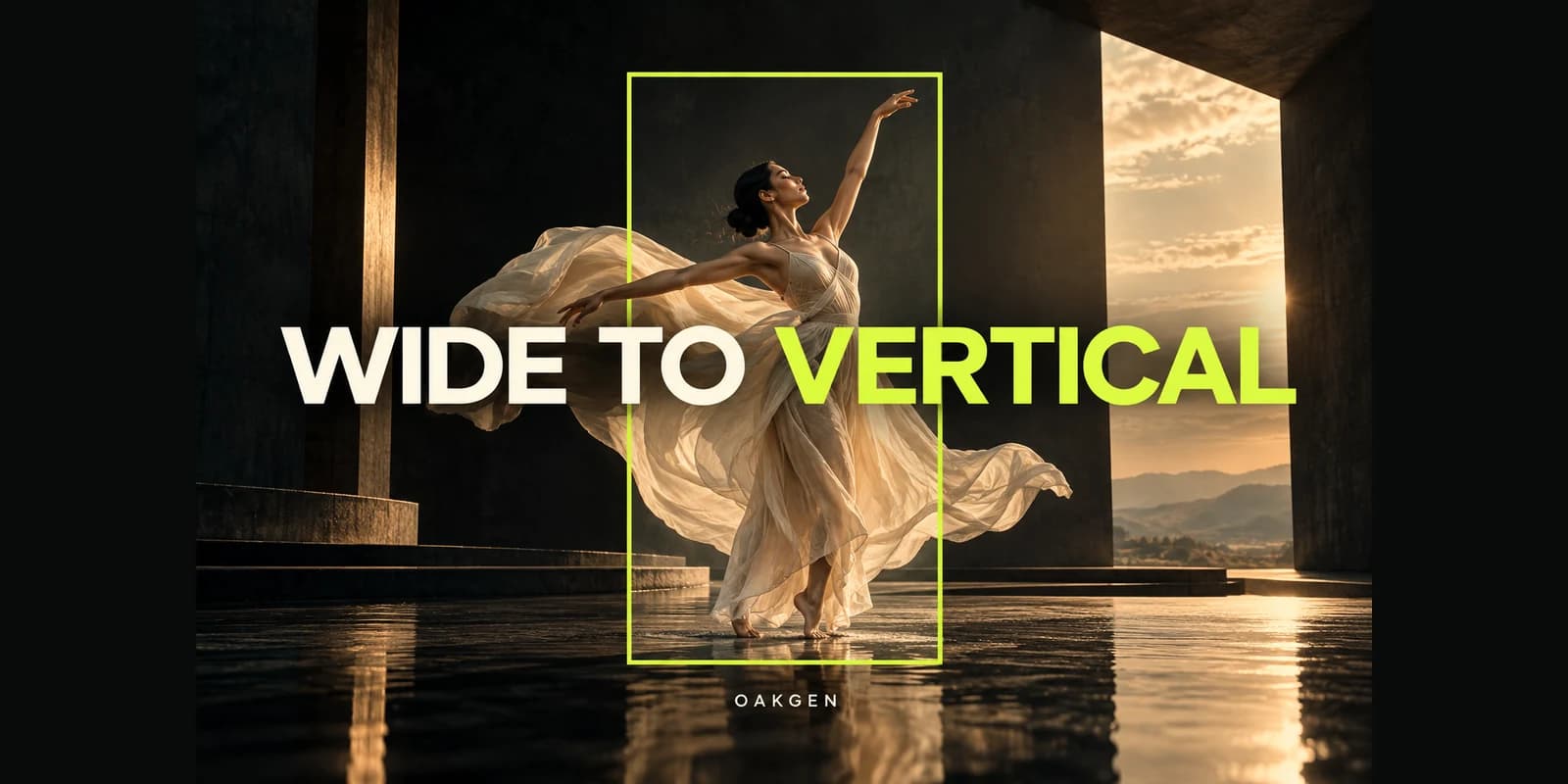
A panoramic banner needs much more horizontal space than an ordinary image. Stretching a photo to fit changes the proportions of people or products. Work out how much of the final canvas the original can cover, then decide which sides should gain new background because they already contain suitable edge detail.
Measure from a known dimension
A 1,200 × 800 source at the height of a 3,200 × 800 banner fills only 1,200 pixels of its width. The other 2,000 pixels would need to come from new artwork or the layout. Decide whether the brief really needs a completely filled photo. You may prefer to place the original photo toward one end and use a purposeful color panel at the other. This lets a large title stay legible and retains the actual crop.
Extend gradually from the easiest boundary
Imagine a shop interior with a wood pattern at the right and a cluttered counter at the left. A short extension on the right may continue the pattern; a long extension on both sides may produce repeating objects or implausible architecture. Compare each step against the source and keep your main subject locked at its original size. Use quiet colors or designed elements elsewhere on the banner.
Approve all visible parts of the frame
Try the AI image extender for where a visual continuation makes sense. The canvas must still be prepared to the exact requested dimensions afterwards. At the target display size, check that the subject's proportions match the original and that the added sides do not compete with the illustration or headline.