Compare models side by side
Run one prompt through up to six image models at once.

Everything Oakgen can make
Image, video, voice and music features, with the models behind each one.
AI agents
- ChatGPT
- Claude
 ChatGPT
 Claude
Workflows
- Home
- YouTube summaries
- AI model news
- Guide 7 of 8
Claude Fable 5.2 and new AI models: video summariesGuide 7 of 8
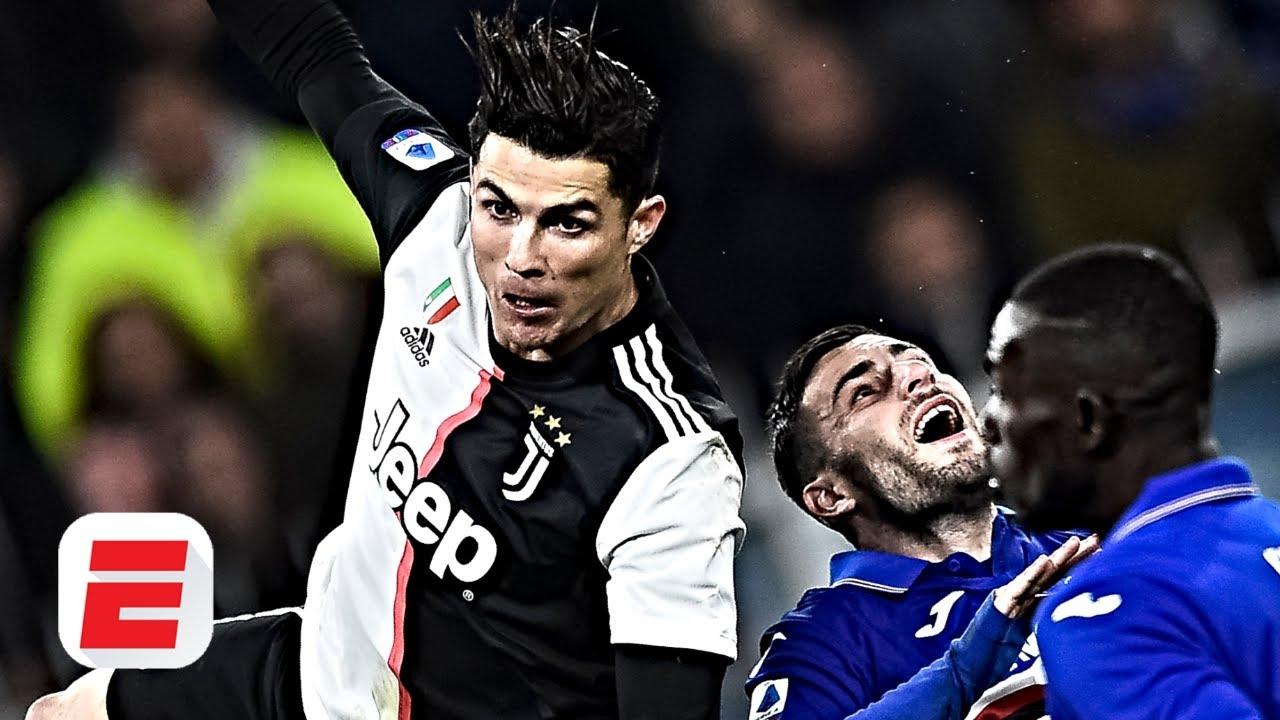
The science behind Ronaldo's header jump, summarized
Discover the sports science and biomechanics behind Cristiano Ronaldo's jumping technique, detailing four primary leap styles and the mindset that sets him apart.
In 30 seconds
- Cristiano Ronaldo adapts his jumping technique depending on whether he needs vertical elevation, horizontal reach, or balanced positioning.
- He optimizes the stretch-shortening cycle (SSC) through techniques like mini-hop drop jumps to generate rapid vertical power.
- A coordinated penultimate step and plant foot allow him to brake horizontal momentum and redirect that energy upward.
- A fearless psychological approach enables Ronaldo to commit fully to aerial duels without hesitation.
0:00Intro
Introduction: CR7's Aerial Dominance
0:00 to 0:28 in the video, under a minute
Throughout his career, Cristiano Ronaldo has scored over 100 headed goals. While much of the football world attributes this aerial dominance simply to natural athleticism, sports science reveals a deliberate variety of jumping techniques adapted to different in-game scenarios.
Maximizing Pure Height: The Vertical Leap
0:29 to 2:53 in the video, about 2 minutes
When Ronaldo needs to reach maximum elevation to challenge defenders, he relies on two distinct vertical jump techniques based on whether he has a running start or must launch from limited space.
Single-Leg Power Jump
In this technique, Ronaldo uses an elongated final stride, planting his takeoff leg well in front of his center of mass to bend his knee and flex his hip deeply. By stiffening the muscles and tendons right before contact and driving his opposite knee in a wide sweeping arc, he redirects forward momentum straight into the air.
His coordinated double-arm swing further magnifies the upward force, allowing him to reach extraordinary heights—such as touching the ball roughly 2.56 meters off the pitch against Sampdoria.
Two-Leg Drop Jump
In crowded penalty boxes where a long run-up is impossible, Ronaldo uses a mini-hop prior to takeoff. This mimics a traditional plyometric drop jump.
The brief hop engages the stretch-shortening cycle (SSC), allowing the ankle plantarflexors and knee extensors to stretch and rapidly recoil like springs. This mini-hop also resets his balance and rhythm for a sudden vertical launch.
Covering Ground: Single-Leg Speed Jump
2:54 to 3:42 in the video, under a minute
When attacking a delivery that requires traveling forward quickly through the air, Ronaldo switches to a horizontal leap known as a single-leg speed jump.
Unlike the power jump, he plants his foot directly beneath his center of mass with minimal knee flexion. This reduces ground contact time, preserves forward sprint velocity, and employs an aggressive torso lean with mid-air body rotation to steer the header on target.
Finding Stability: Balanced Two-Leg Jump
3:43 to 4:44 in the video, about 1 minute
When an incoming cross requires both elevation and positional stability against physical defenders, Ronaldo uses a classic right-left penultimate step sequence.
His penultimate step lowers his center of mass while maintaining approach speed. He then uses his final lead leg to punch into the turf, functioning as a brake that halts horizontal motion and redirects the accumulated force vertically.
Diving Headers: Coordinated Horizontal Thrust
4:45 to 5:18 in the video, under a minute
To meet lower deliveries across the box, Ronaldo utilizes a two-legged launch paired with a sharp forward torso lean to create horizontal thrust.
By flexing his hips and loading onto his forefeet, he propels his entire body horizontally through the air like a projectile, timing his impact perfectly to redirect pace onto the ball.
The Mental Edge: Complete Fearlessness
5:19 to 6:33 in the video, about 1 minute
Underlying all of Ronaldo's physical mechanics is a relentless mindset. Many players unconsciously hesitate when contesting aerial balls due to collision risks with goalkeepers or defenders.
Ronaldo commits entirely to the trajectory of the ball without flinching. His confidence in his body conditioning allows him to absorb awkward impacts and land safely, ensuring his biomechanical coordination is never compromised by fear.
Final Thoughts
Cristiano Ronaldo's aerial threat is not merely a product of height or strength, but a refined mastery of movement science. By analyzing the ball's path and selecting the ideal jumping mechanic—from quick-recoil drop jumps to sprinting horizontal leaps—he has elevated the header into a precise craft.
Do this yourself
From the real technique to the AI parody
The single-leg power jump in this breakdown is the one behind the famous 2.56 m header at Sampdoria. In November 2026 that leap became an AI meme template, with other people recast as the jumper and the defender. Oakgen's header template does the same with your own photos, one for the jumper and one for the defender. Label the result as AI when you post.
Questions
How high did Cristiano Ronaldo jump against Sampdoria?
According to the video, Ronaldo reached an estimated height of 2.56 meters (approximately 8.4 feet) off the ground when making contact with the ball.
Why does Ronaldo sometimes perform a mini-hop before jumping?
The mini-hop mimics a plyometric drop jump, activating the muscle stretch-shortening cycle to generate explosive vertical force without requiring a full running approach.
What is the penultimate step in Ronaldo's jump technique?
The penultimate step is the second-to-last step of his approach, which helps lower his center of mass and maintain momentum before the final plant foot converts that speed into vertical lift.
This is a summary of a public video by 3CB Performance. The method and the demo are theirs: watch the original. Oakgen wrote the summary.