ChatGPT
 Claude
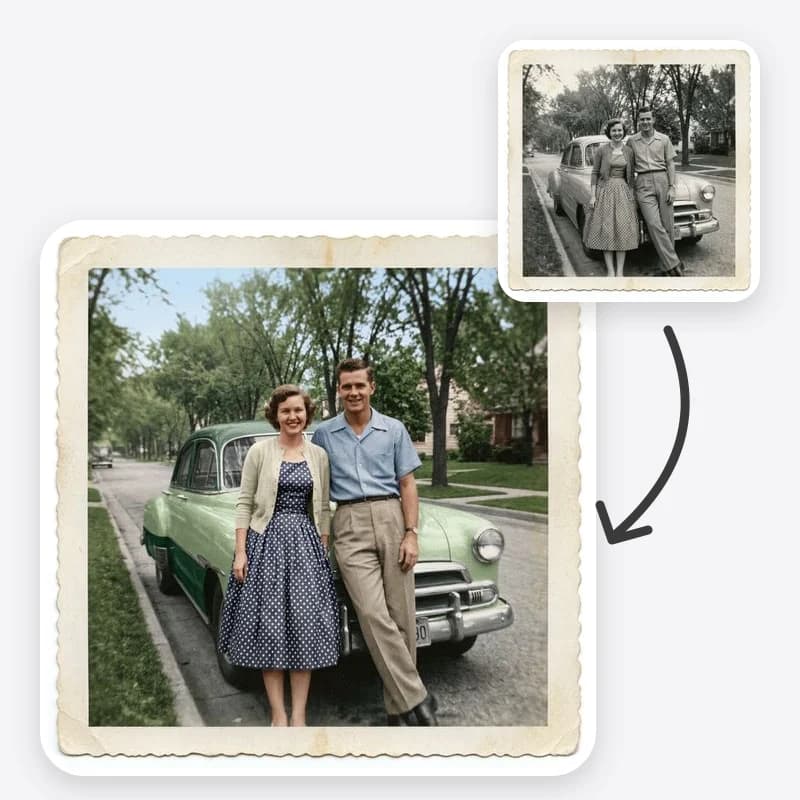
On an exhibition label, identify the original photograph first. Then credit whoever interpreted its colors and explain what evidence supports those choices. Show the monochrome source alongside the new image when wall space permits. A visitor should be able to tell which version entered the collection.
What should the label actually say?
Consider a fictional market photograph catalogued as “North Square, circa 1930, photographer unknown, NS-18.” The date is approximate, the stalls are visible, and the awning colour is undocumented. An exhibition caption could read:
North Square market, circa 1930. Photographer unknown. Collection NS-18. The image at left is the collection scan. The version at right was colorized for this exhibit. The awning and clothing colours are interpretations.
Use your archive’s approved object title, spelling and credit line. If a dated paint sample supports the colour of the shop door, name that evidence in a separate sentence. Keep the claim narrow. A sample from the door tells you little about a person’s coat.
How do you prepare the pair?
Make a working copy after recording its source identifier. If the scan also has tears, use the restoration and colorization guide to decide which changes belong in each derivative. Open Oakgen’s Photo Colorizer and select a treatment such as Natural / Realistic. Check the quoted credit cost before generating. Compare the output and source at the same crop. Enlarge signs, faces and the edges between adjacent garments. Reject a version that changes a shop name or merges two people, even if the street colours look plausible.
Give the designer two clearly named files, for example NS18-source and NS18-exhibition-color. Keep both at the same display scale for comparison. If the original is too small for the main wall, place an accessible reproduction in an adjacent panel and give its location in the label.
What happens when the picture leaves the gallery?
Make a second caption for the press pack and website. A cropped image can lose the wall label, so put “colorized interpretation” in the supplied credit line and filename. Send partners the approved wording with the reproduction. Retain reproduction permissions in the exhibition record.
For the next display, copy the fields for source, date, credit, transformation and evidence. Leave their values blank. Copying the name of a photographer or an approximate date from the previous picture is an easy cataloguing error. Have the collection manager sign off on the final label alongside the exact file going to print.
How we checked this
We checked the Photo Colorizer’s Natural / Realistic option on November 19, 2026. North Square and its sample catalogue record are fictional.
Make an interpretation for review
Work on a copy of a rights-cleared scan and keep the source record beside it.
Frequently asked questions
Which version belongs in the collection record?
Keep the original scan as its own record and link every exhibition derivative to it. Give the colour treatment its own date and description.
What if the archive cannot confirm a uniform colour?
Say the colour is inferred or leave the image monochrome. A convincing tint cannot establish the original colour.
How should a colorized image travel on social media?
Put a brief colourization credit on the image or immediately next to it. Keep the source identifier in the caption so visitors can find the original.