The What Stop Sign meme comes from a driver-and-officer misunderstanding in police bodycam footage. The underlying source is a video published by the Daytona Beach Police Department. The supplied Walter White version is a later AI remake, not Breaking Bad footage. If you want to recreate the exchange, Oakgen's Stop Sign tool uses one driver photo and a fixed reference scene.
The useful distinction is between the recorded conversation, a repost of that recording and a remake that changes the person on screen. A familiar soundtrack can connect all three without making their pictures equally authentic.
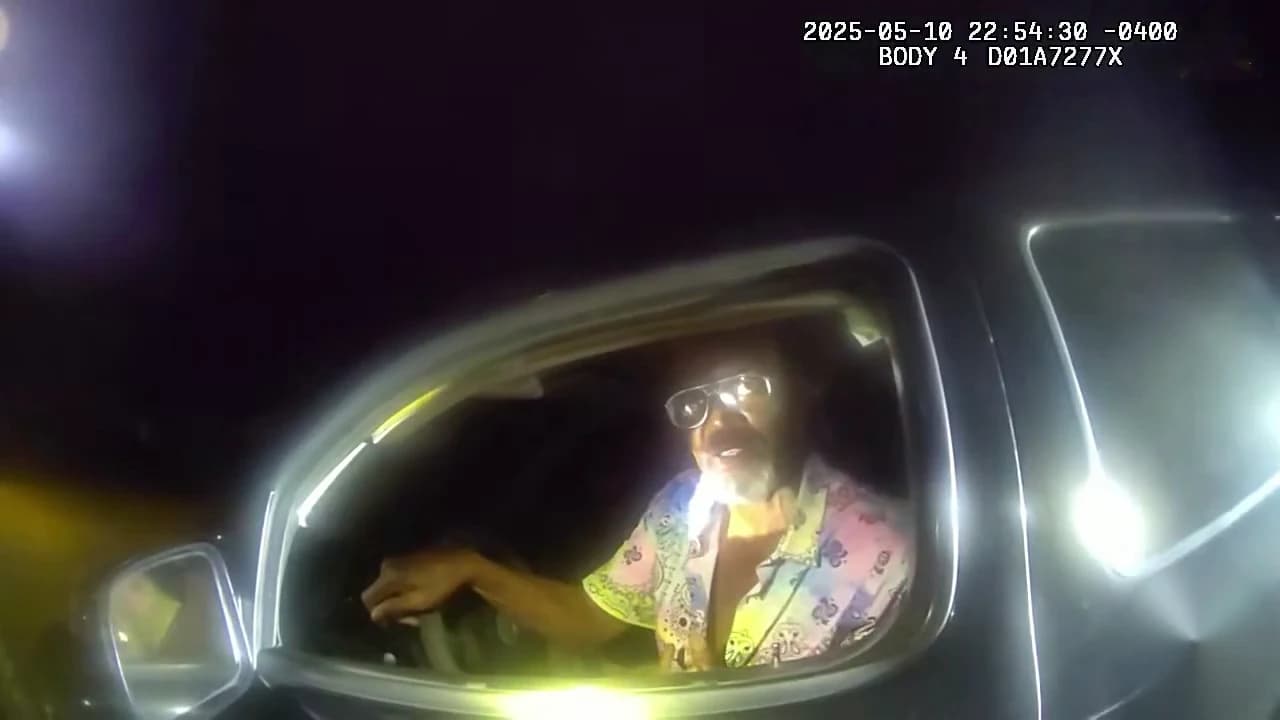
Reference cover: the credited bodycam excerpt used on Oakgen's public trend page, not a verified generated result. Sources and current product behavior reviewed October 18, 2026.
Which Stop Sign video are you looking at?
Start with the clip in front of you. The phrase alone cannot tell you whether its pictures come from the underlying recording or a later adaptation.
| Version | What the picture represents | How to describe it accurately |
|---|---|---|
| Department-published bodycam footage | The recorded driver-and-officer exchange | Underlying footage, with a link to the official publisher |
| A repost of that footage | The recording copied into another account's post, sometimes cropped | Repost of the bodycam clip, with the source distinguished from the reposting account |
| A filmed reenactment | Someone performing a version of the recognizable exchange | Reenactment, with the performer or uploader credited where known |
| The supplied Walter White Reel | An AI character adaptation of the exchange | AI remake by @ausar.ai, with its Reel linked |
| Oakgen's public Stop Sign preview | A credited excerpt selected from the police footage | Source reference for the template, rather than an Oakgen output demonstration |
This table is a way to label a particular clip, not a claim that every video using the phrase fits one verified history. An unfamiliar version still needs its own source check.
Where the underlying exchange comes from
The official department upload is the primary source linked for this template. Its visible scene is a nighttime conversation through a driver's window. One person is featured inside the vehicle while the officer speaks from outside the frame.
An ONLY in DADE repost is another route by which viewers may encounter the footage. Finding that repost explains a social link; it does not make the reposting account the recorder or official publisher. Keep those jobs separate when writing a caption or credit.
Here, “original video” means the underlying footage rather than the Walter White adaptation. It does not establish who first uploaded every excerpt, started every reenactment or coined each search phrase. Those are different questions, and a matching title is not evidence of an earliest upload.
You also do not need the driver's identity or speculation about the wider incident to understand this meme. This guide concerns the source of the short exchange and its later visual adaptations.
Why the same clip has several names
“What Stop Sign,” “Stop Sign meme” and “Stop Sign? What Stop Sign?” are useful ways to find the exchange. The longer phrase identifies the recognizable response; “original video” asks for its source; “Walter White” narrows the search to a particular character adaptation.
The Know Your Meme entry documents the catchphrase and related naming. It is useful context for the meme label. The official publisher remains the stronger source for the underlying footage itself.
| If your question is… | What to look for next |
|---|---|
| “What does this phrase refer to?” | The driver-and-officer exchange, with enough surrounding dialogue to follow the misunderstanding |
| “Where is the original video?” | The department's published footage and the relevant excerpt |
| “Is Walter White really in this?” | The credited AI remake and its relationship to the bodycam source |
| “Can I put my photo in it?” | The fixed Stop Sign generator and its visible driver role |
These names describe different reader tasks. They are not separate Oakgen products, and changing a search phrase does not imply a new scene or extra upload slot.
Read the reference before borrowing the joke
Use this source checklist when a friend sends you an unfamiliar remake or an editor asks you to identify a clip. It works without generating anything.
- Record the exact post URL. Save the creator account alongside it. A downloaded file's name or an added caption can be changed by whoever shares it next.
- Find the underlying recording separately. Follow a credited primary link where available. For this exchange, compare the received post with the department footage rather than stopping at a compilation.
- Compare image and sound independently. The same conversation can accompany a different face or a newly staged scene. Recognizing the voice does not establish who appears in the picture.
- Watch a continuous passage. Check the window, camera position, head turns and hand movement across several moments. A still frame hides edits and gives little information about how a remake follows its reference.
- Write down what remains uncertain. If you have only a short repost, call it a repost or an unidentified copy. Do not turn missing attribution into a confident claim about the earliest creator.
The point is a usable source note, not a verdict based on visual oddities. A stretched crop or compressed face can occur in copied footage too. Publisher evidence and a sequence comparison are more useful than declaring a clip AI-made because one frame looks strange.
After checking the scene, open the Stop Sign generator if your aim is a new character version. Knowing what the reference depicts helps you describe your own adaptation clearly.
Worked example: a Walter White Reel arrives in your group chat
Suppose the received link is the supplied @ausar.ai Walter White Reel. Someone asks whether it is a show scene and where the audio came from. You can answer those questions without pretending to have generated or tested a new video.
First, retain that Reel as the source for the particular adaptation. Then add the department upload as the source for the underlying exchange. Compare the nighttime window scene and the conversation's progression rather than expecting the replacement character to match the recorded driver's appearance.
A short editorial handoff could read:
Received clip: @ausar.ai's Walter White AI remake. Underlying reference: the Daytona Beach Police Department's published bodycam exchange. The remake borrows the conversation and scene structure; it is not Breaking Bad footage. Link the adaptation and underlying source separately.
That note answers three practical questions: which version was received, where the underlying material can be checked and what the remake should be called. It does not claim that the creator invented the meme or that a familiar actor performed the exchange.
If the next step is an Oakgen recreation, add one further note: the tool's preview is the source excerpt, while the new result will be an AI video based on the uploaded driver photo. Those two images serve different purposes. Neither the social remake nor the reference preview is a verified example of the result you will receive.
What Oakgen keeps fixed in this particular template
The Stop Sign public overview previews the credited 15-second landscape excerpt. Oakgen casts one visible driver; the officer stays offscreen. The scene, camera movement and source conversation are supplied by the template, while your photo guides the driver's appearance.
That makes it a specific recreation workflow rather than a way to investigate an incident or record a new conversation. Uploading a photo does not supply a new voice performance or rewrite the officer's replies. Source audio is retained, while the generated picture and mouth timing still need review.
For the actual creation steps, read how to do the Stop Sign AI meme. For choosing an input and evaluating a result, use the separate Stop Sign face-photo and dialogue guide.
If you are comparing conversation formats, DDG Bills has three visible cast roles; its recreation guide explains that different setup. Counting audible voices alone is a poor way to infer how many photos any template needs.
Label the version you actually share
A source-aware caption can be short. For a reference link, write “Excerpt from the department-published bodycam footage.” For the supplied character version, write “Walter White AI remake by @ausar.ai.” For your own result, write “My AI recreation of the Stop Sign exchange,” then credit the reference where useful.
Choose the description that matches the file, rather than copying the received post's claim of “original.” Keep your reference links with the project so you can answer a later question about where the scene came from.
Frequently asked questions
What is the What Stop Sign meme?
It is a driver-and-officer misunderstanding from police bodycam footage. The driver repeats the stop-sign phrase during the exchange, and later reposts, reenactments and AI remakes reuse that recognizable conversation.
Where can I find the underlying Stop Sign video?
The Daytona Beach Police Department published the underlying bodycam footage on its official Facebook account. Follow the department source linked in this guide rather than treating a repost or character remake as the original recording.
Is the Walter White Stop Sign video from Breaking Bad?
No. The supplied @ausar.ai Walter White Reel is an AI remake of the traffic-stop exchange. It is not a scene from Breaking Bad or evidence that the actor took part in the recorded stop.
Is Oakgen's Stop Sign preview a generated example?
No. The public preview and this article's cover use a credited excerpt of the department-published footage. A video created with your photo is a separate AI recreation, which you should review before sharing.
Does Stop Sign need a photo for the officer?
No. Oakgen's fixed Stop Sign scene uses one photo for the visible driver. The officer remains off camera in the reference exchange; hearing another voice does not create a second photo role.
Sources and further reading
- Daytona Beach Police Department's published video: primary source for the underlying exchange.
- ONLY in DADE's repost: a separate social post containing the bodycam footage.
- @ausar.ai's Walter White Reel: the supplied AI adaptation discussed here.
- Stop Sign? What Stop Sign? naming entry: context for the catchphrase and related meme terminology.
Make your own Stop Sign AI recreation in Oakgen when you are ready to move from identifying the reference to casting its driver.