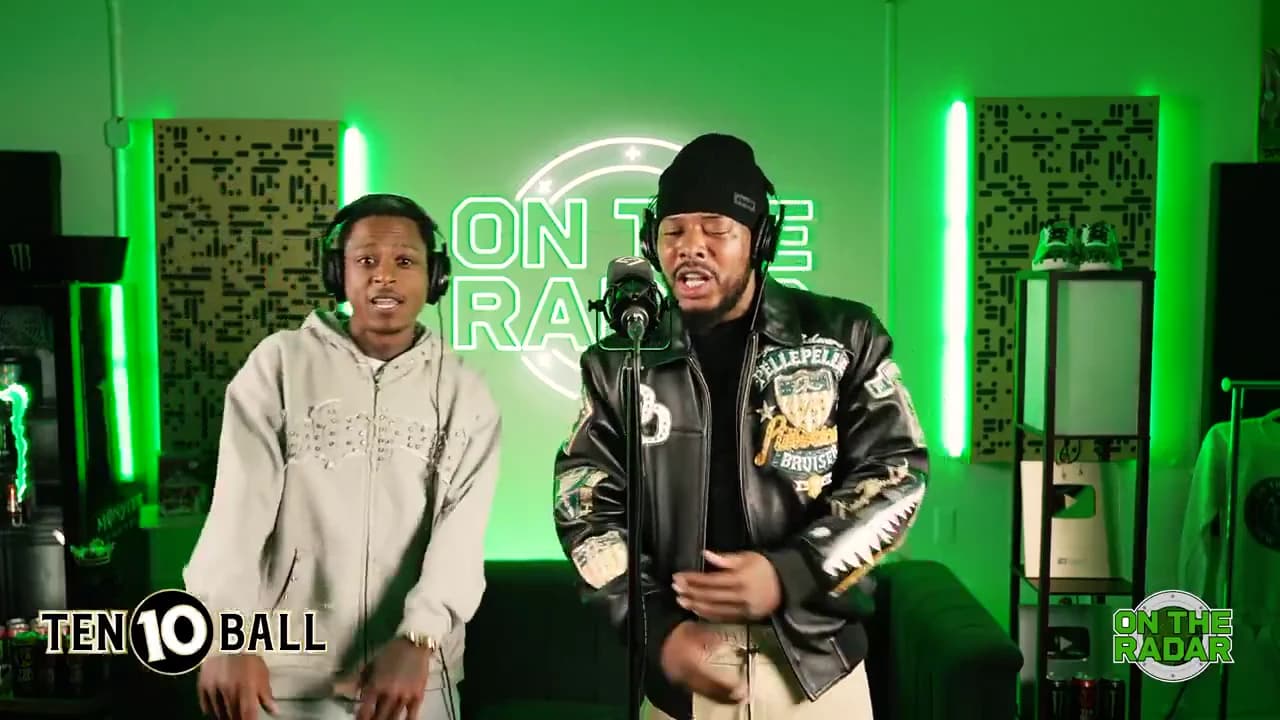
A useful On The Radar duo hook explains why two people are performing with that much confidence. “Us after finding a parking space” gives the booth scene a reason to exist. “Watch this amazing AI video” asks for attention without giving the viewer a situation to recognize.
Choose the premise before opening the On The Radar Duo template. The performance and audio are part of the template; your hook belongs in a caption or an edit made after downloading.
Build the sentence around a small victory
The original booth performance has a lead performer and an animated partner. Use that imbalance deliberately. One person believes they have achieved something enormous, and the other validates it.
Try these original examples with your own cast:
- Friends: “Us after choosing a restaurant in under an hour.”
- Colleagues: “The link finally opened without asking for access.”
- Siblings: “We put the shopping away before Mum came back.”
- A hobby group: “When the first take is actually usable.”
Each setup supplies a shared event. None depends on a custom lyric, an added prop or a changed movement. That makes the joke compatible with the fixed booth performance.
Let the partner carry the second thought
For the restaurant example, the lead celebrates the decision while the partner acts like the choice deserves a stadium announcement. A short post description can add “We picked the usual place.” You do not need to display that sentence over the moving faces.
If the partner represents a different opinion, establish it with a clear relationship. “Me explaining the plan / the friend who agreed without listening” works because the two roles have different information. Three unrelated labels make the performance feel like a list of captions.
Do not label a recognizable person's recreation as a genuine recording. The source preview shows the original artists. Your personalized output is a recreation, not an authentic booth appearance by its replacement cast.
Compare two openings fairly
Duplicate the finished edit and change only the opening text. Version A might say “Us choosing dinner.” Version B might say “Us after choosing dinner in under an hour.” The second makes the specific difficulty visible; whether it works better for your audience still needs observation.
Show the drafts to someone who has not heard the explanation. Ask what happened and why the second person is excited. That answer is more useful than asking which version feels “more viral.” If they describe two different stories, simplify the labels before testing public posts.
For a public comparison, record the actual results available to you, the posting dates and any differences in distribution. One pair of posts cannot establish that a caption caused a change in reach. Likes, views and comments answer different questions and should stay separate.
Keep the performance visible
Put the text in a quiet part of the layout. In a fitted portrait edit, the area above the booth can hold the setup without covering either face. If you use a tight crop, watch for the hype partner entering the text area. The vertical booth edit gives a concrete layout test.
Finish with one understandable premise, one identifiable duo and a caption that can be read at normal speed. For casting, use the lead-and-hype-partner project. For a wider testing routine, see two versions from one trend output.
Explore the video trend creative playbook for related casting, editing and sharing guides.