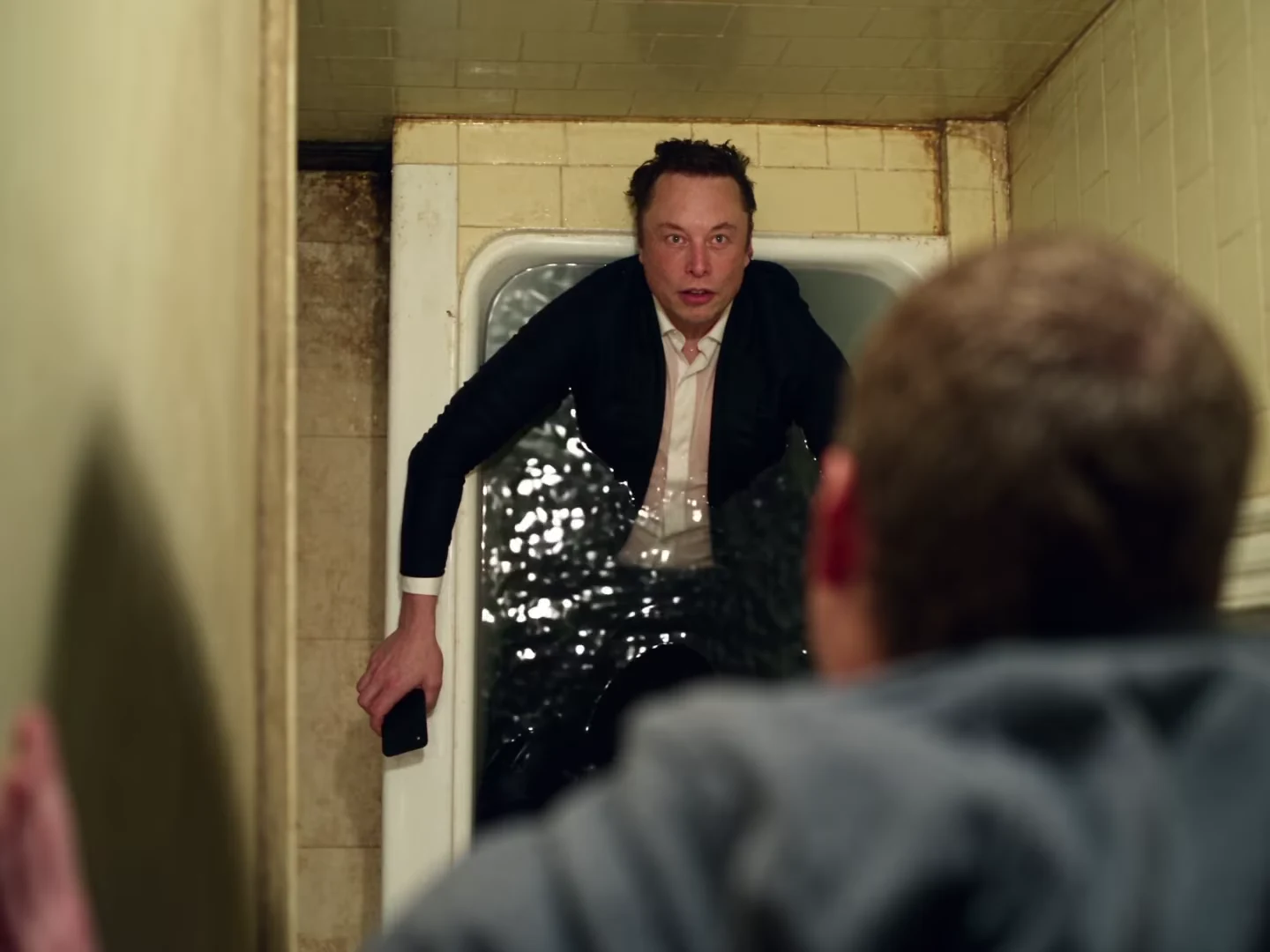
Give a Bathroom Fight clip a tiny fictional cause and let the oversized action supply the joke. Two friends disagreeing over the last slice is easier to understand than a complicated rivalry that needs three introductory cards. The scene already has escalation; your edit needs to explain the relationship.
Start with the Bathroom Fight preview. The template fixes the action and shot order. The captions and optional cuts below belong in a separate editor after downloading your result.
Pick a disagreement the audience recognizes
Choose an ordinary issue without implying a real violent incident. “When both of us called the front seat” creates a fictional setup. A caption accusing a real person of assault would give the same pictures a very different meaning.
Three original premises fit the two-person structure:
- The person who took the last slice versus the person saving it for later.
- Two siblings who both insist they chose the film first.
- Two colleagues debating whether the shared document should be final-final.
For the film-night example, assign each person one side of the disagreement. Do not add a third unseen character who supposedly caused everything. The two recognizable opponents already give the viewer enough information to hold.
Write a three-line edit before touching the timeline
| Story beat | Example text | Where it belongs |
|---|---|---|
| Setup | “Choosing the film was going well.” | Before or over the opening |
| Escalation | “Then someone suggested a sequel.” | After the opponent is established |
| Payoff | “We watched nothing.” | A brief ending card or the description |
The last line does not require the template to display a television. It resolves the premise in words. If the final action is visually busy, put the payoff in the post description rather than covering the bathtub struggle.
The supplied Grok vs Meta recreation shows the intended source action. Its cast and caption are an adaptation, not evidence that this is a real encounter or an Oakgen-generated demo.
Keep the room readable
The sequence includes changing orientation and close-ups. Leave the first spatial transition long enough to be understood before placing another block of text on screen. If a viewer is reading a sentence, they may miss the information that explains the next shot.
For a shorter version, first remove unnecessary text rather than immediately deleting action. If you do trim, keep a clear introduction of both people and an understandable path to the ending. Reordering close-ups can accidentally make the wrong person appear to cause a movement.
Keep audio and video linked when cutting. Listen across every join; an interrupted phrase or abrupt background change may draw more attention than the intended joke. Do not describe the editor's crop or soundtrack controls as options inside the trend generator.
Check the joke and the output separately
First review identity, gravity and contact. A funny premise does not make a broken result usable. Then show the edit to someone who has not heard the explanation and ask what the disagreement was.
If the answer is unclear, simplify the first line. If they understand the disagreement but cannot identify the opponents, revisit the two-character casting plan. If the whole concept feels too intense for your audience, choose a gentler duo performance from the creative playbook.