Make the Good Food, Good Mood AI trend about a recognizable food habit: the friend who arrives for dessert, the guest who claims to be full, or your own very serious relationship with the snack table. The bite is already the visual payoff. Your job is to give it a reason.
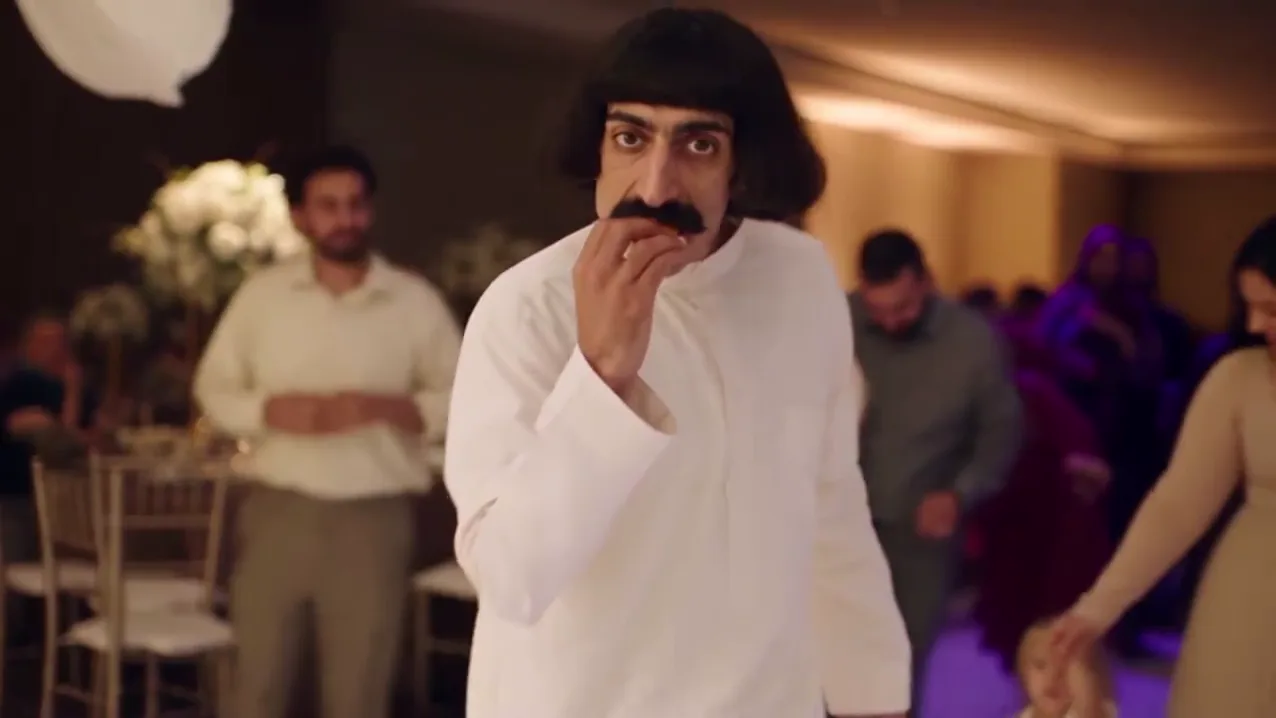
The Good Food, Good Mood template uses one photo for a dancer in a fixed wedding-party sequence. The short scene includes a pastry bite and the reference audio. It is a character comedy format, not a tool for replacing the food with any dish you name.
Choose a joke that the bite can answer
Consider two setups. “Food is amazing” gives viewers little to interpret. “Me after saying I only came to congratulate the couple” explains why this particular guest is dancing toward a pastry.
A personal account can use a real but harmless habit. A restaurant account should be more careful: the generated pastry is not evidence of what the kitchen sells. Keep any actual menu claim in separate, genuine product material. The trend can express enthusiasm without pretending to be a customer testimonial.
Write the snack-table character
For a worked version, cast yourself as “the guest with priorities.” Use an existing photo with a clear face. Preview the template before choosing a photo so you understand the role and the fixed scene.
Build the surrounding copy like this:
- Setup: “I came to support the happy couple.”
- Visual answer: the dance and the bite.
- Post caption: “Also supporting the snack table. AI edit.”
An alternative is “When they say there are leftovers.” That changes the situation without needing a new action. Pick the line that sounds like your audience; a very specific family joke may need a little more context than a public post can supply.
Let the food remain visible
Add titles after downloading, in a separate editor. Keep text away from the mouth and the pastry. Watch the bite at normal speed before deciding where a caption can sit; a placement that looks clear on the first frame may cover the important moment later.
Do not rush straight to the bite if the approach is what establishes the character's enthusiasm. Conversely, avoid a long introduction that repeats the information the dance already provides. Read your proposed setup aloud while playing the opening. If it cannot be finished comfortably, shorten the words.
Check contact before sharing
Inspect the pastry as it approaches the mouth, the hand around it, and the face immediately afterward. Look for disappearing food, unstable fingers or an expression that makes the intended deadpan reaction difficult to read. These are review points, not guaranteed problems or a promise that a different photo will fix them.
Then evaluate the meaning. Does the post invite people to recognize themselves, or does it mock a real guest without their agreement? A self-directed joke is easier to control. Keep the scene clearly framed as an AI edit and choose a caption that fits the friendly tone of the occasion.
Questions before you publish
Can I change the pastry into my own product?
The fixed template does not expose a food-replacement control. Use genuine product footage separately if the post needs to show a specific item.
Where should I add the setup text?
Add it in a separate editor after downloading, away from the face, hand and bite. Check its placement throughout the action.
Continue with AI Trend Hands and Props, Choose an AI Video Trend by Cast Size, Scene and Story, Choose Your Best AI Trend Photo with a Side-by-Side Test, AI Video Trend Playbook.