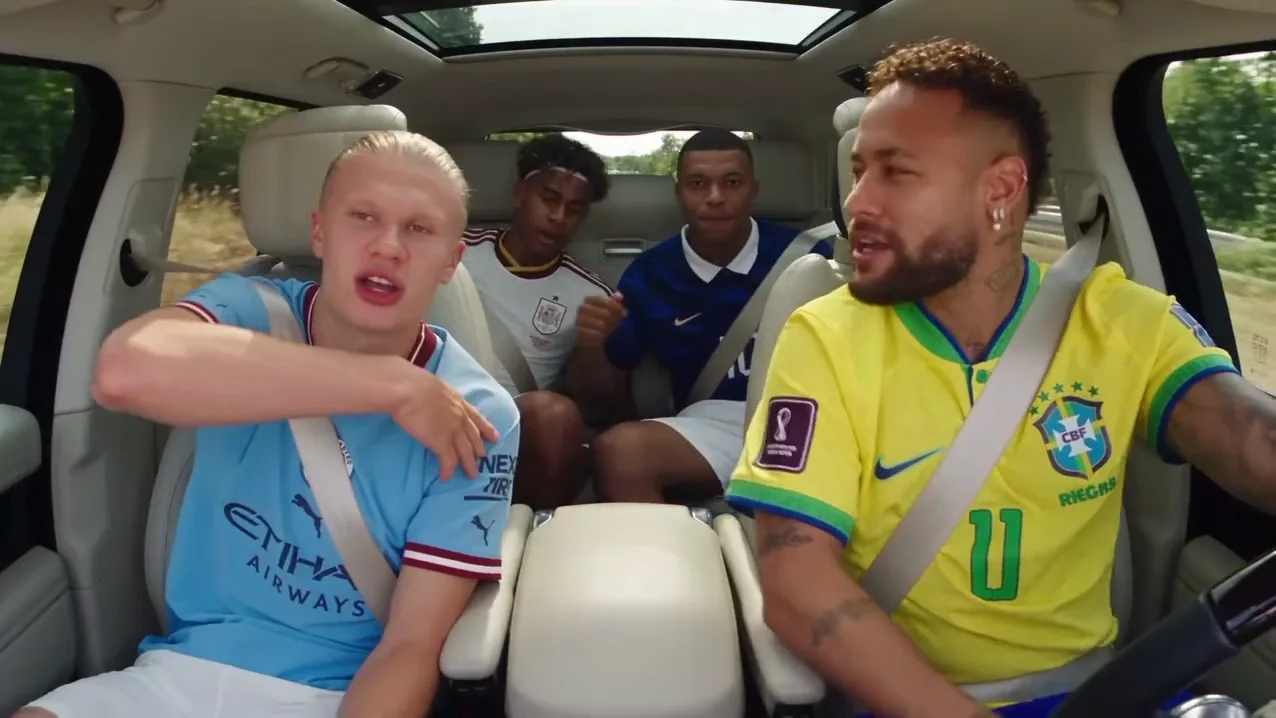
A four-person Car Rap AI video works best when the audience understands why these people belong together. Build the joke around the group's shared situation, then use the seats to establish personalities. You do not need four separate punchlines competing with the song.
The Car Rap template requires four photos: front passenger, driver, back left and back right. It recreates a fixed sequence around those roles with reference audio. The seats are casting decisions, not controls for writing a new conversation or changing the route.
Start with a shared situation
Imagine four friends who spent an hour choosing a quiet evening and then discovered everyone's favorite track. The headline could be “The group that promised an early night.” Each person contributes to the same contradiction.
Compare that with four unrelated labels: “the funny one,” “the smart one,” “the late one,” and “the hungry one.” Those descriptions may be accurate, but they do not yet explain the scene. Add a situation first; use personality only where it strengthens that situation.
Make a seat map before collecting photos
Write the four role labels exactly as the tool displays them. Attach one person's name to each, then collect a separate clear image for every role. This avoids trying to identify four people from a single group photograph.
For the early-night premise, you might cast the friend who suggested going home as the front passenger and the person who chose the playlist as the driver. These labels are part of your joke; they do not change the reference characters' actions. The back-seat friends complete the group rather than becoming background extras without photos.
Send the proposed casting to the people involved before making the post. A photo approval is not necessarily agreement to every joke or public caption.
Keep the overlay simple
After generating, use a separate editor to add one opening line. If individual labels are essential, introduce them briefly when faces are easy to see, rather than leaving four names over the entire performance.
Try this complete treatment:
- Opening: “We agreed on one song before heading home.”
- Main section: the Car Rap performance, without additional commentary.
- Description: “The playlist had other plans. AI edit with the group.”
The output is landscape. Preserve the four-seat composition when preparing a vertical post. Putting the landscape frame on a vertical canvas can be more useful than enlarging it until the rear passengers disappear.
Review the group as a group
Check each face at the beginning, at any cut, and near the end. Look for two identities blending, one person appearing in the wrong seat, or a rear passenger becoming difficult to recognize. Then watch normally to see whether all four still feel present in the story.
A successful edit should not require viewers to pause and read a seating chart. If it does, remove labels and return to the shared premise. This template's fixed audio also means you should not promise that the friends are performing their own recorded voices. Describe the result as an AI group performance and let the recognizable situation carry it.
Questions before you publish
Can I leave the back seats empty?
This template requires a photo for all four roles because the scene is recreated around the full cast.
Can I give each person a different line to sing?
No. The performance and source audio are fixed. Individual dialogue is not a control in the Car Rap template.
Continue with Choose an AI Video Trend by Cast Size, Scene and Story, Solo, Duo or Squad? Choose an AI Rap Trend for Your Cast, Plan an AI Trend Retry Budget Before You Generate Variations, AI Video Trend Playbook.