If you have scrolled past a man in a leather jacket raising a silver cup to the camera under a ceiling full of chandeliers, and the face did not quite belong to the body, you have seen the Burning Bridges AI trend. It takes one party shot from Drake's official music video and recasts the lead. This article explains where each piece comes from: the song, the scene, the phrase everyone attaches to it, and how the AI versions are made. If you already know and just want to make yours, go to the step-by-step guide.
Lead the chandelier party
Add one photo, review your credit quote and make the 15-second Burning Bridges video with the room, the crowd and the song.
What the trend is
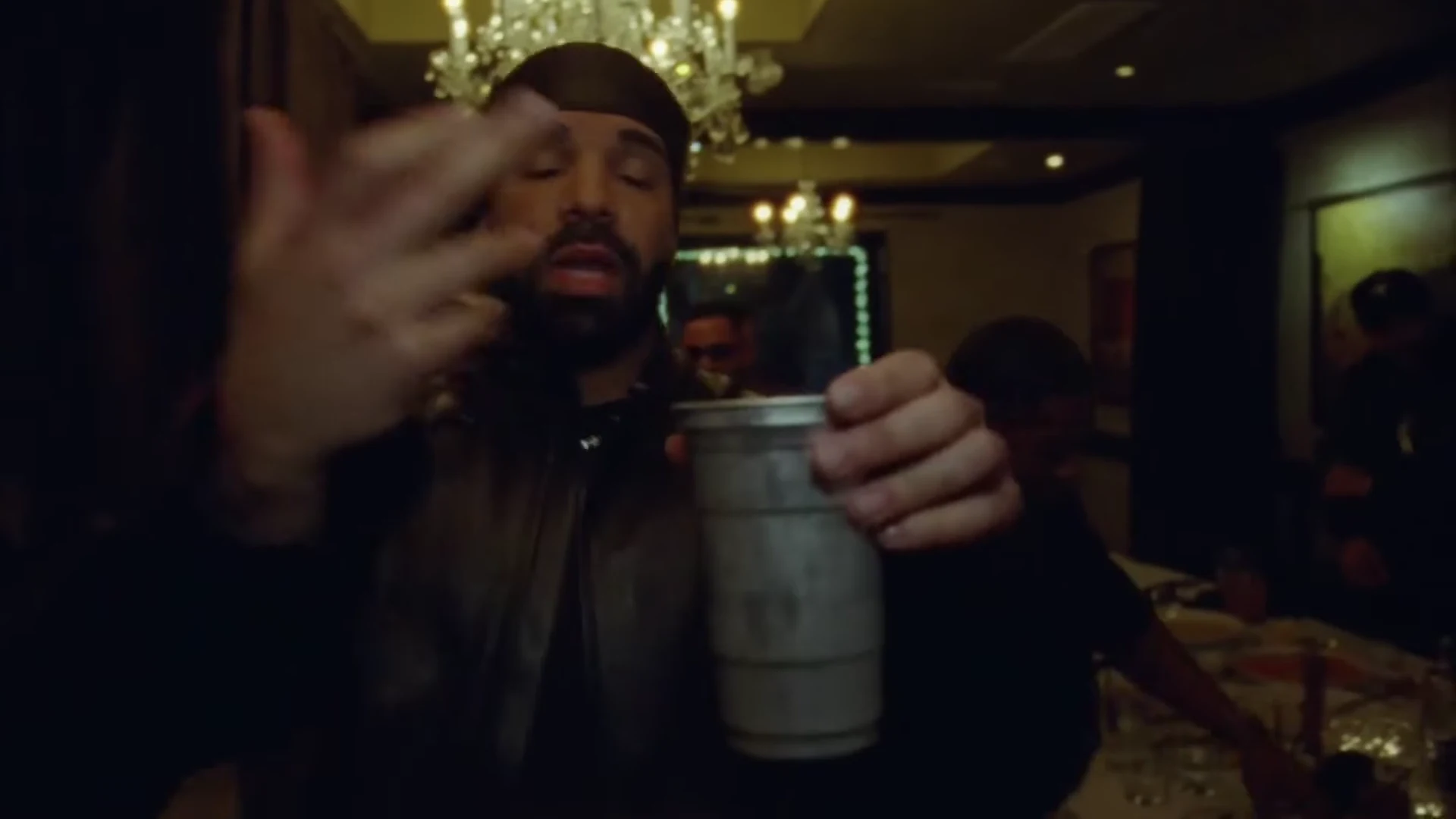
One continuous handheld shot, about 15 seconds long, in landscape. A crowded, dim room lit warm by crystal chandeliers. At the front, close enough to the camera to fill the frame, a man in a black leather jacket and silver chain holds a silver metal cup. He leans into the lens, flicks a hand at it, lifts the cup up to it, points, touches his chain, turns to the men behind him and turns back to point straight into the camera. The crowd of men in caps and jackets behind him laughs, cheers and reaches in.
In the original, that man is Drake. In the trend, he is someone else: a friend, a pet, a film character. AI video tools and TikTok trend lists call it the Drake Burning Bridges AI trend, and describe it the same way: you take the centre spot in a chandelier-lit party.
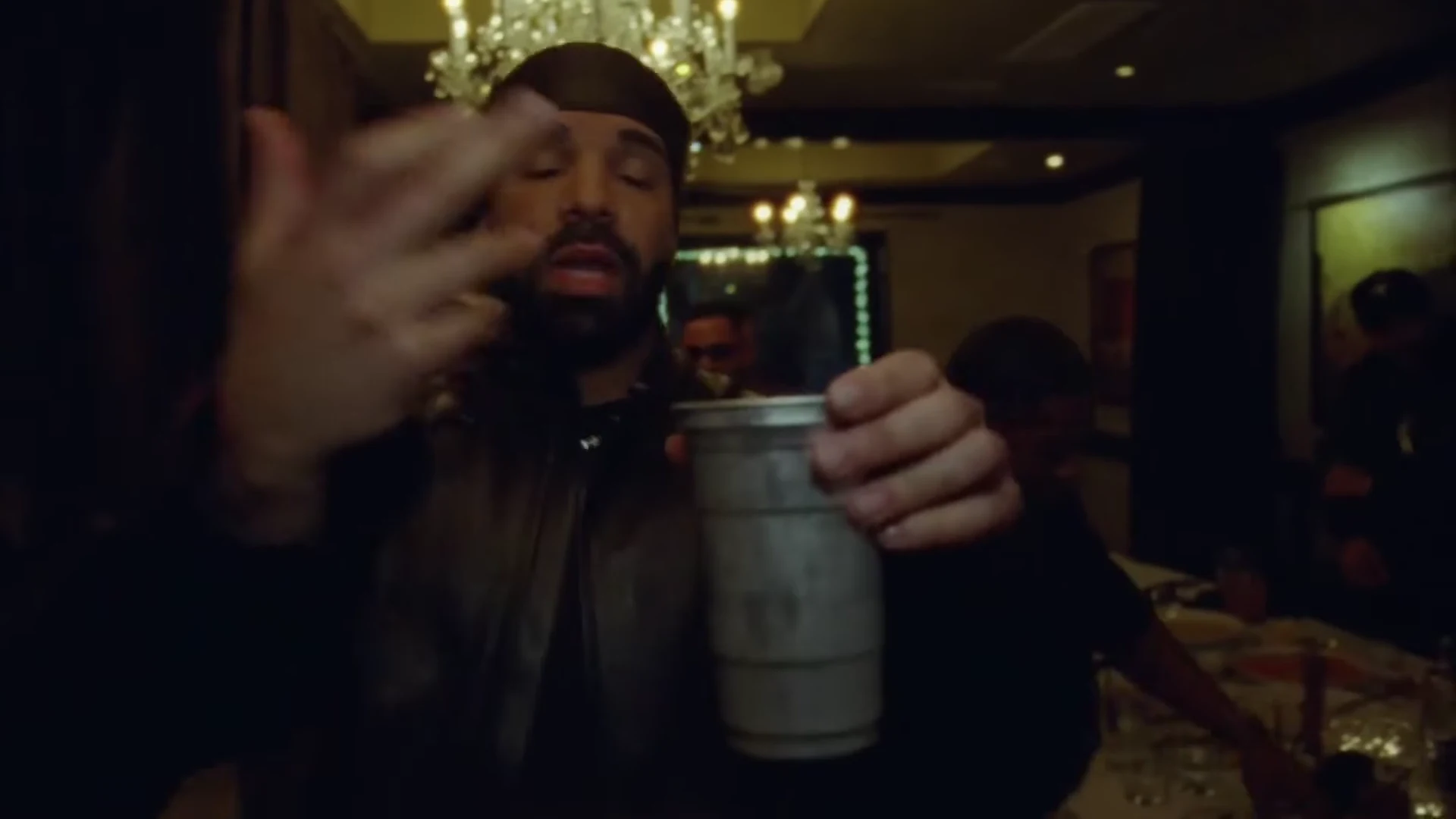
The cup comes up to the camera at about two seconds. This is an excerpt of the official Burning Bridges music video, used as the reference; it is not an Oakgen output.
The song behind it
"Burning Bridges" is a Drake song from his 2026 album ICEMAN, released on 15 May 2026 on OVO Sound and Republic Records, according to its Wikipedia entry. It is track 8 of 18. Wikipedia's chart table lists it at No. 13 on both the Billboard Hot 100 and the Canadian Hot 100. Wikipedia and music press describe it as aimed at another rapper, A$AP Rocky.
Two practical points matter for anyone making the trend. First, the track is explicit, and the stretch the trend uses has strong language in it; we found no clean edit. Second, the trend is built on the real recording, so whatever you post carries a commercial song. The Burning Bridges song page covers both in more detail, including what to do when an app will not play it.
The scene in the music video
The shot comes from the official video. Songfacts describes the video as Drake hosting a private dinner surrounded by friends; the stretch the trend uses is all one room, packed with men, low and warm, chandeliers visible at the top of nearly every frame. Drake wears a black durag, which matters for recasts: anyone taking the role usually loses it, so their own hair shows.
What makes the shot work as a template is how close the camera is. For most of the 15 seconds the lead is an arm's length from the lens, and every gesture is aimed at it. That is also why it is hard: a face that close, in a room that dark, has nowhere to hide.
How a music video became an AI trend
The song came out in May 2026. By October 2026 the AI recasts were documented: recast posts were circulating on X, with versions built on TV, film and sports characters. We did not confirm when the official video itself was released.
AI video tools and TikTok trend lists picked the format up under the same few names: the Drake Burning Bridges AI trend, Burning Bridges AI and the chandelier party. That shared wording is why Oakgen calls the trend Burning Bridges. We could not find the first recast, and the tool pages' claims about how viral it is are their own. Where the party clip comes from sets out the full source trail and what we could not confirm.
"Where she at?" and the gesture
The phrase most people attach to the trend is "Where she at?". It is a line from the song. The Source reported on 19 May 2026 that the song's bars "quickly spread across socials" after the album's release and listed "Where she at?" among them; coverage read it as aimed at A$AP Rocky and Rihanna.
Several AI video tools turned the line into a recast gesture: a flat hand held above the eyes, as if searching the room. It is worth knowing that this is the tools' idea rather than a fixed move in the stretch of video the trend copies. We went through Oakgen's 15-second reference frame by frame: it does not contain a full hand-over-the-eyes gesture. It ends with the lead raising an open hand up beside his face. The "Where she at?" page explains the line, the gesture and what your video will and will not do.
Is it really Drake?
In the reference, yes: it is the official video, with the real Drake. In the trend videos, no. They are AI recasts, and the person you see at the front is whoever was swapped in. That is the whole joke.
It also sets the rules. Drake has no connection with these videos, with the AI tool pages or with Oakgen, and nothing in a recast should suggest he does. The trend works with your own face or a friend's who said yes. It is not a way to put a celebrity, a public figure or a stranger into a party they were never at.
How Oakgen's version works
Oakgen's Burning Bridges template follows a 15-second excerpt of the official video, with a small logo removed from the corner. It makes one role from one photo:
- One photo, required. The lead in the reference is a real, famous person, so his face is never kept. Your face and hair come from your photo. Casting yourself as the party lead explains what the photo controls.
- The look stays. The black leather jacket, silver chain and silver cup are costume and props. The durag goes, so your hair shows.
- The crowd stays. Everyone behind you remains background people.
- The song stays. The video keeps the original song audio from those 15 seconds. You perform to it toward the camera; it is not a precise lip-sync.
- The shape stays. Landscape 16:9, 15 seconds, at 480p, 720p or 1080p. The studio shows the credit quote before anything starts.
Before you post
The clip is landscape and most people post on vertical apps, so plan the crop: you sit mostly in the middle, with the chandeliers in the top corners and the crowd at the sides. Say it is AI-made in the caption, only use a face that agreed to be in it, and check the explicit song fits your account. Cropping and captioning a chandelier party video has the frame-by-frame position of the lead and caption ideas.
Ready to make it? How to make the Burning Bridges AI trend from one photo goes from choosing the photo to checking the finished clip. Burning Bridges was added at the same time as two other trends, Closed on Sunday and Champagne Shoot, and if you want another Drake song in a one-photo template, see Toosie Slide.
Frequently asked questions
What is the Drake Burning Bridges AI trend?
AI recasts of one party shot from Drake's official "Burning Bridges" music video: a man in a leather jacket and silver chain, holding a silver cup, performing into a handheld camera under crystal chandeliers while a crowd cheers. People swap the lead for someone else.
What song is it?
"Burning Bridges" by Drake, from his 2026 album ICEMAN, released on 15 May 2026. Wikipedia's chart table lists it at No. 13 on the Billboard Hot 100.
What does "Where she at?" mean in the trend?
It is a line from the song that spread on social media after the album came out. Some AI video sites turned it into a gesture, a flat hand held above the eyes as if searching the room. Oakgen's 15-second template does not contain a full version of that gesture.
Is the clip in the trend really Drake?
The reference shot is the real Drake in his official video. The trend videos are AI recasts with someone else's face. Drake has no connection with them or with Oakgen.
Does the song have strong language?
Yes. The track is explicit, and the 15 seconds the template uses contain strong language. We found no clean edit.
Can I make my own?
Yes. Oakgen's Burning Bridges template takes one photo of you, or of someone who agreed, and makes a 15-second landscape video with the original song audio. Do not upload a celebrity or anyone who has not said yes.