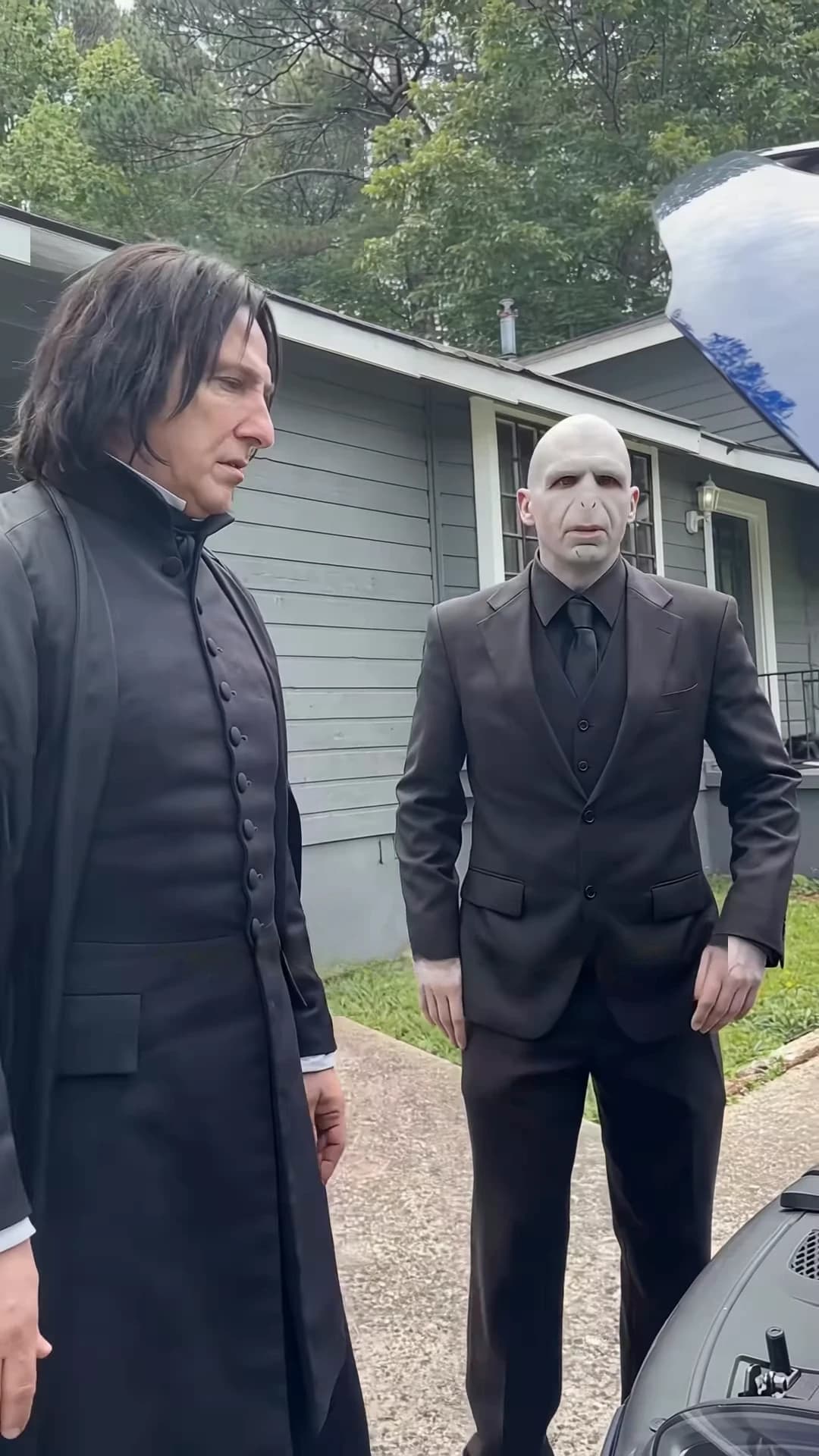
This article is about how the 15-second car-hood take moves: its rhythm, its pauses and what the two people do with their bodies. It is not about what the joke means. That is on the explainer page. In short, the key line is car slang for the transmission, and the humour is a confident diagnosis answered by a long excuse and a flat reaction. What follows is about timing and posture, and how to pick two photos that suit them. Timings come from machine transcripts and are approximate.
Put your own pair in the driveway
Add a photo for the coat character, the suit character or both, then check the quote and the result.
One take, so the pauses are real
There is no cut anywhere in the clip: one handheld portrait shot in a suburban yard. That matters for pacing, because a pause in a single take is real time on screen. The viewer watches both people sit in the silence together. Here are the gaps between lines.
| Between | Gap | What it feels like |
|---|---|---|
| Opening diagnosis and "What?" | about 0.1 s | The question cuts straight in |
| "What?" and the accusation | about 0.1 s | The reply comes at once |
| Accusation and the short denial | about 0.7 s | The first real pause, while the accusation lands |
| Denial and "Yes, you did" | about 1.3 s | The longest pause, and the flattest beat |
| "Yes, you did" and "Nuh-uh" | about 0.2 s | A quick tit-for-tat |
| "Nuh-uh" and the long excuse | about 0.2 s | The excuse starts almost on top of it |
| The excuse and the closing question | about 0.3 s | A short beat, then the deadpan close |
The pattern is quick exchanges with two long pauses, then a four-second speech. The longest pause comes right before the insistence, which is why "Yes, you did" lands flat. This is our reading of the clip, not a claim about how its makers meant it.
What the left role does
The left role is the coat character, tall, in a long black buttoned coat with shoulder-length dark hair.
- 0 to 1.8 s: bent over the open hood with a hand on the plastic housing, face turned down, then steps back.
- 2.5 to 3.8 s: upright, turned from the engine to make the accusation.
- 6.8 to 7.8 s: turns toward the other person for the short insistence.
- From about 8 s: stands large at the left edge of the frame in profile, listening, an open hand in view.
- 12.9 to 15 s: turns to look at the right role and speaks the closing question.
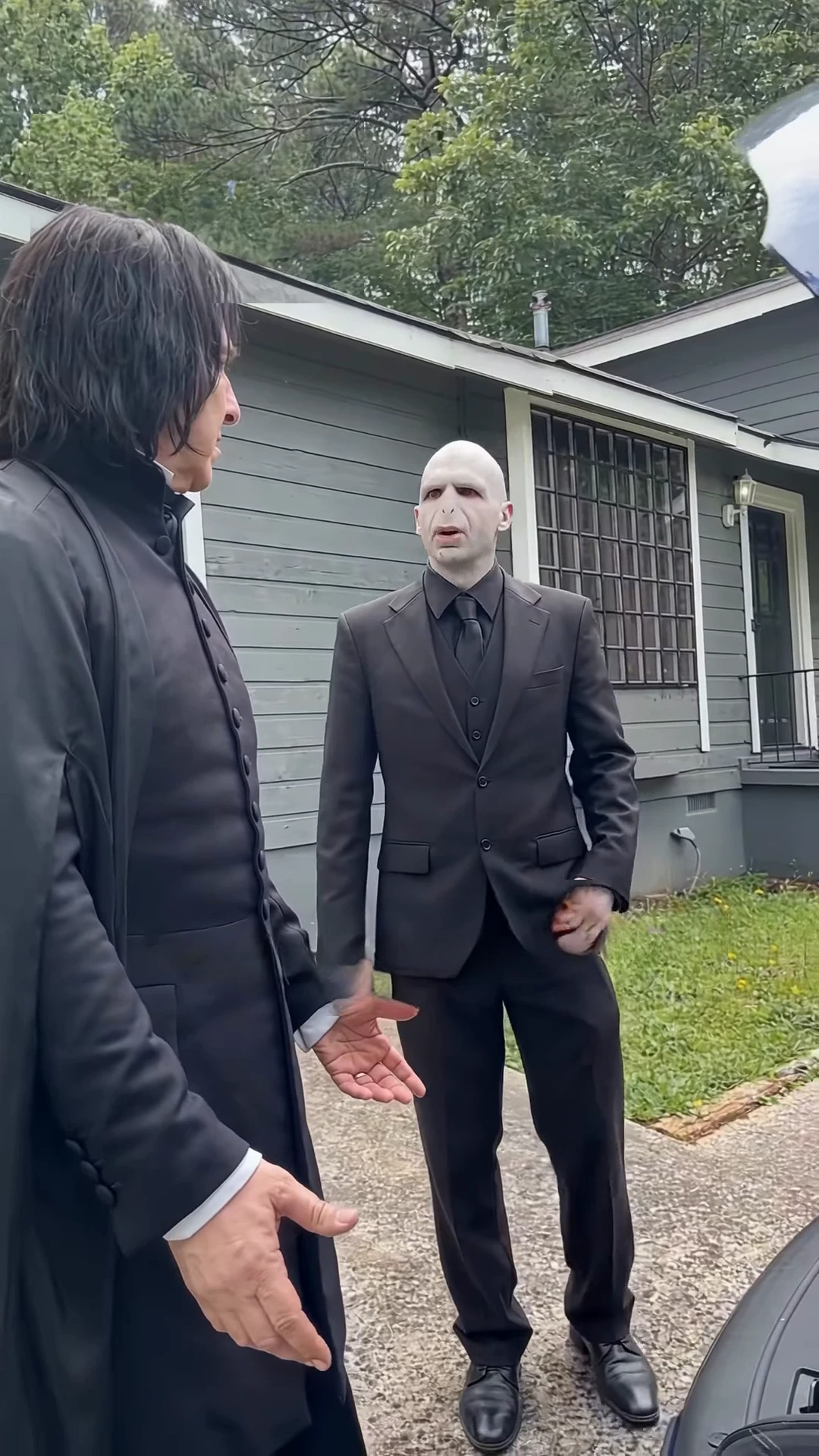
Frame at about eight and a half seconds from the credited @ausar.ai source reel, not an Oakgen output.
What the right role does
The right role is the suit character, bald and pale in a black three-piece suit and tie.
- 0 to about 2 s: half hidden behind the coat character, head tilted toward the engine.
- 1.9 to 2.4 s: hands behind the back, looking into the engine bay, says a short "What?"
- From about 5 s: faces the camera for the rest of the clip, hands at his sides at first.
- 8.7 to 12.6 s: both arms spread in a shrug while he speaks for almost four seconds.
- 12.9 to 15 s: back to listening as the closing question arrives.
The two roles swap energy. The coat character starts busy at the engine and goes still. The suit character starts still, hands behind his back, and ends with the widest gestures in the clip. The picture mirrors the dialogue, which is the main reason the take reads as a scene rather than two people talking.
Choosing photos that fit the body language
The reference clip supplies the posture, gestures and camera motion. Your photos supply identity, meaning face, hair and outfit, so a photo's own pose does not change what the figure does. Fit here means the face reads well in the frames where it is shown. This is a judgment from watching the reference, and we have not tested it.
| Role | Seen doing | A photo that suits it |
|---|---|---|
| Coat (left) | Bent over, then in profile at the frame edge, then turning to speak | Visible hairline and head shape, and a neutral, serious face |
| Suit (right) | Facing the camera, hands behind the back, then arms spread, speaking for four seconds | A large, sharp, front-facing face in even light |
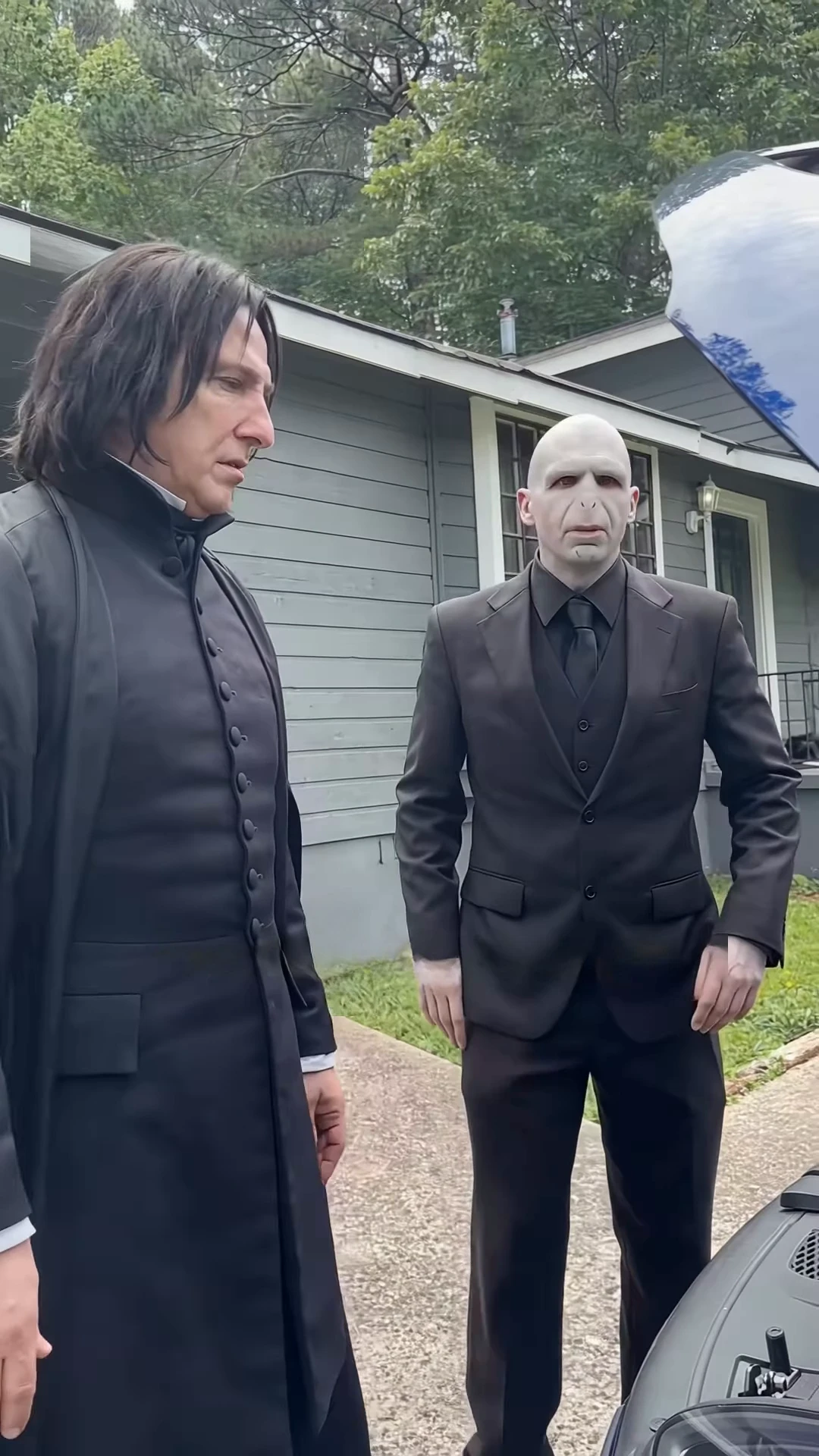
The poster frame, at about five seconds, from the credited @ausar.ai source reel, not an Oakgen output.
Using the pauses in an edit
The two long pauses, roughly 3.8 to 4.5 seconds and 5.5 to 6.8 seconds, are the natural places for a text beat if you caption your video. Keep text off the faces, since the right role's mouth is the main thing to watch from 8.7 to 12.6 seconds. The full script with times lists every line.
Where to go next
Once you have a result, check it stretch by stretch. For the recipe, read You Fked the Transmission AI Trend. The two roles have their own page, and the caption's source is covered separately. Oakgen's Voldemort Car Repair template keeps the source soundtrack, strong language included, and the clip on the trend page is the credited reel, not an Oakgen result. We could not find the original audio or the skit's first makers. Use only photos of people who have said yes, and say your video is AI-made. This is a fan-style parody, not affiliated with any franchise it recalls.