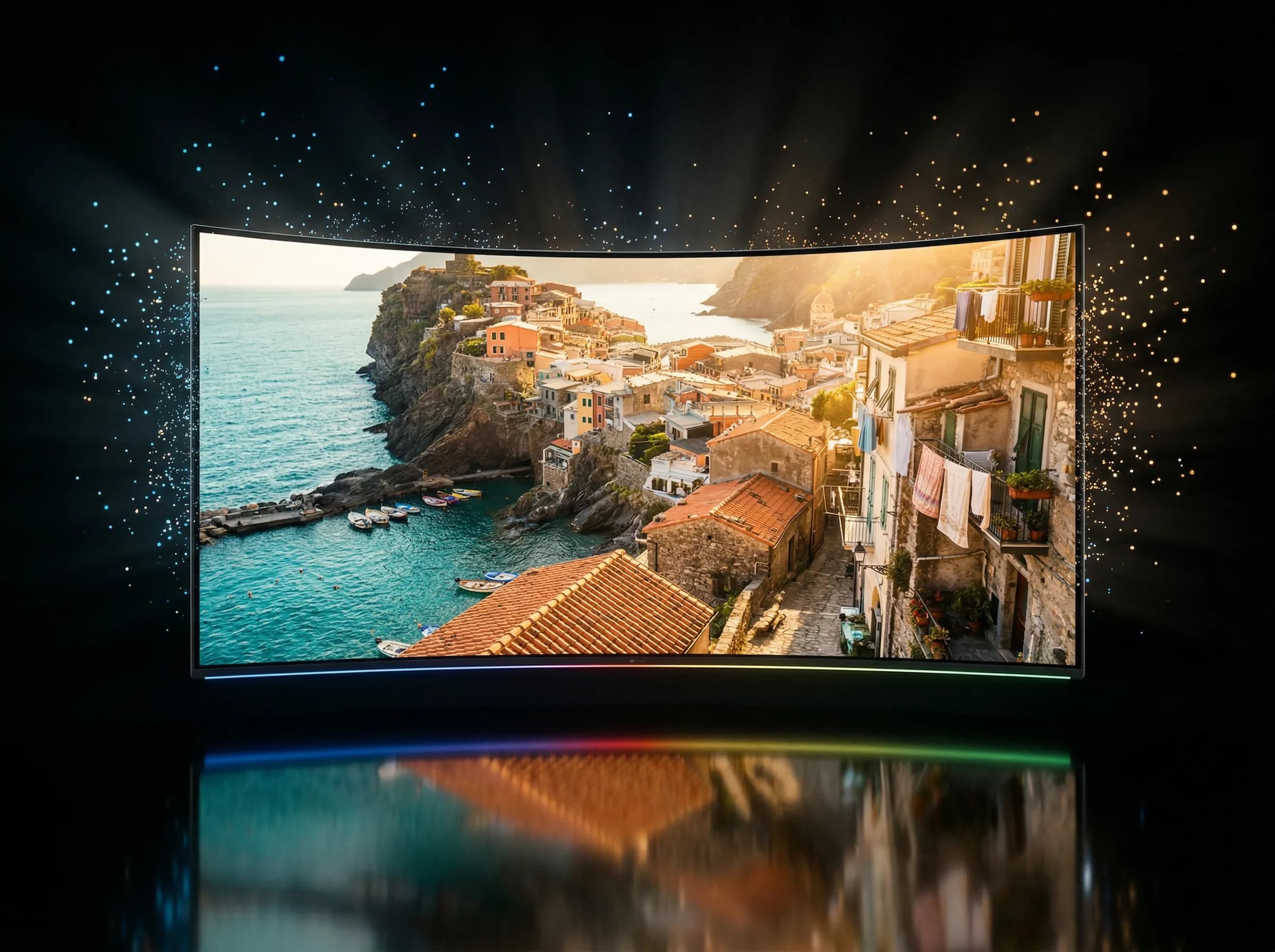
Google has been playing catch-up in image generation for over a year. Imagen 3 was solid but never threatened Midjourney or Flux for the top spot. That changes with Imagen 4 Preview -- a model that finally puts Google in the conversation for best AI image generator in 2026.
Available in three tiers -- Preview, Preview Fast, and Preview Ultra -- Imagen 4 brings dramatic improvements in photorealism, text rendering, and compositional accuracy. Here is what it gets right, what it still misses, and how it stacks up against the competition.
What Is Imagen 4?
Imagen 4 is Google DeepMind's latest text-to-image model, built on an upgraded diffusion architecture with tighter integration to Google's Gemini language understanding pipeline. This means the model does not just "read" your prompt -- it reasons about it, breaking complex descriptions into spatial relationships, material properties, lighting conditions, and semantic intent before generating a single pixel.
The result is a model that follows prompts with almost unsettling accuracy.
Key Improvements Over Imagen 3
Photorealism
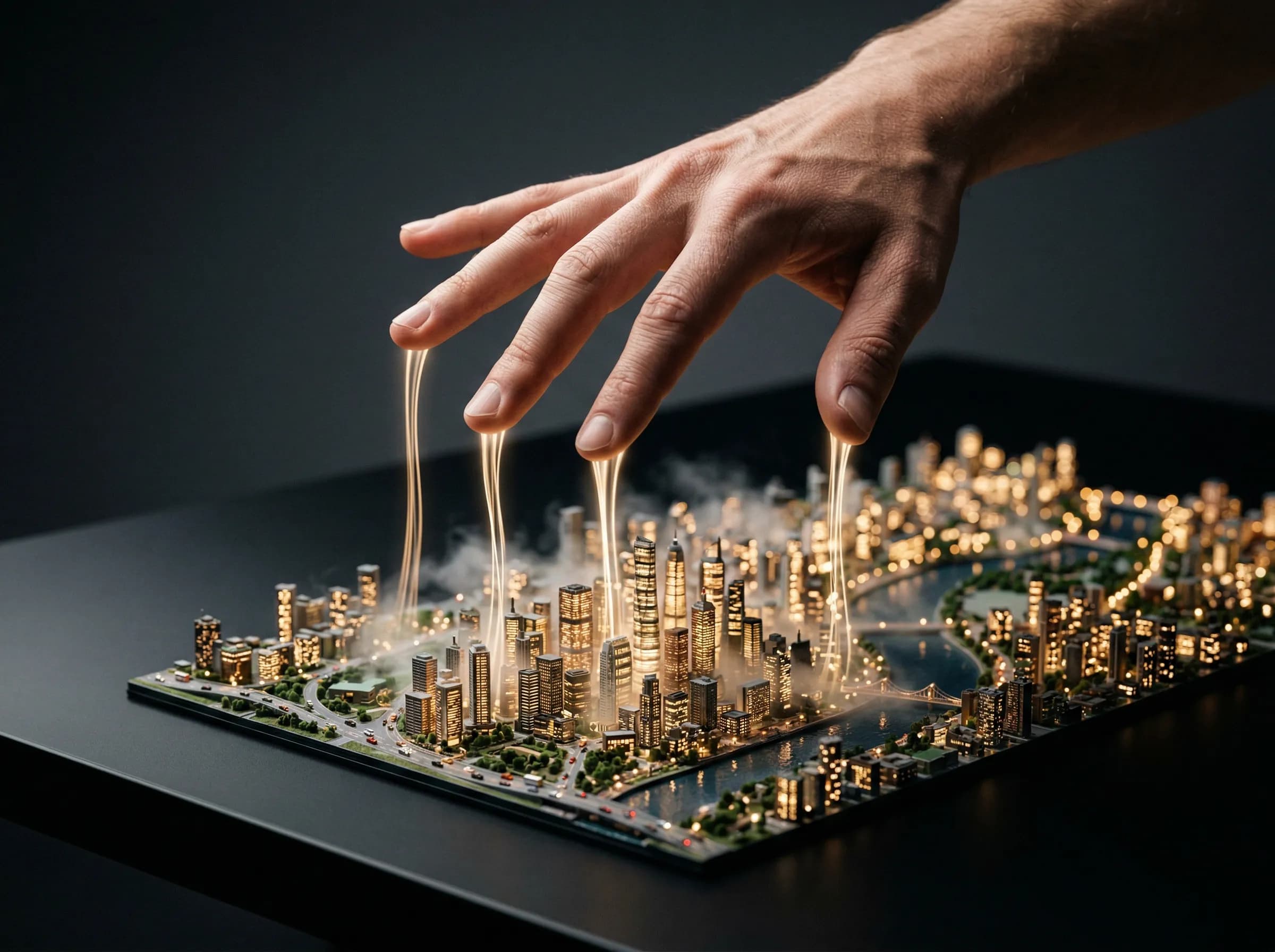
Imagen 3 produced competent realistic images but they often had a slightly clinical quality -- technically correct but emotionally flat. Imagen 4 fixes this. Skin tones have warmth and variation. Environments feel lived-in. Lighting interacts with surfaces in physically accurate ways -- subsurface scattering on skin, caustic reflections through glass, proper penumbra on cast shadows.
The improvement is most visible in portrait photography prompts. Imagen 4 renders:
- Natural skin imperfections -- moles, subtle redness, uneven texture
- Hair with individual strand detail and accurate lighting interaction
- Eyes with proper environmental reflections and natural moisture
- Fabric with realistic drape, wrinkle patterns, and material-specific sheen
Text Rendering
This is where Imagen 4 makes its biggest leap. Text in AI-generated images has been a persistent pain point across the industry. Most models struggle with anything beyond short words on signs.
Imagen 4 renders text with near-perfect accuracy for:
- Signs and storefronts (up to 15-20 characters reliably)
- Product labels and packaging
- Book covers and movie posters
- Handwritten notes (maintains consistent handwriting style)
- Multi-line text blocks with proper line spacing
It is not quite at GPT Image 1.5 or Ideogram V3 levels for very long text passages, but for practical use cases -- product mockups, social media graphics, signage -- it is more than sufficient.
Prompt Adherence
Imagen 4's Gemini-powered prompt understanding is arguably its greatest technical achievement. Complex prompts that would trip up other models are handled reliably:
- "A red bicycle leaning against a blue wall, with a yellow cat sitting in the basket, viewed from a 45-degree angle" -- every element placed correctly
- Specific quantities ("exactly seven candles on the cake") rendered accurately
- Spatial relationships maintained even in crowded scenes
- Style instructions ("shot on Kodak Portra 400, 35mm film grain") applied convincingly
Speed
Imagen 4 Preview Fast is genuinely fast. Generation times average 3-5 seconds for standard resolutions, making it competitive with Flux Schnell for rapid iteration workflows. The standard Preview tier takes 8-12 seconds, and Ultra can take 15-25 seconds for maximum quality.
The Three Tiers
Google offers Imagen 4 in three quality tiers, each with different speed-quality tradeoffs:
| Tier | Speed | Quality | Best For |
|---|---|---|---|
| Preview Fast | 3-5 sec | Very Good | Rapid iteration, drafts, high-volume generation |
| Preview | 8-12 sec | Excellent | Production-quality images, marketing assets |
| Preview Ultra | 15-25 sec | Best | Hero images, print-quality outputs, maximum detail |
The quality difference between tiers is real but not dramatic. Fast is approximately 85% of Ultra quality -- more than sufficient for social media, web content, and initial concepts. Ultra shines when you need maximum detail for large-format outputs or critical brand imagery.
Imagen 4 vs. The Competition
Imagen 4 vs. Flux 2 Pro
Flux 2 Pro from Black Forest Labs has been the benchmark for photorealistic AI images in 2026.
- Photorealism: Very close. Flux 2 Pro has a slight edge in skin texture and the "film-captured" quality. Imagen 4 is marginally better at environmental scenes and architecture.
- Text rendering: Imagen 4 wins. Flux handles short text but degrades faster on longer strings.
- Speed: Imagen 4 Fast is significantly quicker than Flux 2 Pro. Standard tiers are comparable.
- Ecosystem: Flux has more variants (Max, Klein, Turbo, Kontext) and a more mature developer ecosystem. Imagen 4 benefits from Google Cloud integration.
- Consistency: Flux produces more consistent results across repeated generations. Imagen 4 occasionally has wider quality variance between generations.
Choose Imagen 4 when: You need text in images, fast iteration, or Google ecosystem integration.
Choose Flux 2 Pro when: You need maximum photorealism, character consistency workflows (Kontext), or the broadest model ecosystem.
Imagen 4 vs. Reve Image 1.0
Reve holds the #1 spot on the Artificial Analysis Image Arena. How does Imagen 4 compare?
- Photorealism: Reve still leads on raw photorealism, particularly for portraits. The "hyper-authenticity" quality of Reve images -- where they look indistinguishable from camera captures -- is still a step ahead.
- Versatility: Imagen 4 is more versatile. It handles illustration, graphic design, architectural visualization, and stylized outputs better than Reve, which is optimized primarily for photorealism.
- Text rendering: Imagen 4 wins decisively.
- Speed: Imagen 4 Fast is substantially quicker.
- Controls: Imagen 4 offers more generation parameters. Reve is relatively simple -- prompt in, image out.
Imagen 4 vs. GPT Image 1.5
GPT Image 1.5 from OpenAI is the multimodal native -- it understands and generates images within the same model that handles text conversation.
- Text rendering: GPT Image 1.5 is still the king of text in images. For complex typography, multi-language text, and precise text placement, OpenAI leads.
- Conversational editing: GPT Image 1.5 excels at iterative editing through conversation ("now make the sky more orange, and add a bird in the top-left"). Imagen 4 does not support this workflow.
- Photorealism: Imagen 4 produces more photorealistic outputs. GPT Image 1.5 images often have a slightly illustrated quality.
- Prompt adherence: Both are excellent. Imagen 4 edges ahead on spatial accuracy; GPT Image 1.5 edges ahead on understanding intent and nuance.
| Feature | Imagen 4 Preview | Flux 2 Pro | Reve Image 1.0 | GPT Image 1.5 |
|---|---|---|---|---|
| Photorealism | Excellent | Excellent | Best | Very Good |
| Text Rendering | Very Good | Good | Good | Best |
| Speed (Fast Tier) | Best | Good | Medium | Medium |
| Prompt Adherence | Best | Excellent | Excellent | Excellent |
| Artistic Versatility | Very Good | Very Good | Limited | Good |
| Ecosystem | Google Cloud | Mature | Limited | ChatGPT |
| Available on Oakgen | ✓ | ✓ | ✓ | ✓ |
Where Imagen 4 Falls Short
- Character consistency. No built-in mechanism for maintaining the same character across multiple generations. Flux Kontext and Midjourney's
--crefhandle this better. - Artistic style range. While more versatile than Reve, Imagen 4 does not match Midjourney's ability to produce emotionally evocative, stylized art. Its outputs lean toward photographic accuracy over artistic interpretation.
- Safety filters. Google's content filtering is the most restrictive of any major model. Legitimate creative prompts -- particularly involving human figures in artistic contexts -- can trigger false positives more frequently than competitors.
- Limited editing. No inpainting, outpainting, or reference-based editing in the current Preview. You generate from scratch each time.
- Occasional artifacts. Preview Ultra is clean, but Fast and standard tiers can produce subtle artifacts in complex scenes -- repeated patterns, slightly warped geometry in architecture, inconsistent shadow directions.
Using Imagen 4 on Oakgen
Oakgen offers all three Imagen 4 tiers alongside Google's previous generation:
- Imagen 4 Preview (
imagen-4-preview) -- Standard quality, balanced speed - Imagen 4 Preview Fast (
imagen-4-preview-fast) -- Fastest generation, slightly lower quality - Imagen 4 Preview Ultra (
imagen-4-preview-ultra) -- Maximum quality, slower generation - Imagen 3 (
imagen-3) -- Previous generation, available for comparison
All tiers are accessible through Oakgen's Image Generator with credit-based pricing. No Google Cloud account required.
Use Oakgen's Image Arena to compare Imagen 4 outputs against Flux 2 Pro, Reve, and GPT Image 1.5 on the same prompt. Seeing the differences side-by-side is more informative than any review.
Who Should Use Imagen 4?
Imagen 4 is ideal for:
- Marketing teams who need text in images (product mockups, social graphics, promotional banners)
- Anyone already in the Google ecosystem (seamless integration with Google Cloud, Gemini, Google Ads)
- High-volume content creators who need fast iteration (use the Fast tier)
- Architectural and real estate visualization
- Product photography mockups with readable labels
Imagen 4 is not ideal for:
- Artists seeking emotionally rich, stylized outputs (use Midjourney)
- Portrait photography requiring maximum realism (use Reve or Flux 2 Pro)
- Workflows requiring character consistency across images (use Flux Kontext)
- Users who need conversational image editing (use GPT Image 1.5)
The Bottom Line
Imagen 4 Preview is the first Google image model that does not feel like it is playing catch-up. It leads on text rendering and prompt adherence, competes credibly on photorealism, and offers genuinely useful speed tiers for different workflows.
It does not dethrone Reve for photorealism or Midjourney for artistic outputs. But it is the most well-rounded model Google has ever released, and for text-heavy use cases, it is arguably the best choice available.
Google is no longer a spectator in the image generation race. With Imagen 4, they are a contender.