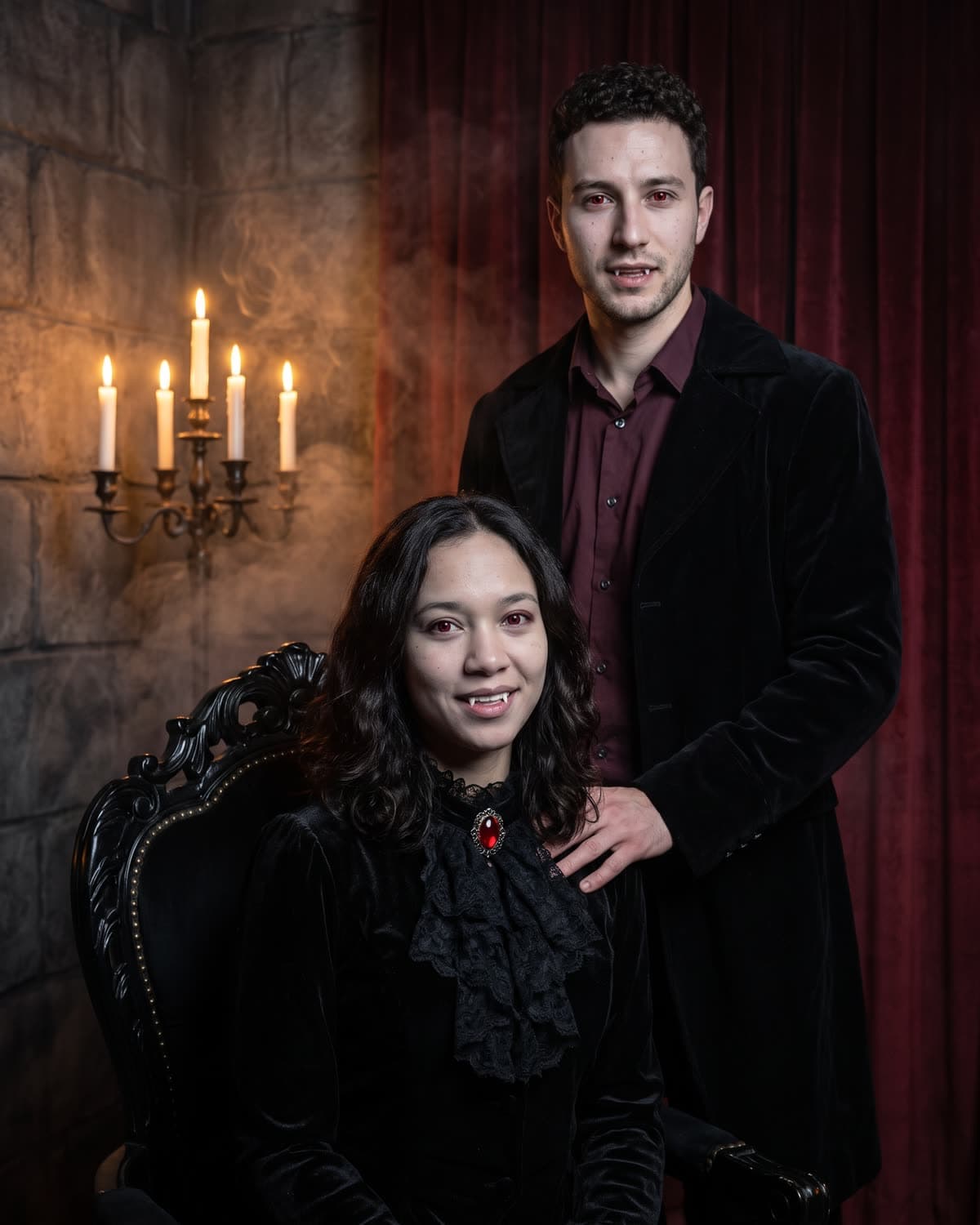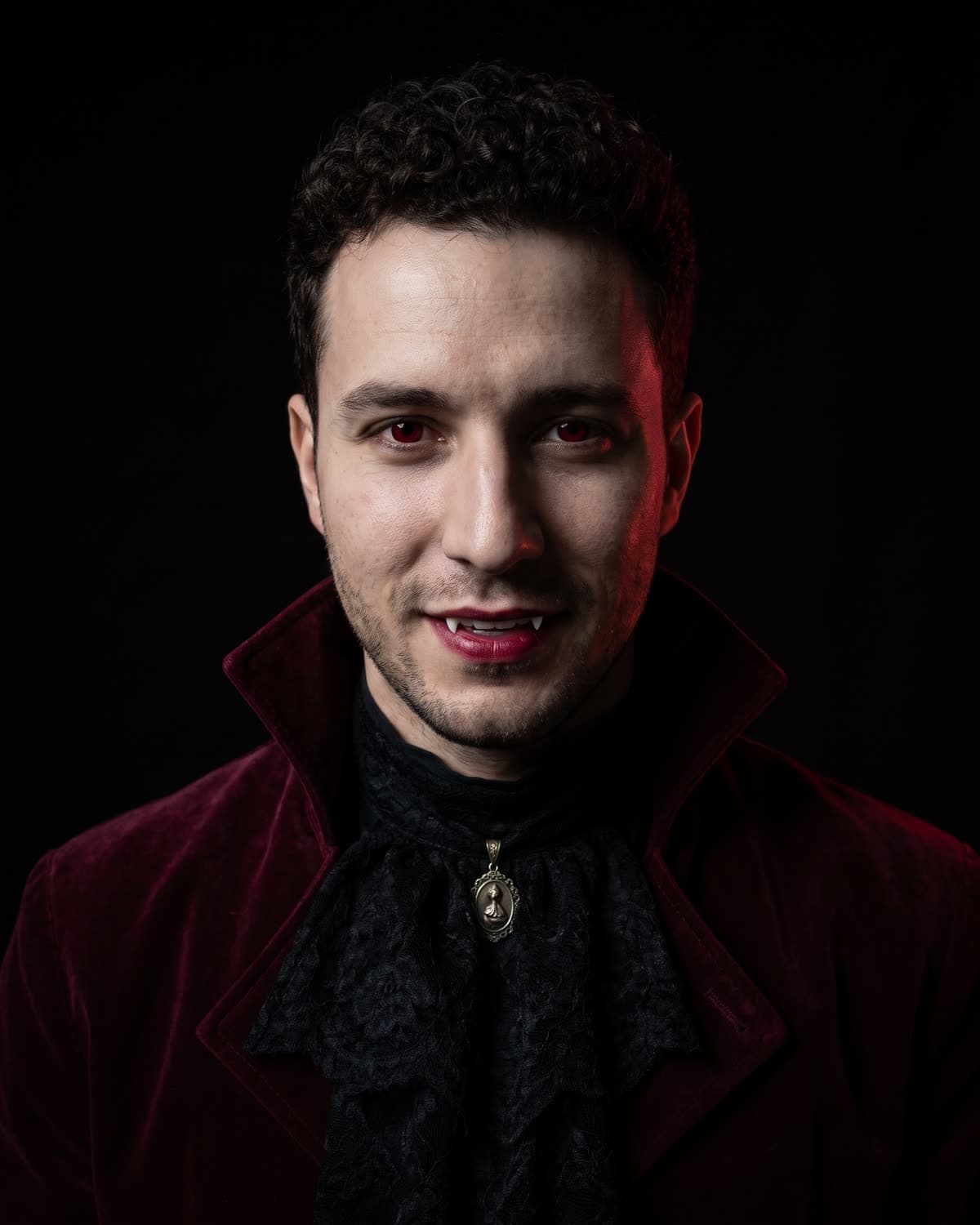
You can recognise a vampire portrait from across a room before you see a single fang. Something about the light and the colour already says it. The Gothic Vampire Portrait is built almost entirely on that idea: it uses no cape, no castle and no blood, and leans instead on one candle, a black background, a thin line of red light and a few pieces of period clothing. This guide takes each of those choices apart, explains what it does to the picture, and what it means for the photo you upload.
None of this needs you to know anything about photography. The template applies all of it for you. Knowing why it looks the way it does just makes it easier to judge a result and to pick a photo that works with it.
See the look on your own face
One photo in. One candle, burgundy velvet and a black background out, in about a minute.
Darkness does most of the work
Photographers call an image like this low-key: most of the frame is dark, and only a few areas are lit. In the Gothic Vampire Portrait the background is pure black from edge to edge, the clothes are deep burgundy and black, and only part of your face catches the light.
Darkness matters because vampire stories are night stories. A bright, evenly lit portrait reads as daytime, open and ordinary, however many fangs you add. A frame that is mostly shadow reads as night, private and a little dangerous before anything else is noticed. The black background also removes every clue about place, so nothing ties the picture to a party, a house or a date in October.
The trade-off is that dark images hide detail. That is why the recipe asks for sharp detail on skin, velvet and lace, and why fine grain is added: a little texture keeps the shadows from turning into flat, empty black.
One candle, one side
The single biggest decision in the look is the light: one candle, out of frame, on one side of your face. The other side falls into shadow.
Light from one side does two things. First, it sculpts the face. Cheekbones, the line of the nose and the jaw all throw shadows, which makes the face look more defined and more serious than flat front light would. Second, it splits the face into a lit half and a hidden half, which gives the portrait a sense of something held back. That half-seen quality is a large part of why a side-lit face feels secretive.
The colour of the light matters too. Candlelight is warm and orange-gold, so the lit cheek glows while everything else stays cold and dark. Against a pale vampire complexion, that warm glow is the only real sign of warmth in the frame, which makes the contrast stronger.
The candle itself is never in the picture. Keeping the flame out of frame keeps the attention on your face and avoids a bright spot that would pull the eye away. If a result ever shows a candle, a lamp or a second light source, it has drifted from the recipe; the result checklist covers that.
A thin red line behind the shoulders
Behind you there is a faint deep-red rim light: a soft glow that outlines the shoulders and the back of the head against the black.
Without it, dark hair, a dark jacket and a black background would melt into each other, and your outline would disappear. The rim gives the figure an edge so it stands out from the background. Making that edge red instead of white does a second job. It repeats the crimson of the eyes and the burgundy of the velvet, so the whole image stays inside one narrow, blood-toned palette without showing any blood. It also hints at heat or danger behind you, which suits a vampire well.
Burgundy, black and a little silver
The colour palette is small on purpose: burgundy, black, the warm gold of the candle, deep crimson in the eyes, dark red on the lips and one small point of antique silver at the pendant.
A narrow palette like this looks deliberate, the way a magazine fashion story does. Burgundy is a common choice in gothic and vampire imagery because it sits between red and black: rich, old, expensive-looking and close to the colour of wine or dried blood without being either. Silver is the one cool, bright note, and keeping it small makes it catch the eye without competing with your face.
Your own colouring is kept. The recipe makes skin only slightly paler over your own skin tone, not a different complexion, so the palette is built around you rather than replacing you.
Velvet, lace and a high collar
The outfit is a deep burgundy velvet jacket with a high collar, a black lace jabot at the throat and a small antique silver pendant. It is a period-inspired look rather than a historical costume.
Each piece has a job:
- Velvet absorbs light in its folds and shines softly at its edges, so it shows texture even in a dark image. It also reads as old money and evening wear, which suits a centuries-old aristocrat.
- The high collar frames the face and covers the neck. In vampire imagery the neck is a charged area, so hiding it behind a collar is a quiet nod to the story.
- The lace jabot is the frill of lace at the throat associated with older formal menswear and later with gothic fashion. It gives a clear period signal at the centre of the frame, right under the chin.
- The pendant adds one small, bright detail that draws the eye back up toward the face.
This is also why the template replaces your clothes. A hoodie or a T-shirt under candlelight would pull the picture back into the present day.
Small vampire signs instead of a costume
With the light, colour and clothes setting the mood, the vampire details can stay small: slightly paler skin, deep crimson eyes, dark red lips and the tips of two small fangs in a closed, confident smile.
This restraint is what separates the Gothic Vampire Portrait from a costume photo. Big fangs, blood and a cape tell the viewer "this is dress-up". Small fangs in a closed smile and eyes that are a little too red ask the viewer to look twice, and the second look is the one that lands. The calm, direct gaze into the camera finishes it: the portrait is not acting scared or scary, it is simply looking at you.
What this means for your photo
Knowing how the look is built explains the advice on what to upload.
- Soft, even light in the original. The template relights your face with its own candle. A photo already full of hard shadows or coloured light gives it less real detail to keep on the lit side.
- Face the camera. The lit half carries most of the likeness, so a front-facing photo gives it the most to work from.
- A relaxed or closed mouth. The fangs appear only as tips in a closed smile, so a calm expression fits better than a wide grin.
- Hair away from the eyes. The crimson eyes are a key signal and need to be visible.
The full list is in which photo to upload for a gothic vampire portrait, and Gothic Vampire Portrait AI photo: what you get lists every element of the recipe in one place.
Where to go from here
If you are planning a post around the portrait, Gothic Vampire Portrait ideas covers hair, uses and captions. If you are not sure this quiet, close-up look is the right one, is the Gothic Vampire Portrait right for your photo? walks through the decision, and which AI vampire photo look is for you compares it with the other vampire looks: Y2K Vampire Flash for a harsh 2000s flash snapshot, Vampire Couple Portrait for two people, and Halloween Costume for a full-body party photo.
Whatever you post, label it as AI-made, and use only your own photo or one from someone who agreed. This guide explains the fixed recipe; it does not claim any particular result.
Frequently asked questions
Why does the Gothic Vampire Portrait use only one candle?
A single light from one side leaves the other half of the face in shadow. That contrast, with warm colour on one cheek and darkness on the other, is what makes the portrait feel nocturnal and secretive rather than like an ordinary headshot.
What does the red rim light do?
It is a faint deep-red glow behind the shoulders. It separates your outline from the pure black background, so you do not disappear into it, and it repeats the crimson of the eyes and the burgundy of the jacket.
Why is there no cape or blood?
The template carries the idea of a vampire through light, colour and small details instead of props. That keeps it closer to a fashion portrait and makes it usable after Halloween. The recipe asks for no blood and no gore.
Can I change the lighting?
No. The light is part of the fixed recipe. What you can influence is the photo you upload: soft, even light in the original gives the template the most detail to relight.