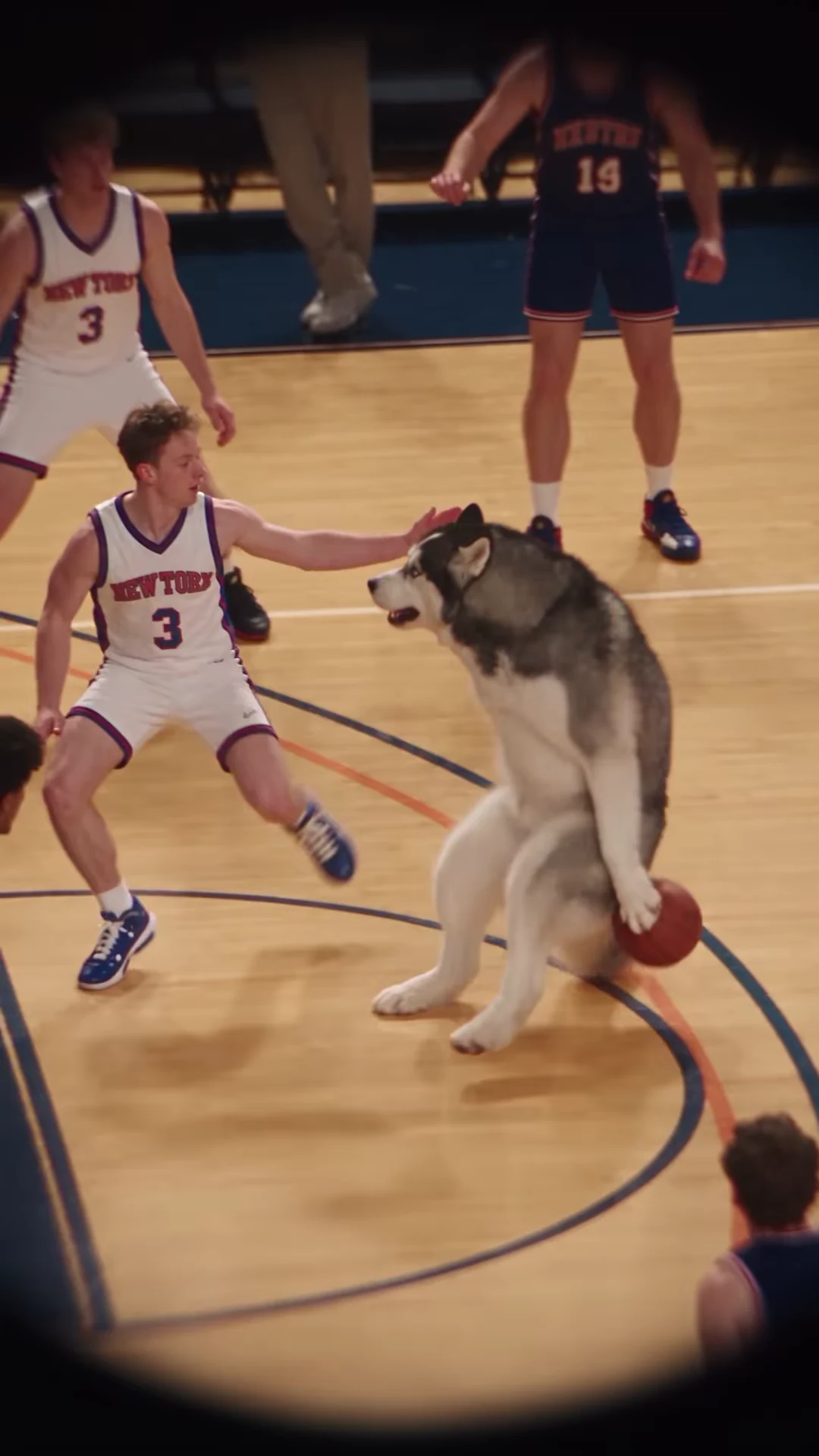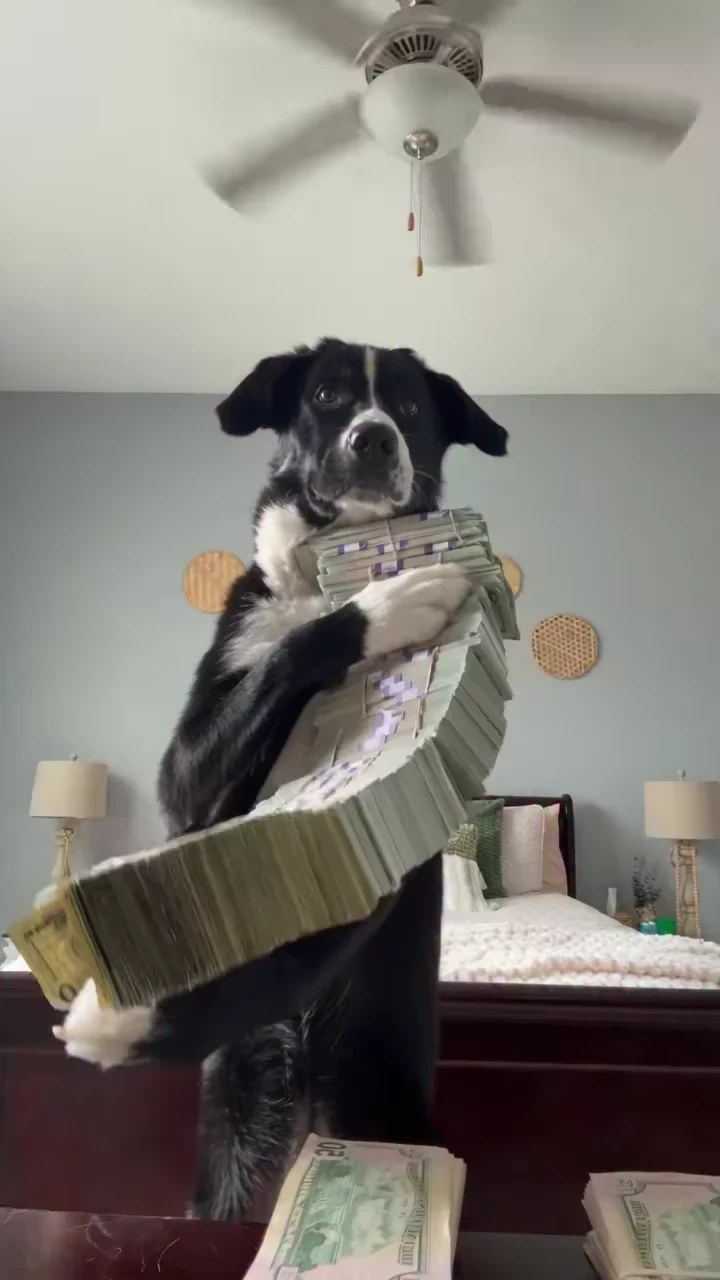
The cash-flex AI format works when the size of the celebration is wildly out of proportion to the achievement. A character displays stacks of money as though something enormous has happened; the caption reveals that the victory was ordinary.
Oakgen's Cash Flex trend follows a roughly 14.7-second portrait reference with one featured performer, a table of cash and a bedroom setting. The supplied dog remake moves through large bundles, a brief reset and a banknote fan toward the camera. Those three visual phases give you a compact story structure.
Let the gestures carry the escalation
Watch the full reference before writing. The money is already visible at the start, so there is no reason to spend several seconds announcing that the character has cash. Use the opening to explain why this particular character thinks the moment deserves a celebration.
| Approximate source time | Visible phase | Useful caption role |
|---|---|---|
| 0–5.8 seconds | Large stacks presented and moved toward the lens | Set up the small achievement |
| 5.8–7.8 seconds | Performer lowers the display and reaches down | Add a short pause or complication |
| 7.8–10.8 seconds | A smaller stack is handled and starts to spread | Prepare the closing reaction |
| 10.8–14.7 seconds | Banknote fan fills the foreground | Land the exaggerated reaction |
These are broad landmarks from one-second source samples. Place text against the gestures in your finished video, especially where a bundle briefly covers the face.
Script one: the tiny refund
Opening: “When the forgotten refund finally arrives.” Middle: “It was four pounds.” Ending: “Financial department has been notified.”
The specific amount turns a generic wealth joke into an observable situation. The last line overreacts to it. You can adapt the currency and amount to your own story without implying that the banknotes shown in the reference represent that exact payment.
Keep the middle line short. The reset is a visual breath between the opening display and the final fan; it should not become a paragraph explaining the transaction. Avoid adding a fake bank screenshot or presenting the clip as evidence of real earnings.
Script two: the friend who used a coupon
Try “Saved 10% on something I didn't need,” then “Ignoring the other 90%,” followed by “Investment strategy complete.” The joke is about the character's reasoning, not about how much actual money they have.
This is a good fit for someone who enjoys self-deprecating shopping humor. The uploaded identity does not need to be photographed holding money. The scene already supplies the prop and movement; choose a photo that makes the subject easy to recognize.
If the person dislikes being portrayed as boastful, change the premise before generating. A clear shared joke makes better creative direction than trying to explain an uncomfortable portrayal after posting.
Script three: a pet's imaginary business
Use “First customer at the treat inspection service,” then “Payment accepted in biscuits,” and finish with “Expansion plans are underway.” This keeps the fantasy obvious and avoids merely copying the supplied creator's caption.
A pet reference is an experiment in identity and motion transfer. The source preview shows another creator's dog recreation; it is not proof that every pet photo will produce the same result. Inspect the finished character and prop contact before choosing a final caption edit.
Give the banknote fan some space
The ending fan grows large in the foreground. Put the punchline where it does not cover the prop or the eyes. If text is readable only on a paused frame, shorten it or move its entry earlier.
Keep the whole portrait frame while deciding placement. A close zoom can make the money look more dramatic, but it can also remove the face just as the joke needs a recognizable reaction. Check the edit at phone size with the social controls you expect around it.
Add these captions in an external editor after downloading the video. They are text overlays, not instructions for new gestures, a new room or synthesized dialogue. Save an uncaptioned copy so later wording changes do not require a new generation.
For the next pass, use the cash-flex hands and props review. The cash-flex song and source notes identify the music and matching human performance while distinguishing them from the unverified earliest uploader.
Source and creative evidence
The gesture map comes from @clash's supplied reel, inspected October 18, 2026. The scripts above are original editing examples. The cover is a supplied recreation frame; no paid Oakgen generation was performed for this guide.
Cast your small victory
Choose one clear identity photo and inspect the full cash-display reference before reviewing the quote.
Frequently asked questions
Do the caption scripts change the cash-flex action?
No. They are text to add after download. The fixed template supplies the room, money and gestures.
Do I need a photo holding money?
No. Choose a clear identity photo. The reference supplies the money props, and their contact with the generated character still needs review.