OpenAI's GPT Image 2 announcement included dozens of example outputs that quietly redefine what's possible in AI image generation — near-perfect text, multilingual typography, narrative consistency across comic panels, photoreal candid portraits, and infographics that reason about their own layout. Instead of rewriting the announcement, we pulled the most instructive examples into one place and wrote a copy-paste prompt you can adapt for each one on Oakgen.
All images below are from OpenAI's official GPT Image 2 announcement. All prompts are original — written to reverse-engineer the capability each example demonstrates, not to copy OpenAI's exact prompt.
The six pillars of GPT Image 2
OpenAI organized the announcement around six capability gains: greater precision and control, stylistic sophistication, improved language coverage, stronger real-world intelligence, flexible aspect ratios, and a thinking-mode partner for complex briefs. The gallery below is grouped by the pillar each example best illustrates.
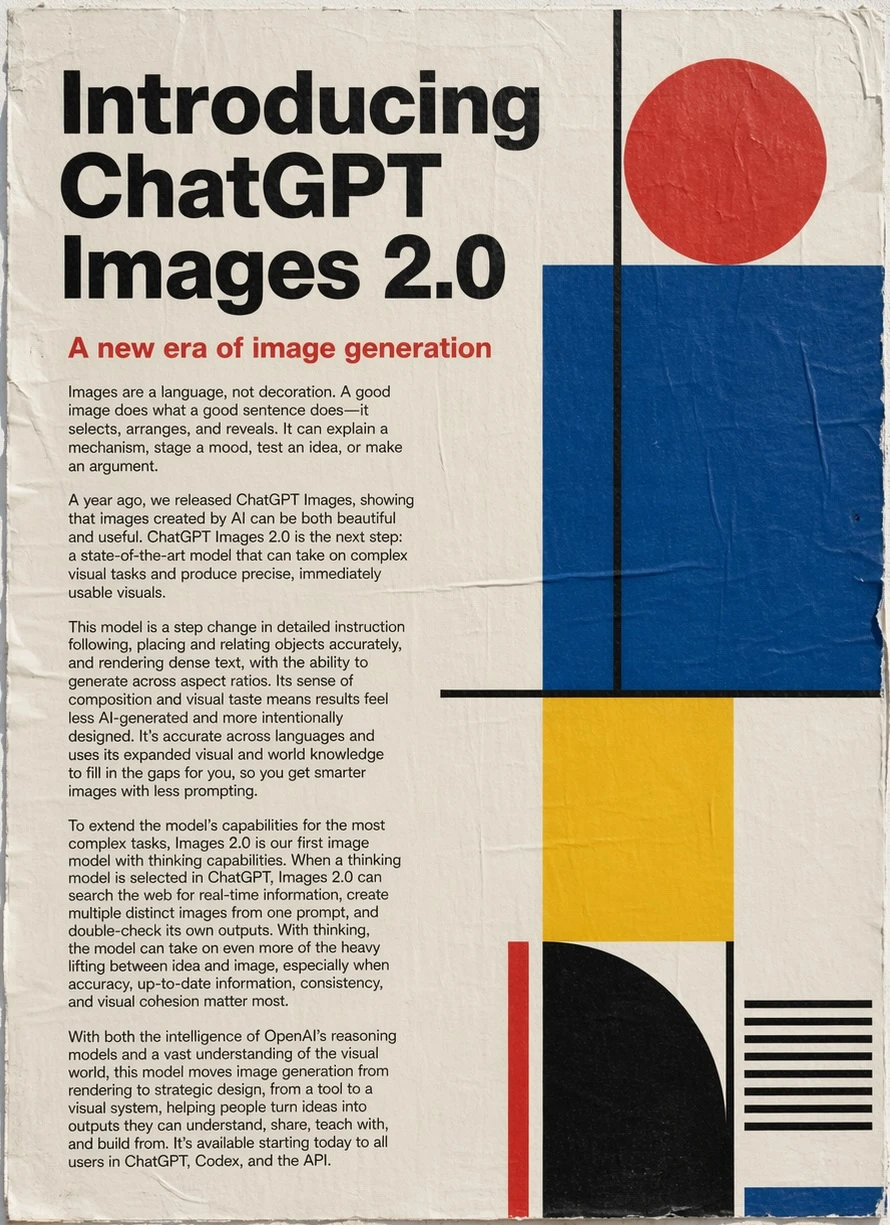
Editorial-poster prompt you can adapt:
A bold modernist magazine poster introducing "{your product name}". Thick
editorial typography, blocks of short body copy, geometric shapes in
primary red, black, navy, and pale cream. Swiss-grid layout, offset
arrangement, slight paper texture. Headline weight contrast between the
title and supporting labels. Print-ready, 2:3 aspect ratio.
1. Greater precision and control
GPT Image 2's biggest jump is how faithfully it follows complex compositional instructions. Structural layouts, small-point body copy, and typographic hierarchy all land where you put them.
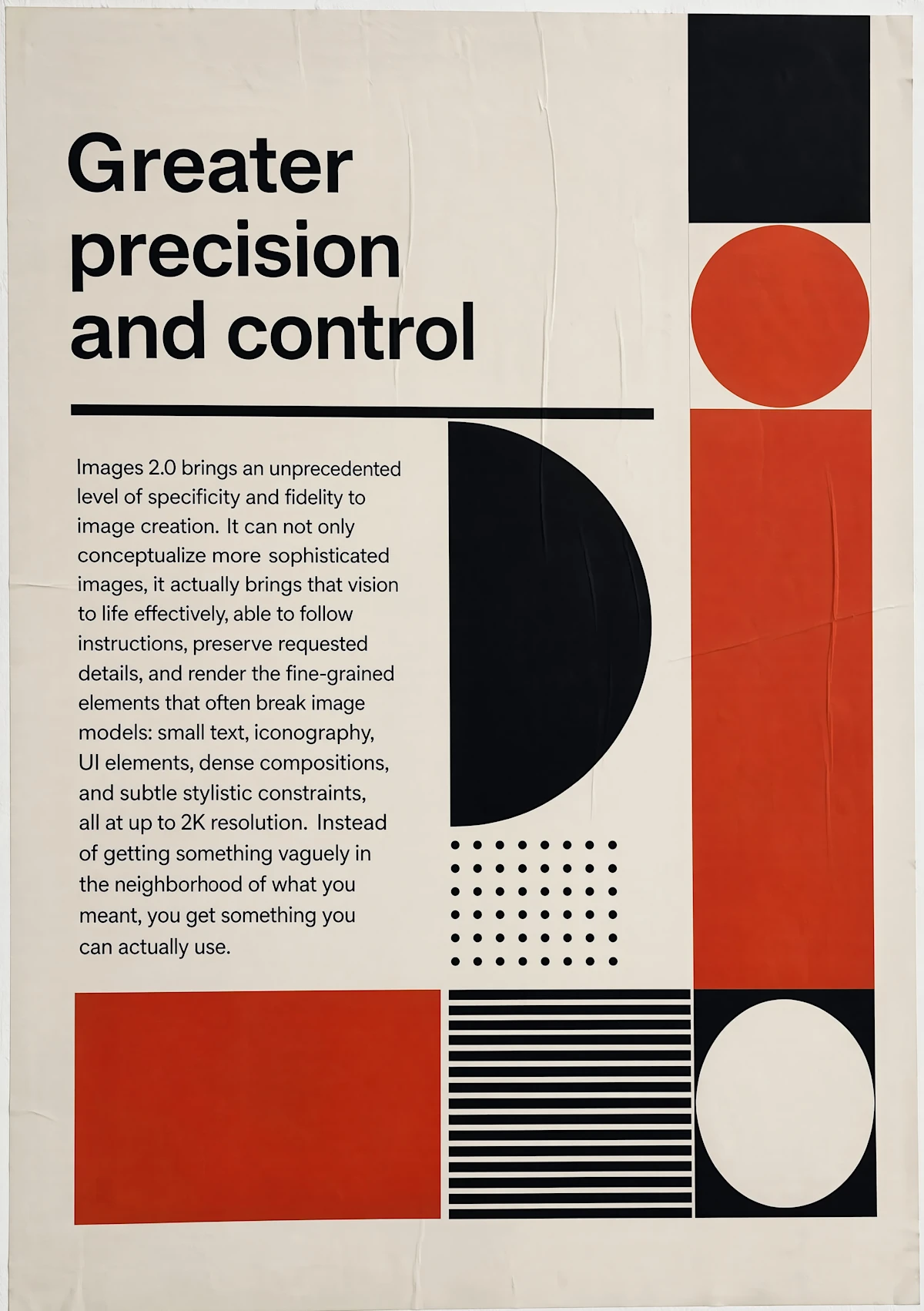
A minimalist editorial poster titled "Greater Precision and Control" in
thick black sans-serif at the top. Subhead in smaller red sans beneath:
"Your prompts, rendered." A grid of four short paragraphs below, each
50-80 words, separated by thin black rules. One accent geometric form —
a solid red semicircle — anchors the lower right. Cream background,
editorial print feel, 3:4 aspect ratio.
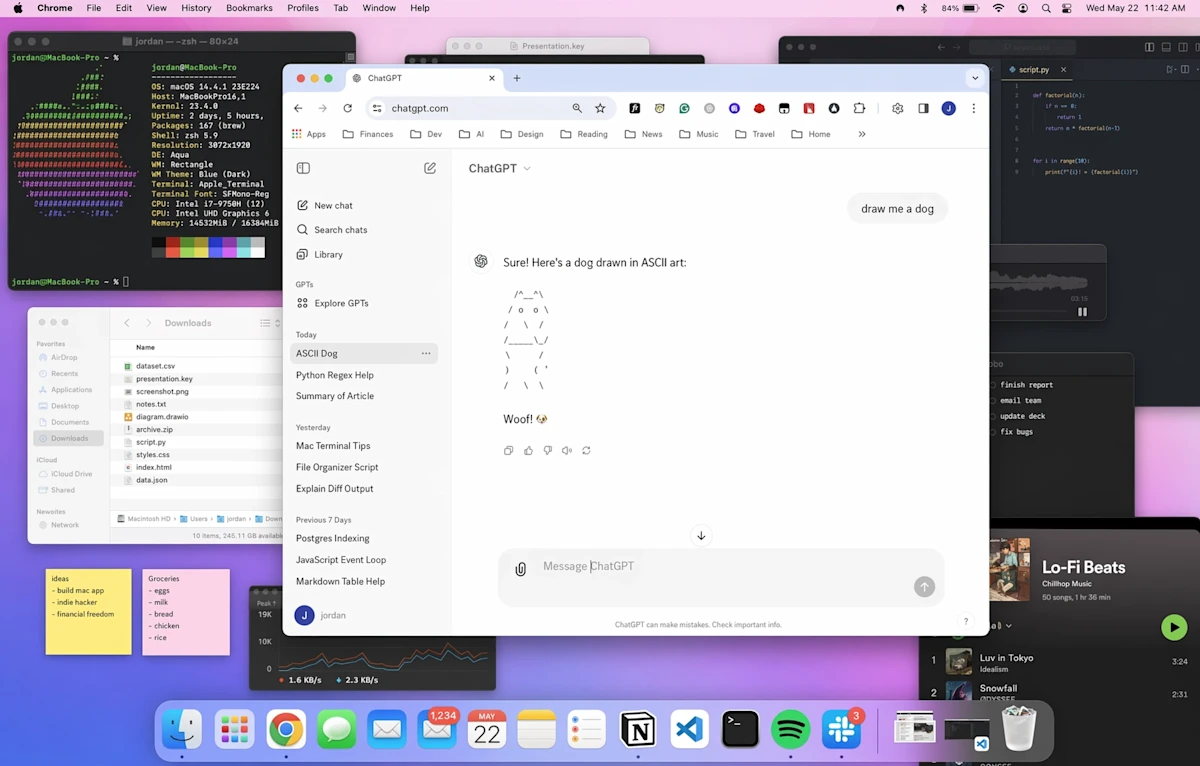
A highly detailed macOS desktop screenshot. Finder, Terminal, Safari,
Notes, Calendar, Spotify mini-player, and ChatGPT are all open in
distinct windows tiled across a 5K display. ChatGPT is centered,
rendering ASCII art of a mountain range inside a code block. Top menu
bar, dock at the bottom with standard icons, wallpaper a subtle macOS
gradient. Every readable label and menu item is correctly rendered as
English text.
2. Stronger across languages
Multilingual text rendering is where GPT Image 2 moves from "sometimes works" to "production-ready." Japanese, Korean, Chinese, Hindi, Bengali, and dense Latin-script typography all stay legible at both poster and small-body-copy sizes.
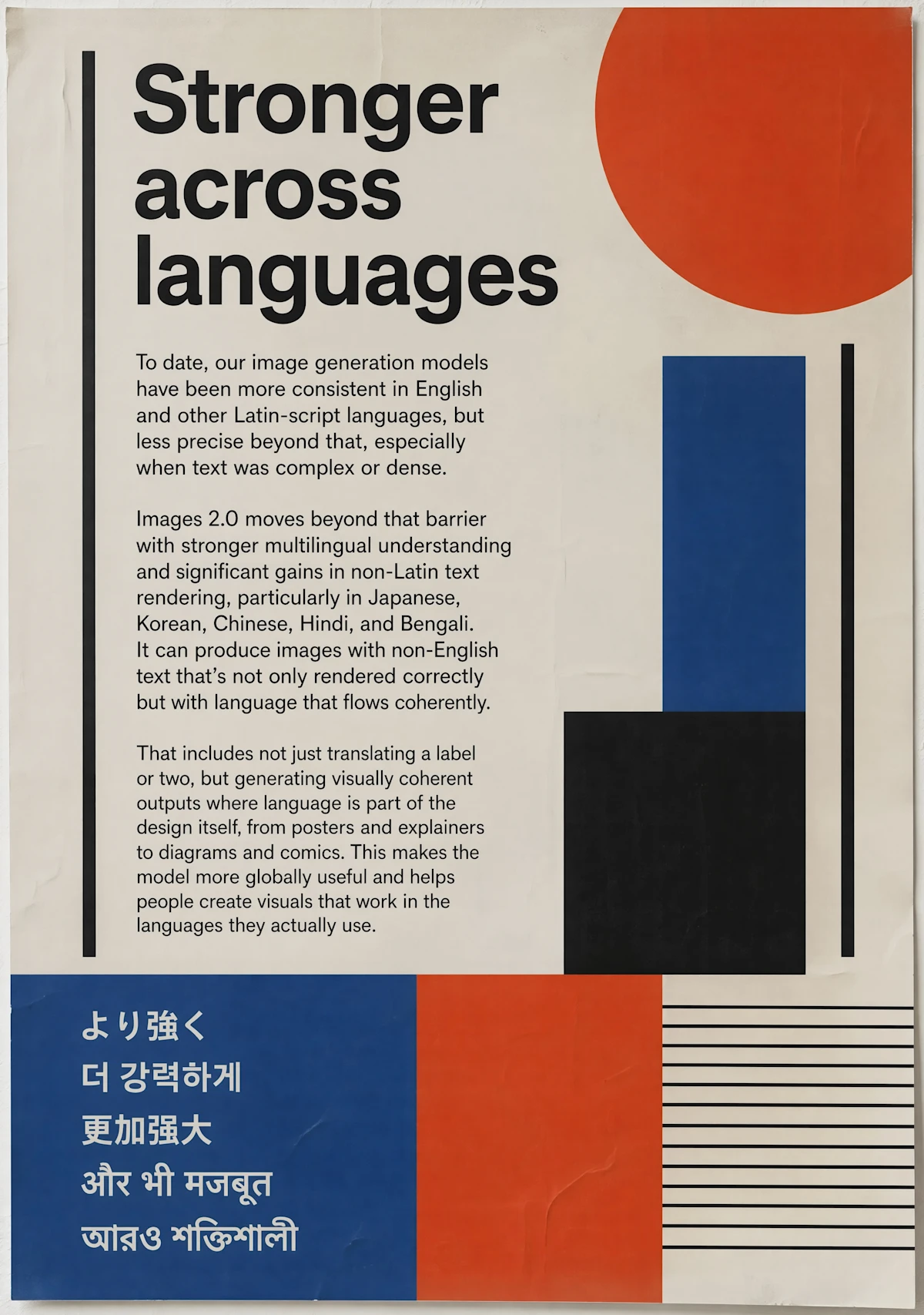
A bold editorial poster titled "Stronger Across Languages" in large
sans-serif. Below the title, a grid of eight small panels, each
containing a short sentence in a different script — Latin, Japanese
kanji, Korean hangul, Simplified Chinese, Devanagari, Arabic, Cyrillic,
and Bengali. Every sentence correctly rendered. Primary red, navy blue,
and warm cream palette. 3:4 print layout.
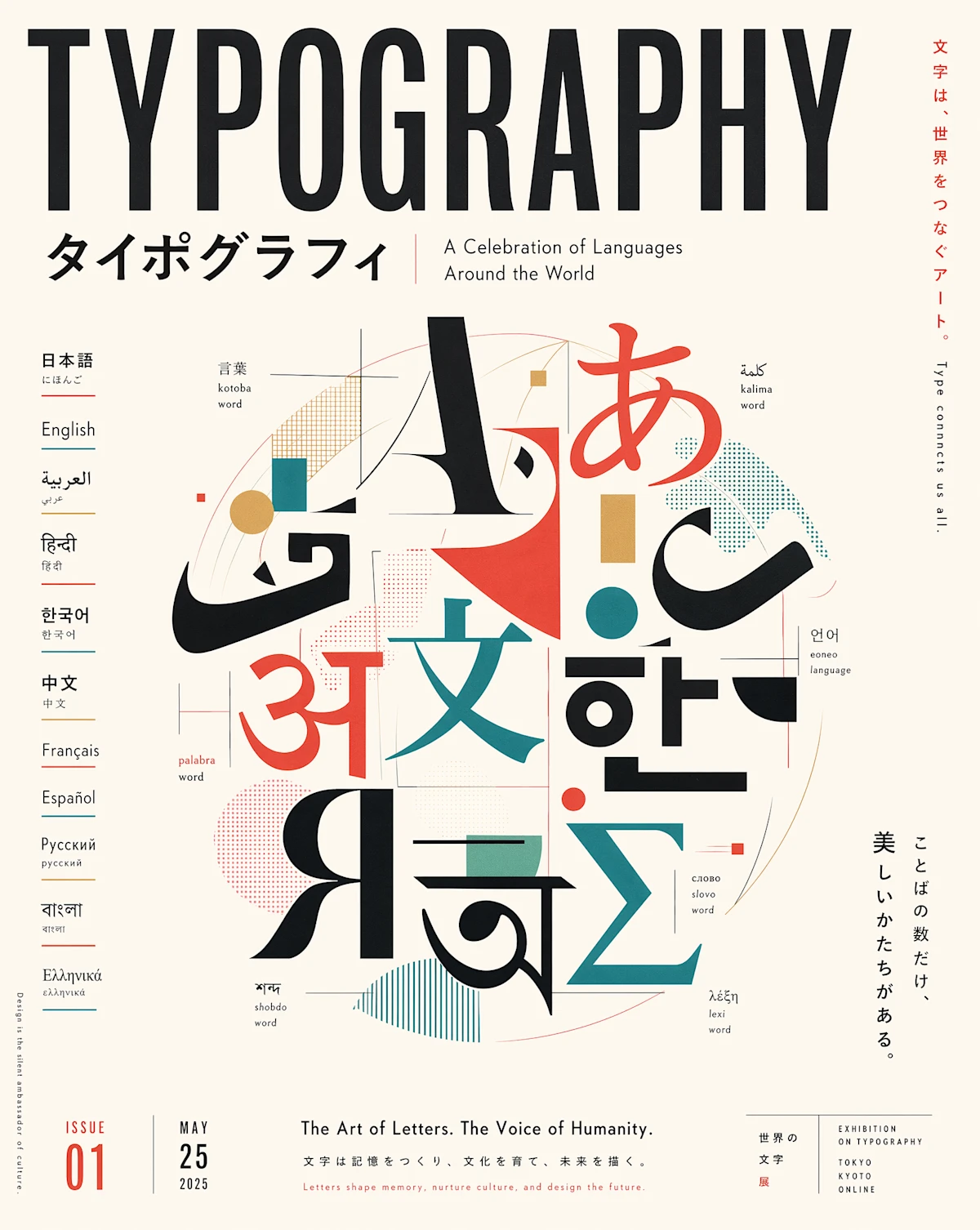
A graphic design poster with the word "Typography" rendered nine times,
each instance in a different writing system: Latin, Japanese, Arabic,
Korean, Devanagari, Cyrillic, Bengali, Greek, and Chinese. Each version
in a distinctive typeface from that script's native tradition. Clean
grid, cream background, minimal decoration. The poster is about letterforms
as cultural objects.
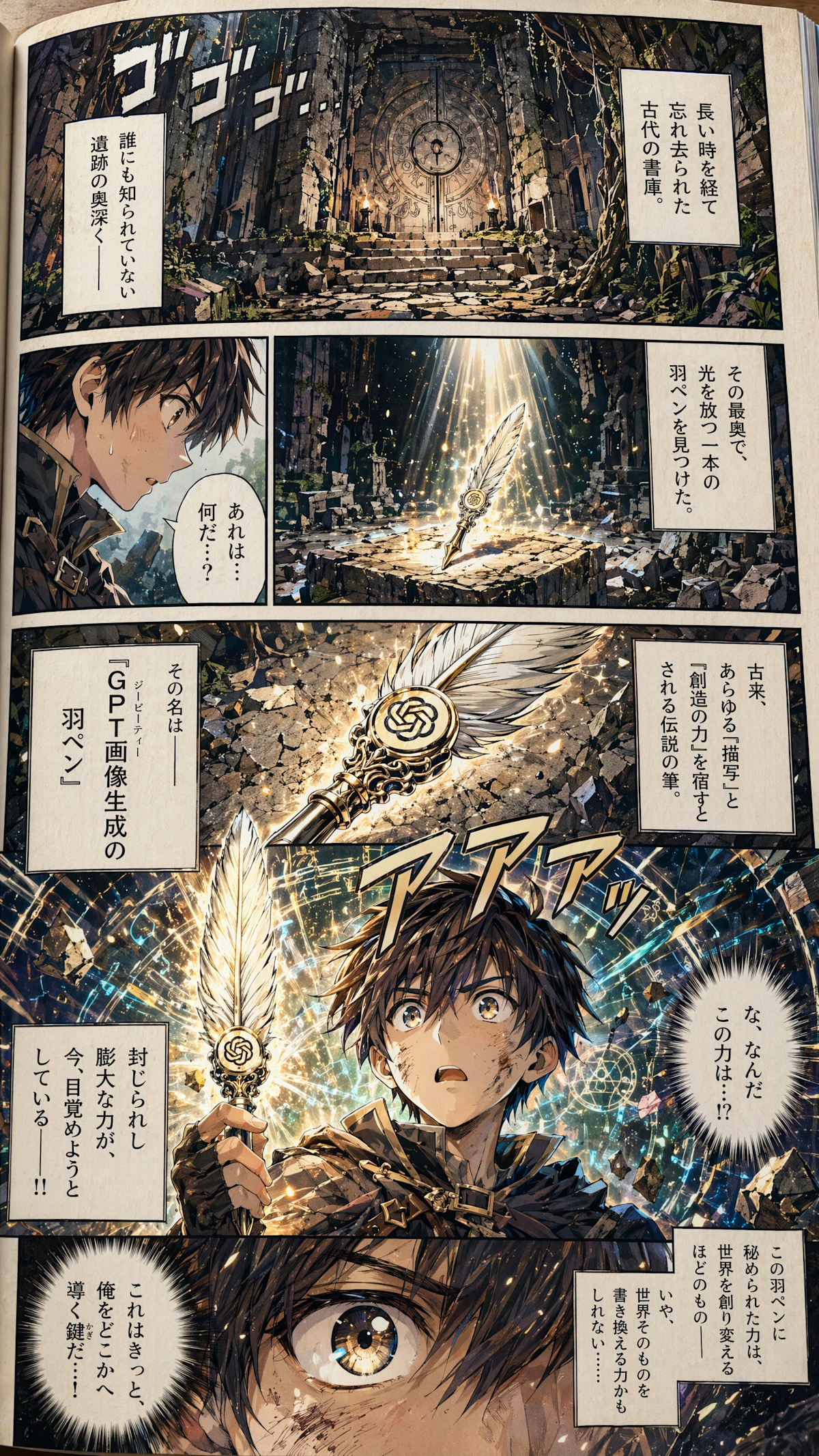
A dramatic manga-style fantasy comic page, all dialogue and sound effects
in Japanese. A young adventurer in weathered leather armor enters a
moonlit ruin and discovers a glowing feather pen floating above a cracked
pedestal. Six cinematic panels with varied framing — wide establishing,
close-up on the pen, character reaction, clutching the pen, aftermath
flash of light, final wide of the adventurer walking out. Dramatic
ink-heavy shading, halftone accents, dynamic speed lines on action
panels.
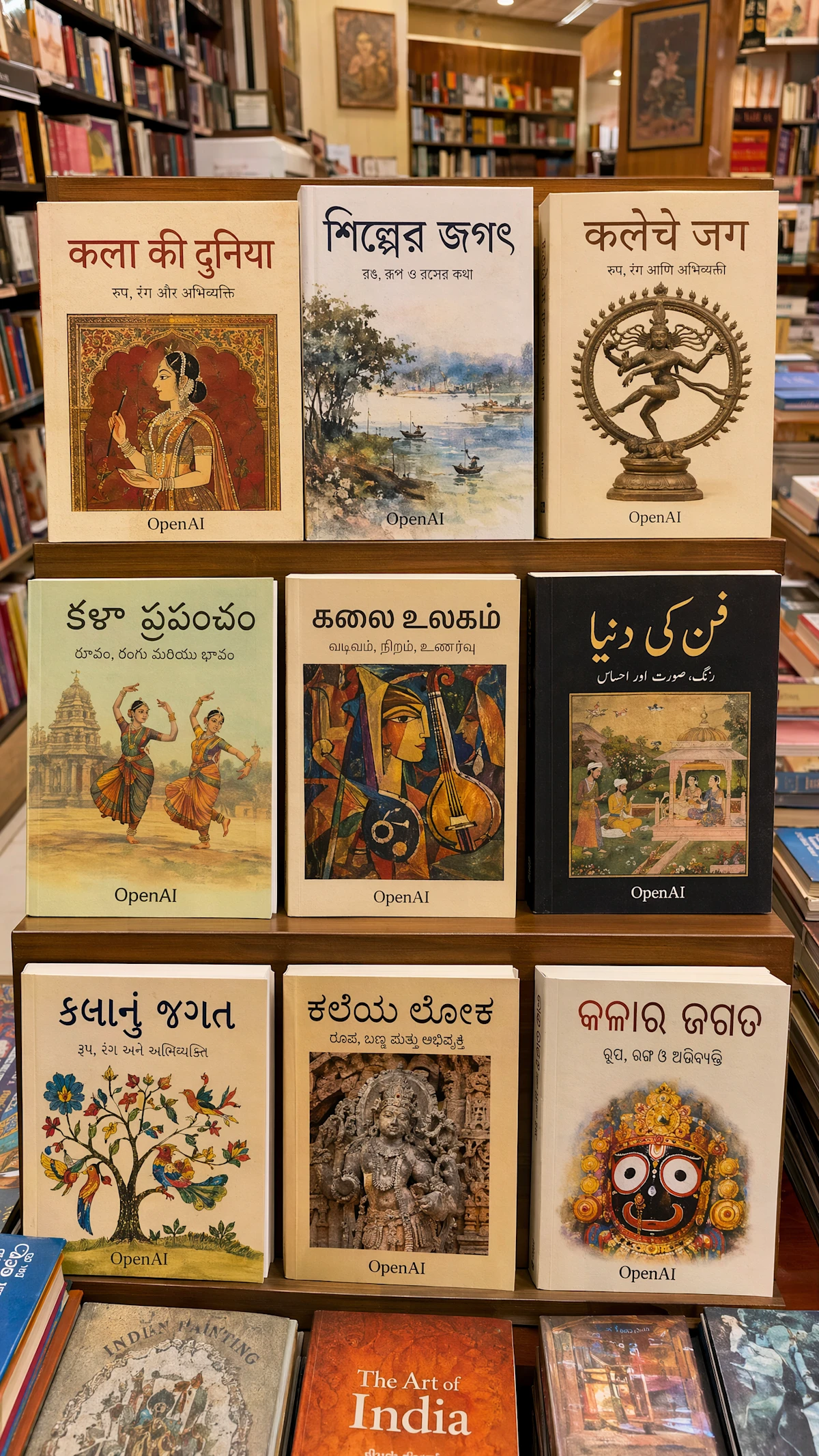
An elegant bookstore display, shot at eye level. Seven curated art books
on a dark wooden shelf. Each book cover written in a different South
Asian language — Hindi, Tamil, Bengali, Marathi, Kannada, Telugu, and
Punjabi — with regional artwork on the cover. Warm tungsten lighting,
shallow depth of field, shot on 50mm lens. The books feel like they
belong together as a publishing series.
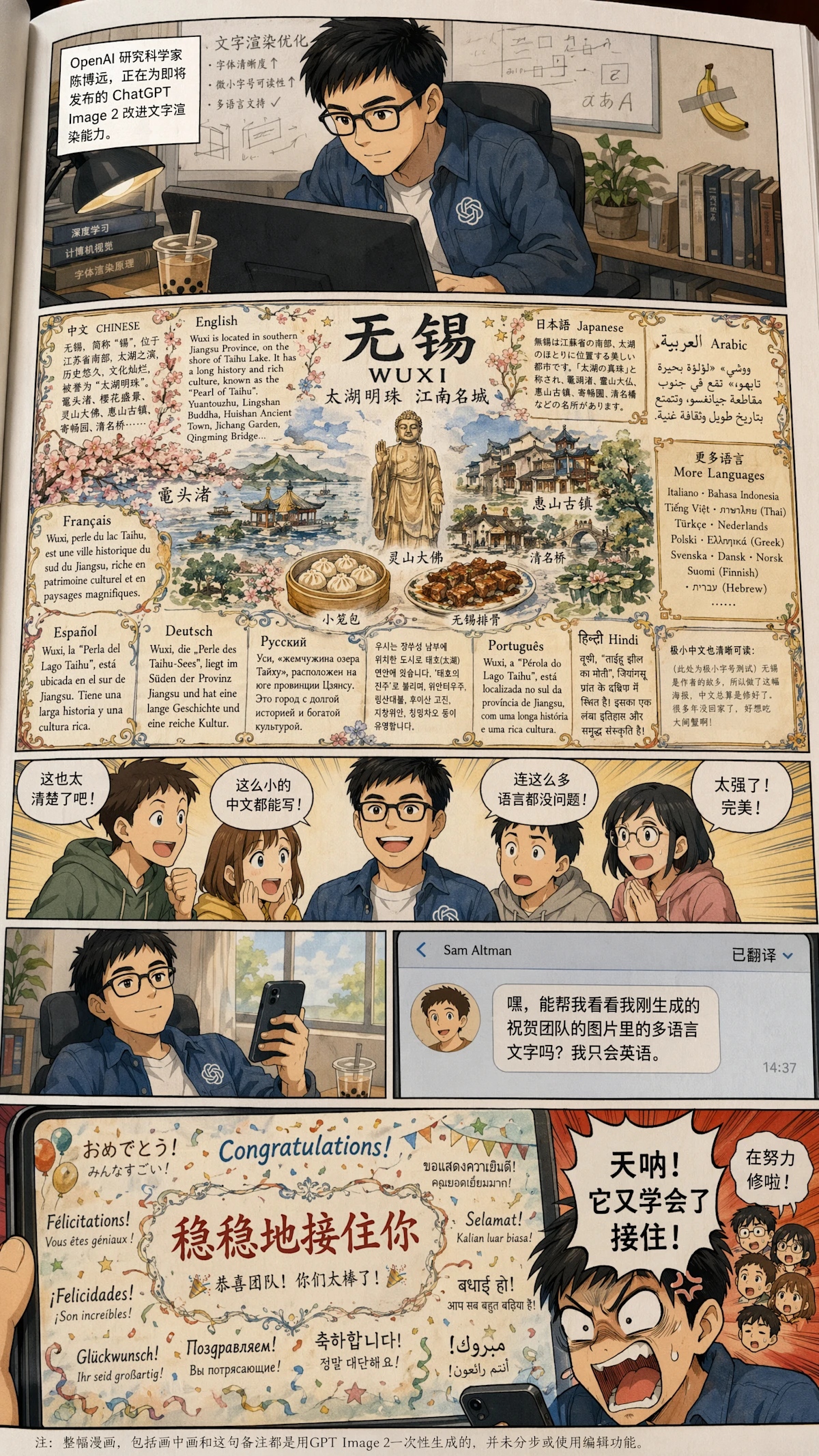
A manga-style comic page where a character narrates a story in Chinese
across six panels. Illustrated speech bubbles with Simplified Chinese
dialog. Panel 1: character at desk. Panel 2: character holding phone
with Chinese text message thread. Panel 3: a city poster translated to
Chinese. Panel 4: close-up of delighted face. Panel 5: multilingual
chat window. Panel 6: celebration scene with "干得漂亮" banner.
Consistent character appearance across all panels.
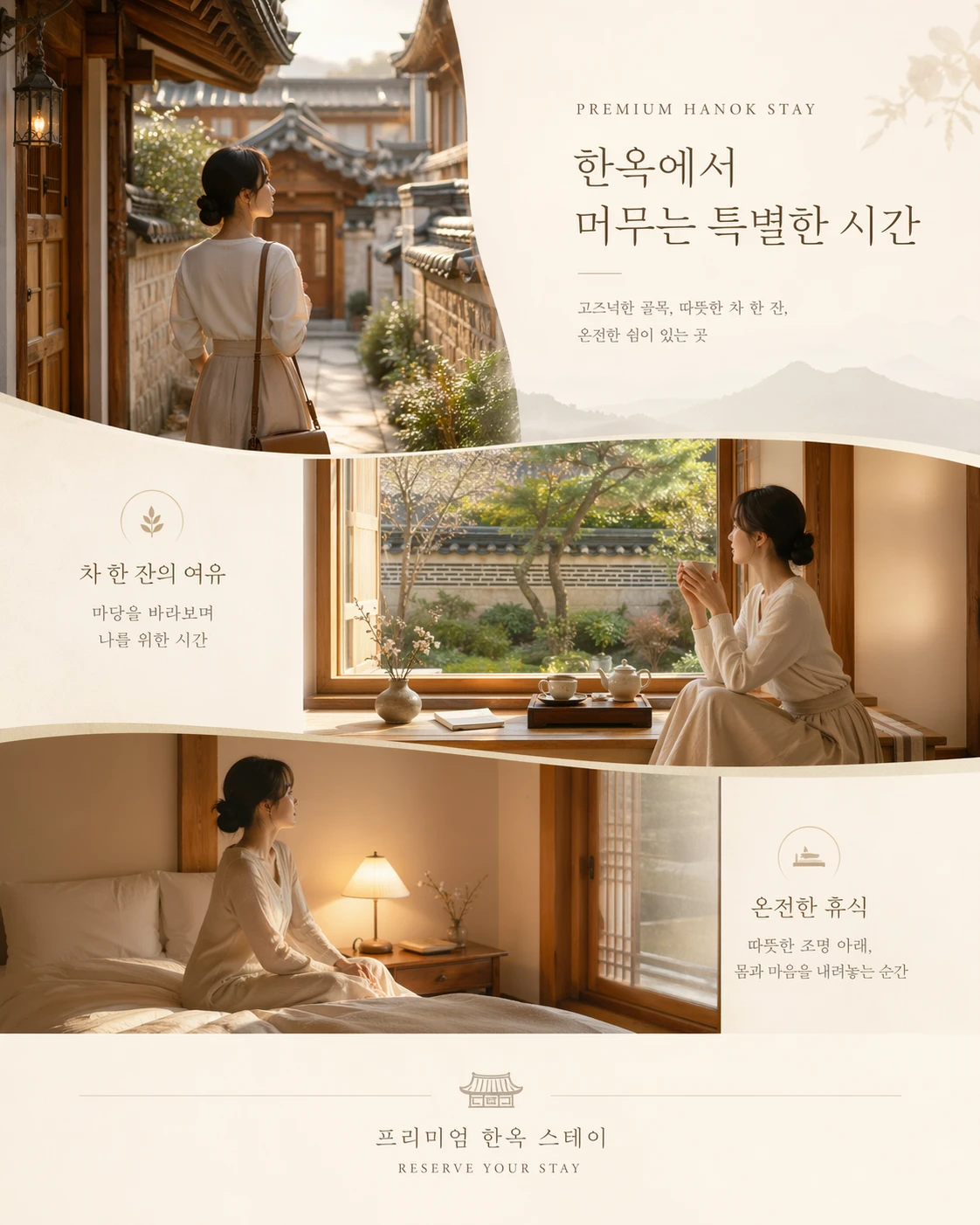
A premium hospitality brochure spread for a traditional Korean hanok
guesthouse. Left page: editorial photo of a hanok courtyard at golden
hour. Right page: Korean hangul typography for the name "달빛 한옥"
in elegant serif, plus a short two-paragraph description beneath in
smaller hangul body copy. Color palette of warm wood, paper white,
and deep navy. Crisp, magazine-level print quality, 2-page spread layout.
3. Stylistic sophistication and realism
GPT Image 2 handles pixel-thin photoreal skin as confidently as flat Bauhaus illustration. The model's default aesthetic is less "AI look" than most competitors — it holds editorial photography, cinematic portraiture, 35mm film grain, and high fashion without prompting gymnastics.
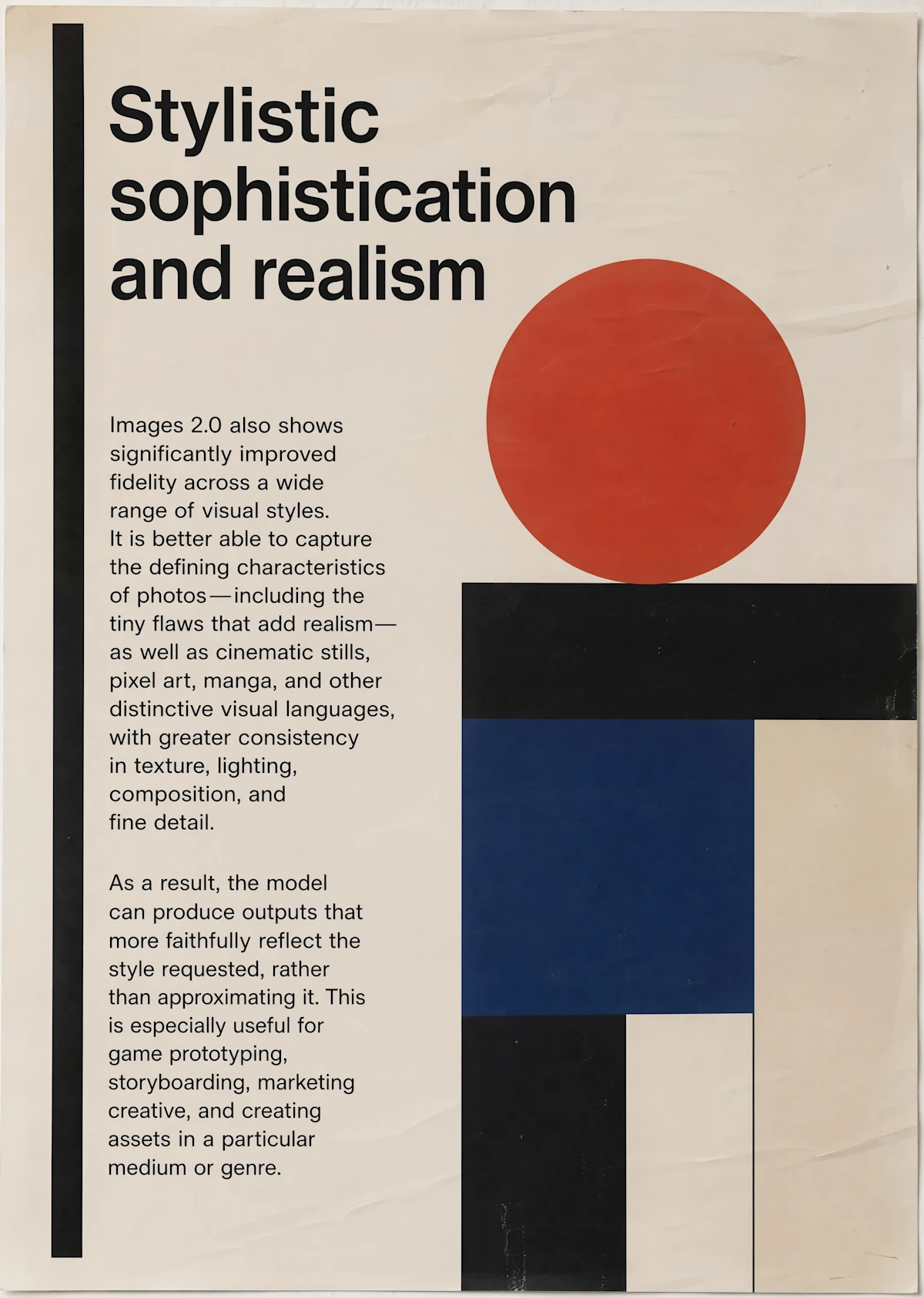
A minimalist editorial poster titled "Stylistic Sophistication and
Realism" in thick black serif. Below, six small rectangular thumbnails
arranged in a 2x3 grid, each showing a different visual style —
photography, illustration, manga, pixel art, watercolor, pencil
sketch. Cream background, thin rule separators, red accent block in
upper left. Magazine cover aesthetic, 3:4 portrait aspect ratio.
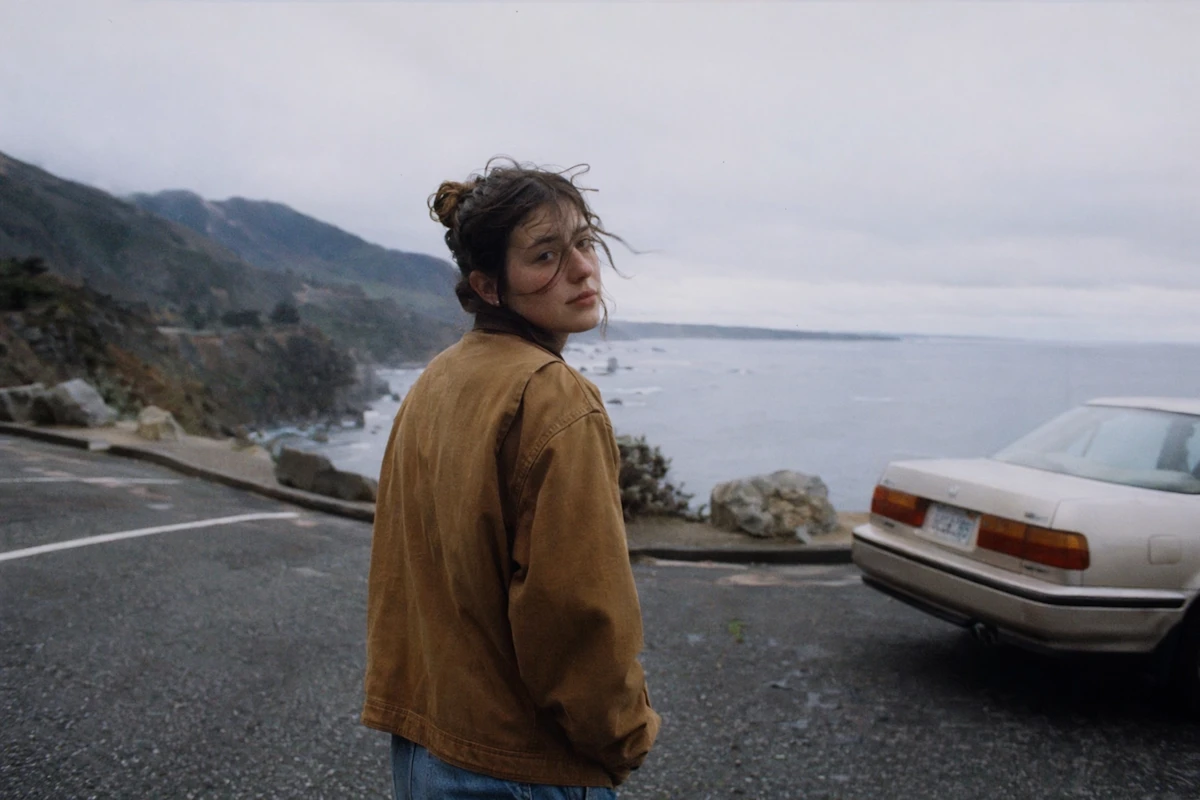
A candid roadside portrait. A person in a worn brown canvas jacket
turns to look back at the camera, caught mid-step. Misty cliffs in the
background, overcast sky, parked dark sedan just in frame. Overcast
natural light, shot on a 35mm film camera with Portra 400, natural skin
texture with visible pores and windblown hair. Shallow depth of field,
3:2 aspect ratio, documentary photography feel.
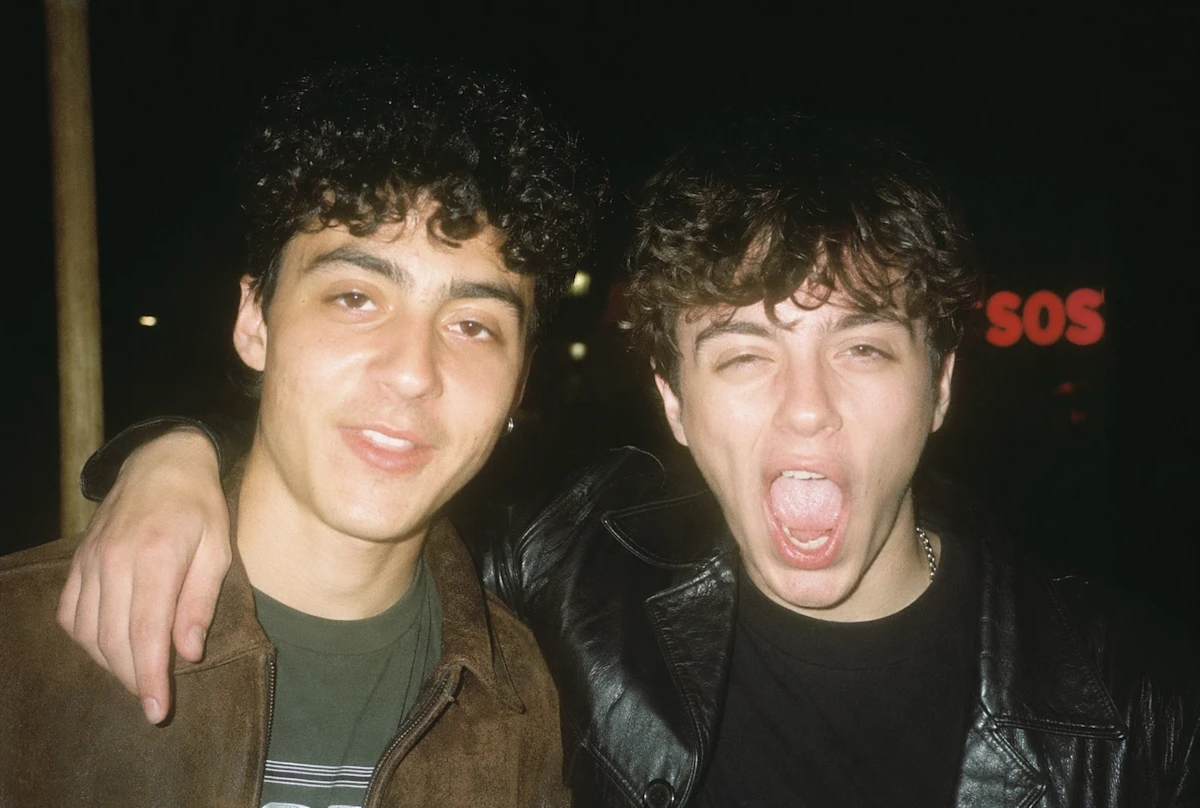
A candid flash photo on a city street at night. Two friends close
together, one smiling directly at camera, the other shouting playfully
with their mouth open. Film-camera aesthetic — strong direct flash,
slight red-eye, shallow depth of field, grainy film look, neon sign
bokeh behind them. Shot on disposable Kodak 400. Unposed, spontaneous
party energy.
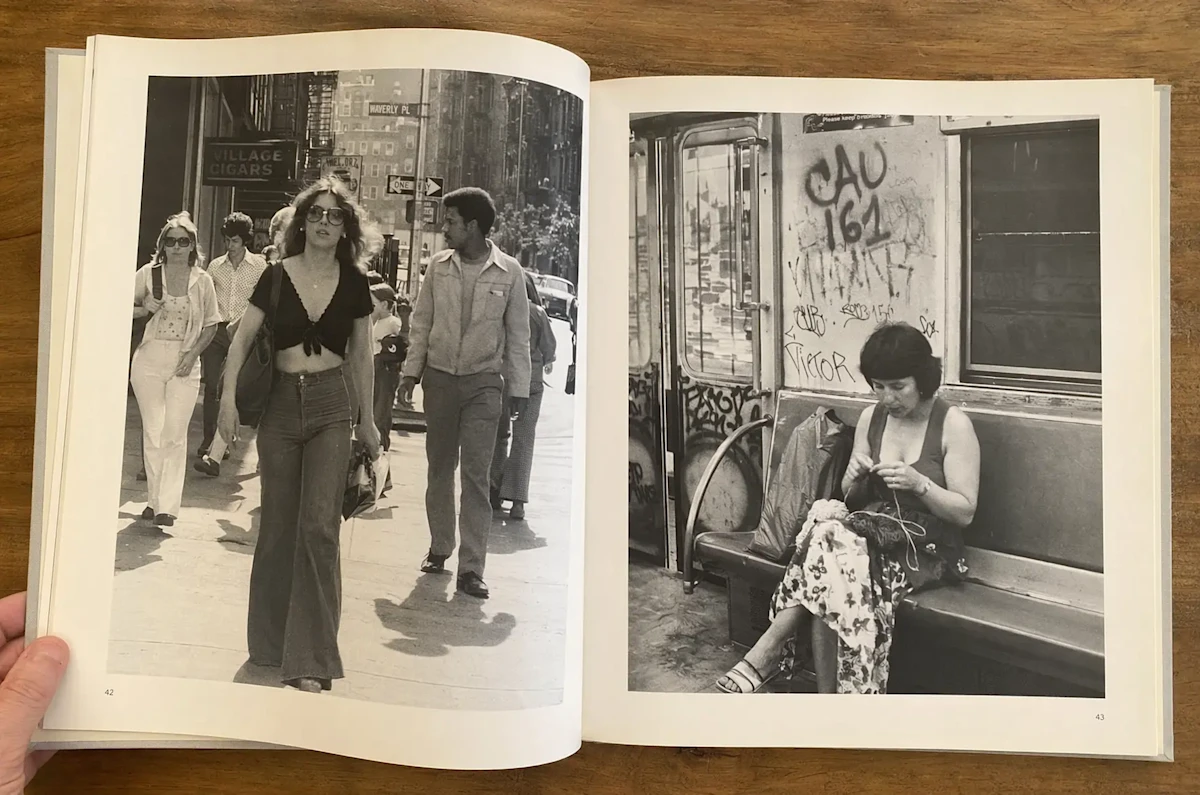
A black-and-white photo book two-page spread. Left page: a 35mm street
photograph of pedestrians crossing an afternoon sidewalk, motion blur
on a walker passing close to the lens. Right page: a person seated in
a graffiti-marked subway car, knitting calmly. Both images feel shot on
Tri-X 400, pushed, with visible grain and deep shadow detail. Thin
white margins, page numbers bottom outside corners. Documentary 35mm
photography.
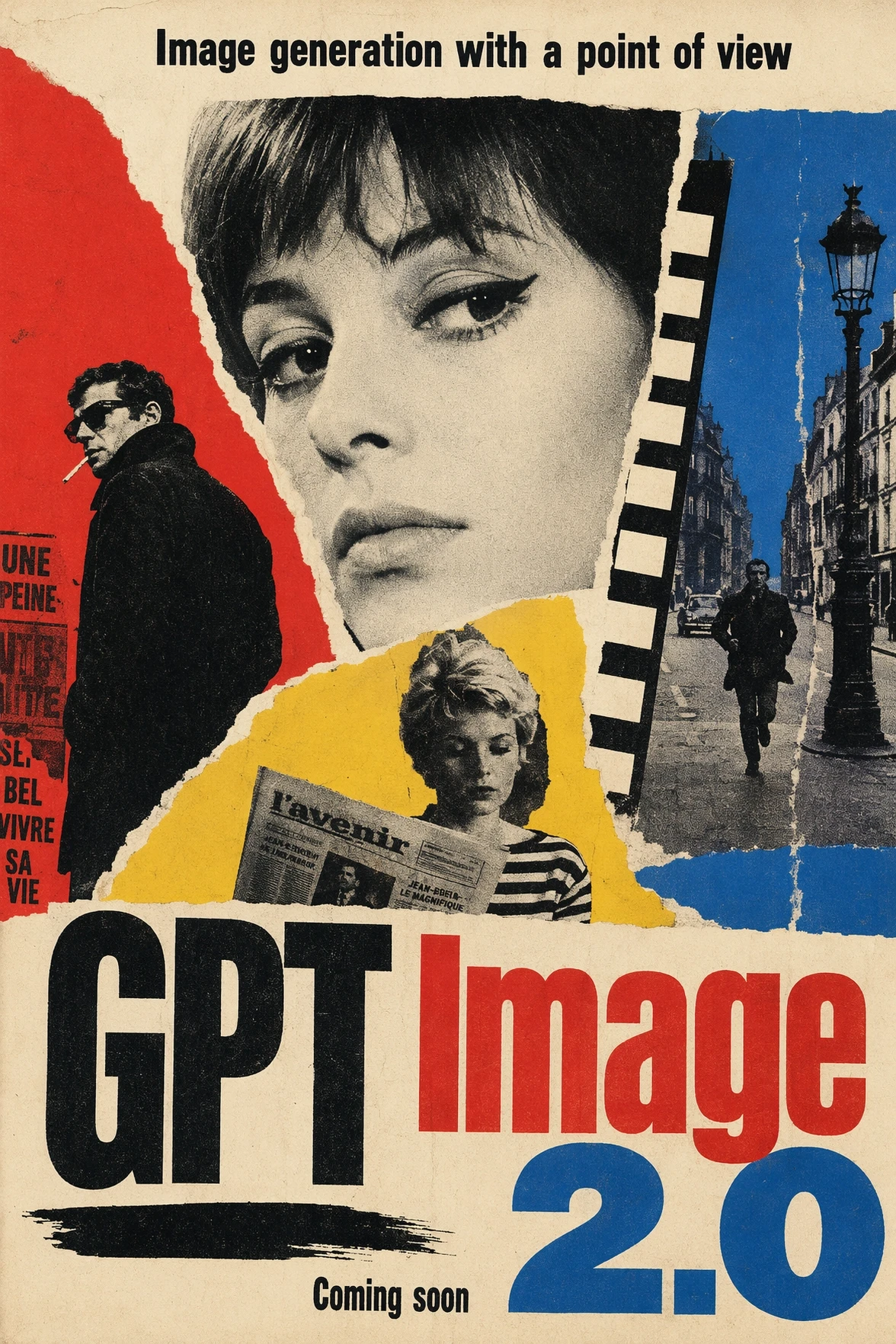
A vintage French New Wave-inspired poster. Torn-paper collage overlapping
black-and-white cinematic portraits with bold red typographic blocks.
Title in oversized French sans-serif at the top. Secondary text
in Futura-style condensed below, wrapped around a torn cinema still.
Palette restricted to red, midnight blue, black, and cream. The
composition has a slightly imperfect, cut-and-paste handmade quality.
3:4 portrait aspect ratio.
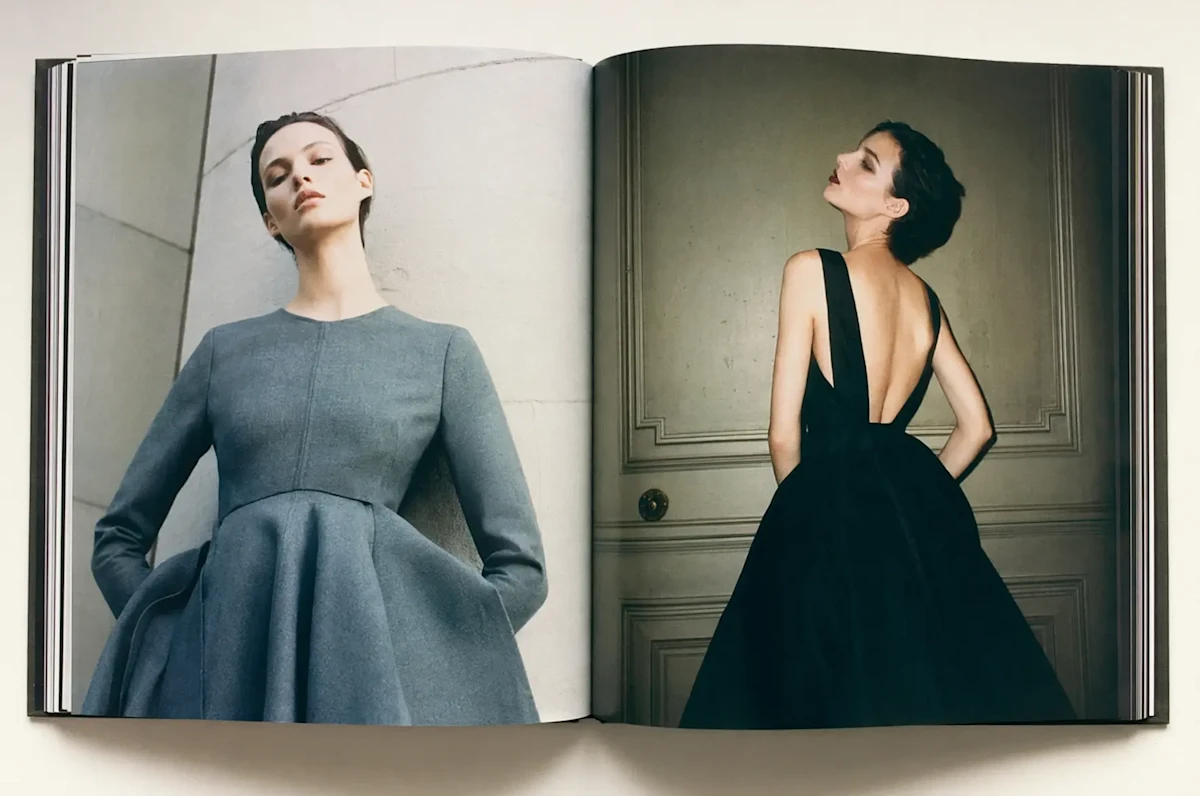
A luxury fashion book two-page spread. Left page: full-bleed editorial
portrait of a model in a sculptural dove-gray gown, arms raised in a
dramatic pose, minimalist studio backdrop. Right page: same model in a
floor-length black gown, posed with back to camera, head turned, looking
over shoulder. Both photos soft natural window light, 85mm lens, shallow
depth of field. Minimal typography — just the brand name in small caps
along the gutter. Gloss magazine print feel, 2:3 spread aspect ratio.
4. Narrative consistency — comics, characters, stories
The model keeps the same character's face, clothing, and body type across multi-panel sequences. That unlocks comics, children's books, character reference sheets, and storyboarding as practical GPT Image 2 workflows.
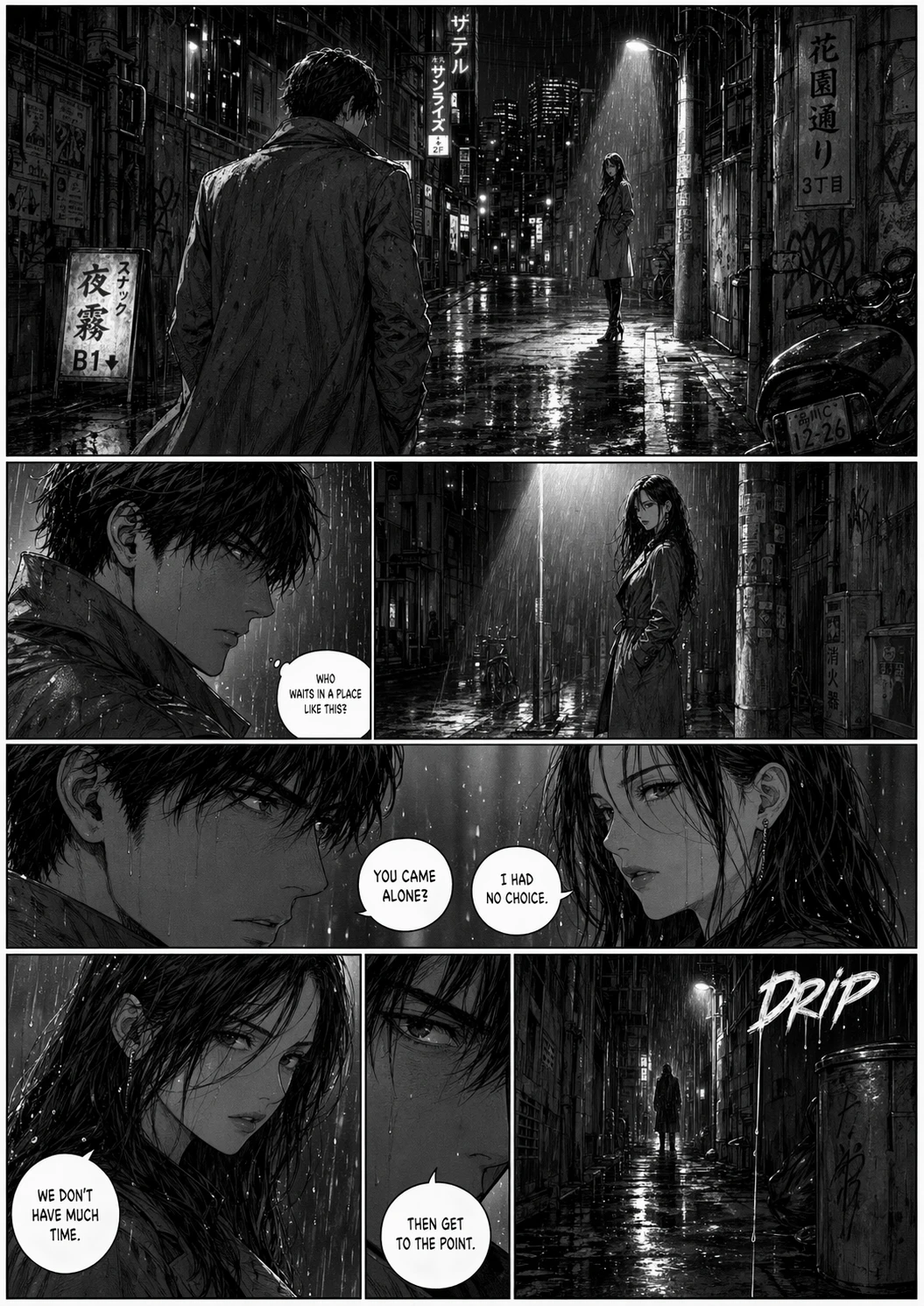
A black-and-white seinen manga page. Six panels following a solitary
young man walking through Tokyo at night, reflecting on loneliness and
being overlooked. Panel 1: wide cinematic shot of the character crossing
an empty intersection. Panel 2: close-up of his face, eyes downcast.
Panel 3: a neon-lit alley reflected in a puddle. Panel 4: over-the-shoulder
looking at a glowing convenience store window. Panel 5: introspective
close-up, narration bubble in small Japanese text. Panel 6: wide
departing shot, character walking toward a vanishing point. Heavy ink
shading, screentone halftones, cinematic composition throughout.
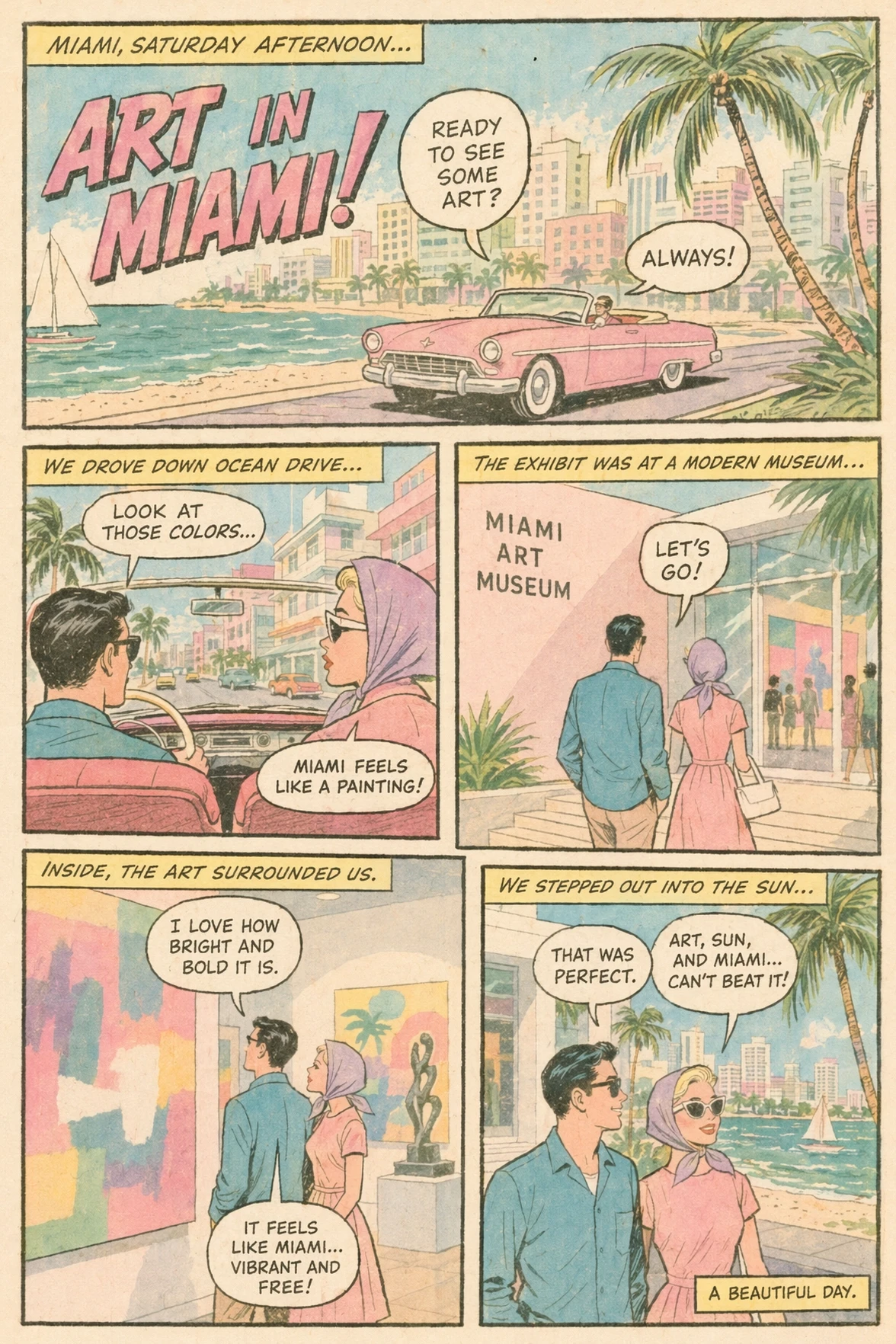
A retro 1970s-style vintage comic page following a couple's day at the
Miami Art Deco museum. Six colorful panels with consistent character
design in each. Panel 1: the couple outside the museum entrance. Panel 2:
viewing a painting, captions translating what they see. Panel 3:
closeup of one character's amused reaction. Panel 4: they share food
on a bench. Panel 5: they buy a postcard in the gift shop. Panel 6:
walking out at golden hour. Warm pastel palette, thick black outlines,
retro print halftone texture. Destination branding "Miami Art Deco
Museum" consistent on signage.
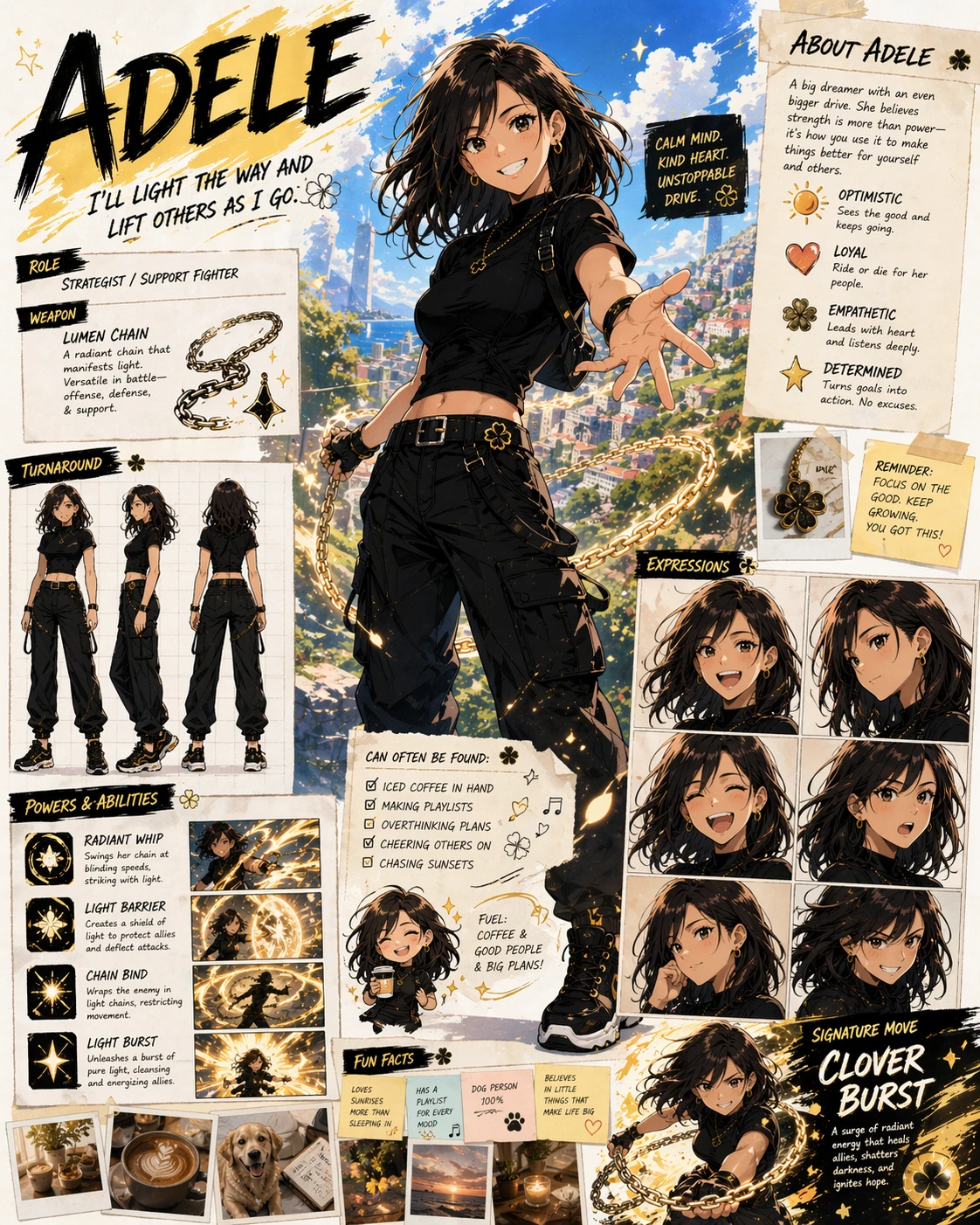
An anime-style character reference sheet in vibrant scrapbook layout.
Title block "Adele — Support Fighter" in stylized Latin text. Main hero
portrait on the left: a cheerful young woman in battle gear holding a
glowing chain weapon. Turnaround views across the center — front, 3/4,
side, back. A row of six expression thumbnails below — happy, angry,
surprised, focused, sad, playful. Two small side vignettes: her
relaxing with a book, and prepping tea. Bright color palette, hand-drawn
annotation arrows, notes in neat handwriting.
5. Enhanced real-world intelligence
"Thinking mode" generations let GPT Image 2 research and reason before drawing. You brief it once with a topic; it produces an image that actually contains accurate structural information — infographics that follow real logic, editorial spreads with correct data, educational diagrams with correct symbolic content.
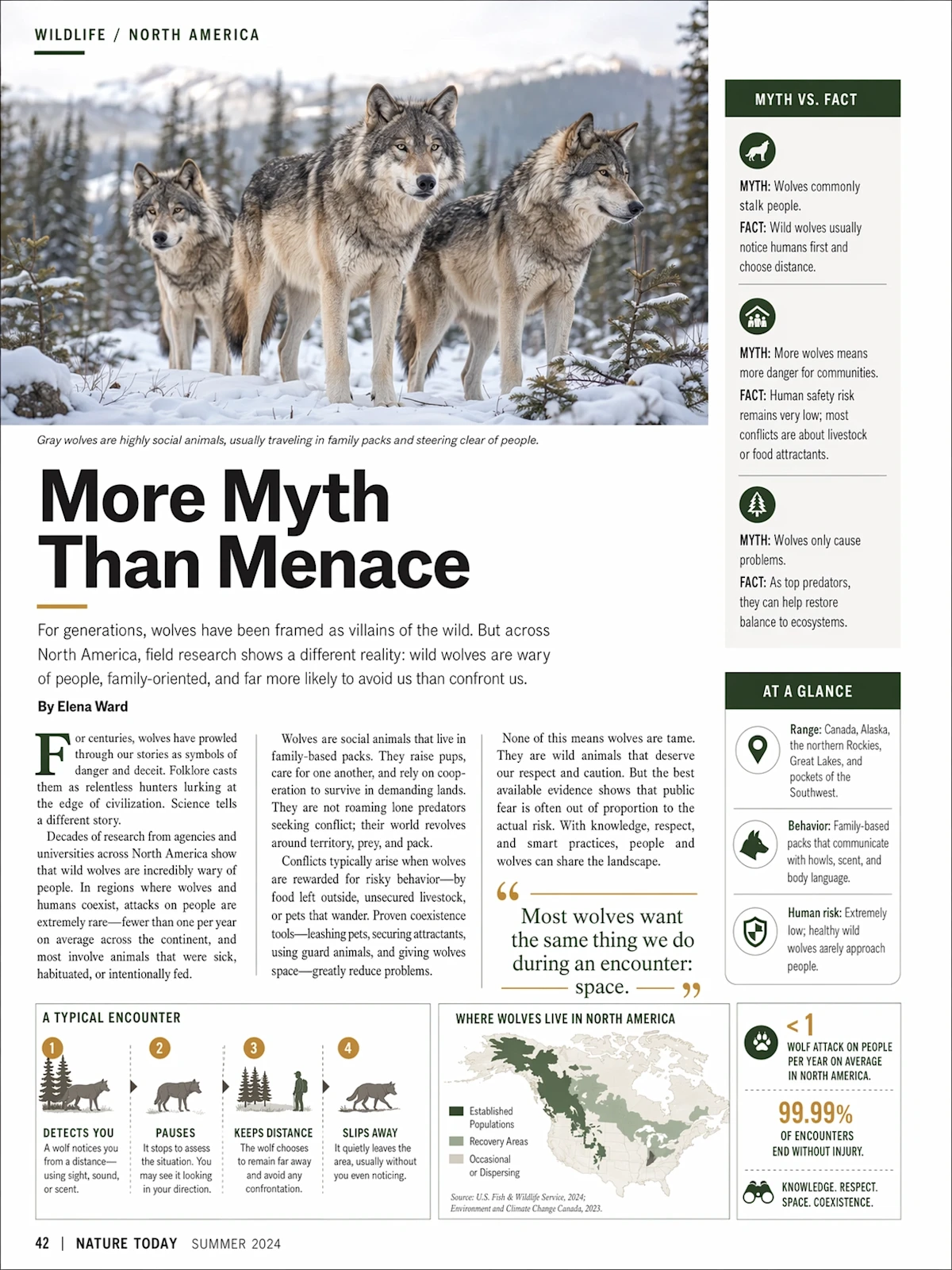
A National Geographic-style magazine infographic spread about gray wolves
in North America. Hero photo of three wolves in snow across the top two
thirds. Bottom third contains four structured sections: a myths vs. facts
callout box, a small North American range map, a statistics panel ("pack
size: 6-12, territory: 50-1,000 sq mi"), and an educational illustration
of wolf body language. All text correctly rendered and factually accurate.
Editorial magazine design, 2-page spread aspect ratio.
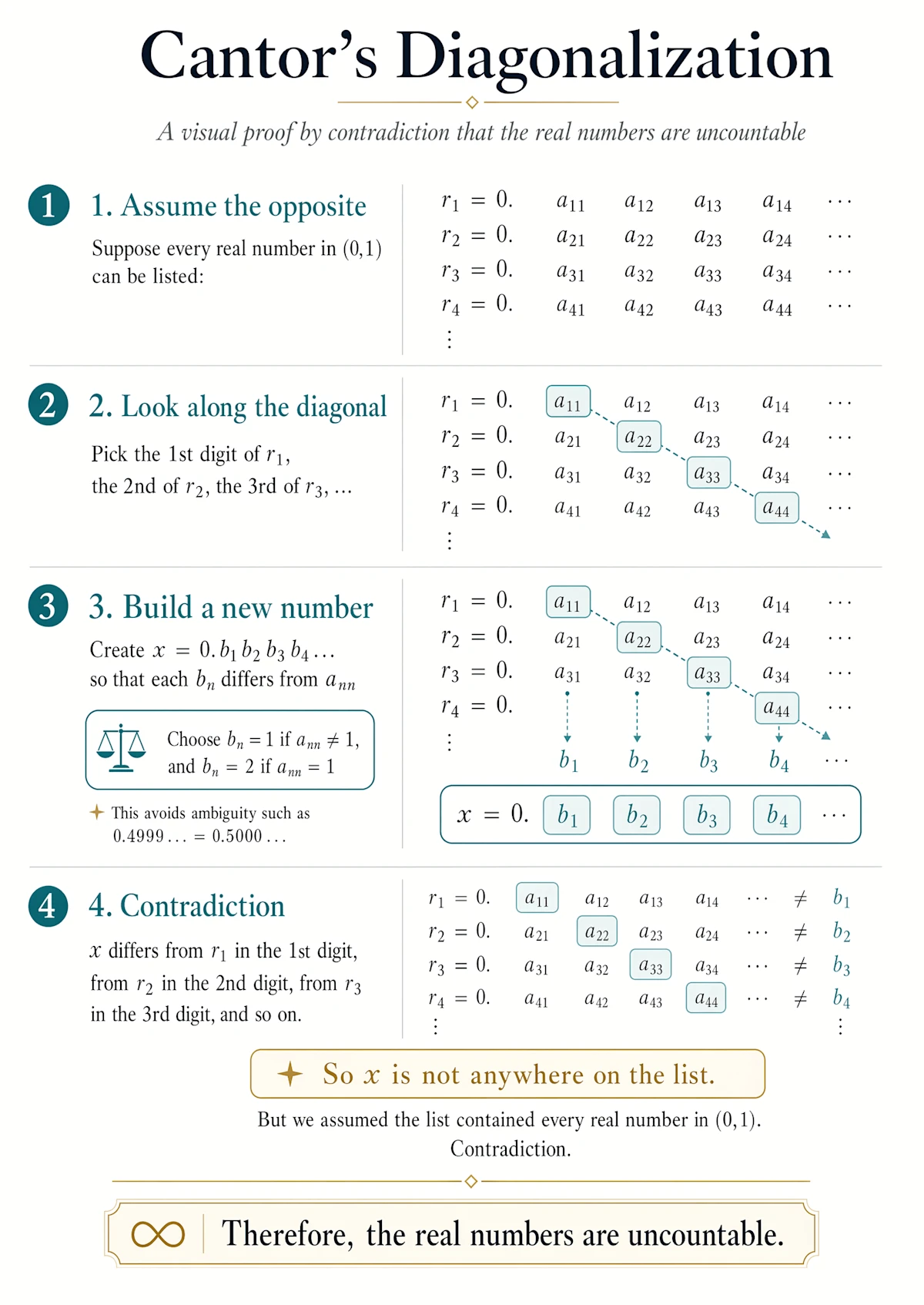
An educational infographic explaining Cantor's diagonalization proof.
Title "The Reals Are Uncountable" in serif caps. Three sequential panels:
(1) "Assume all reals are listable", showing a numbered list 1-6 of
hypothetical real numbers with their decimal expansions; (2) "Build a
number along the diagonal", with the digits on the diagonal highlighted;
(3) "The new number can't be on the list", showing the constructed
number and why it differs from every listed number at one position.
Clean mathematical typography, subtle grid, cream and navy palette.
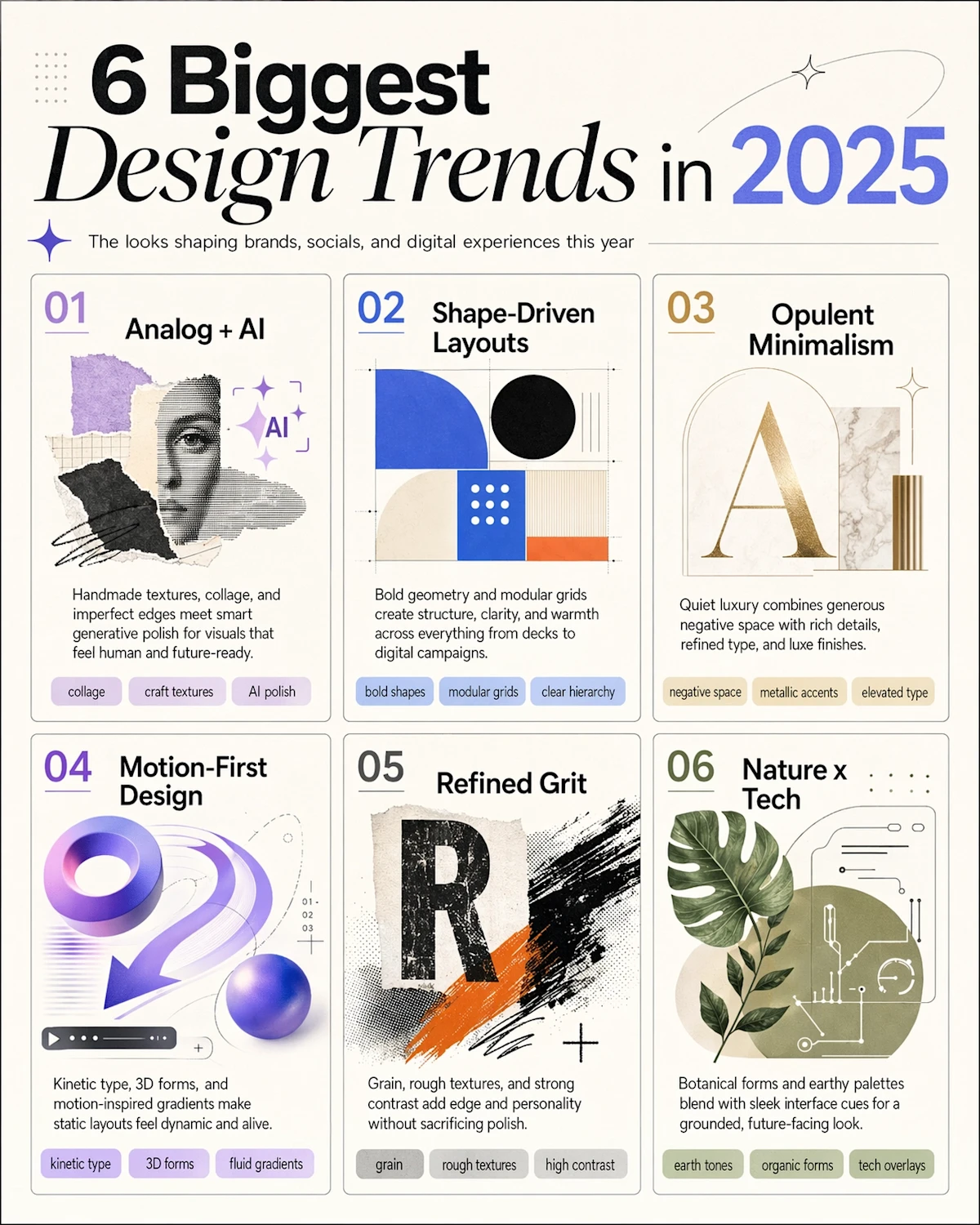
A polished design-trends infographic poster titled "Six Design Trends
That Matter in 2026." Six equally-sized cards in a 2x3 grid. Each card
contains a trend name ("Analog + AI", "Shape-Driven Layouts", "Opulent
Minimalism", "Motion-First", "Refined Grit", "Nature x Tech"), a short
two-line description, and one tiny illustrative icon demonstrating the
trend. Modern editorial layout, pale cream background, single red accent
color. Poster aspect ratio 3:4.
6. Flexible aspect ratios
GPT Image 2 natively handles ratios from square to panoramic to tall vertical without the composition breaking. This is quiet but load-bearing for production work — every social channel, every ad unit, every print format gets filled by one model.
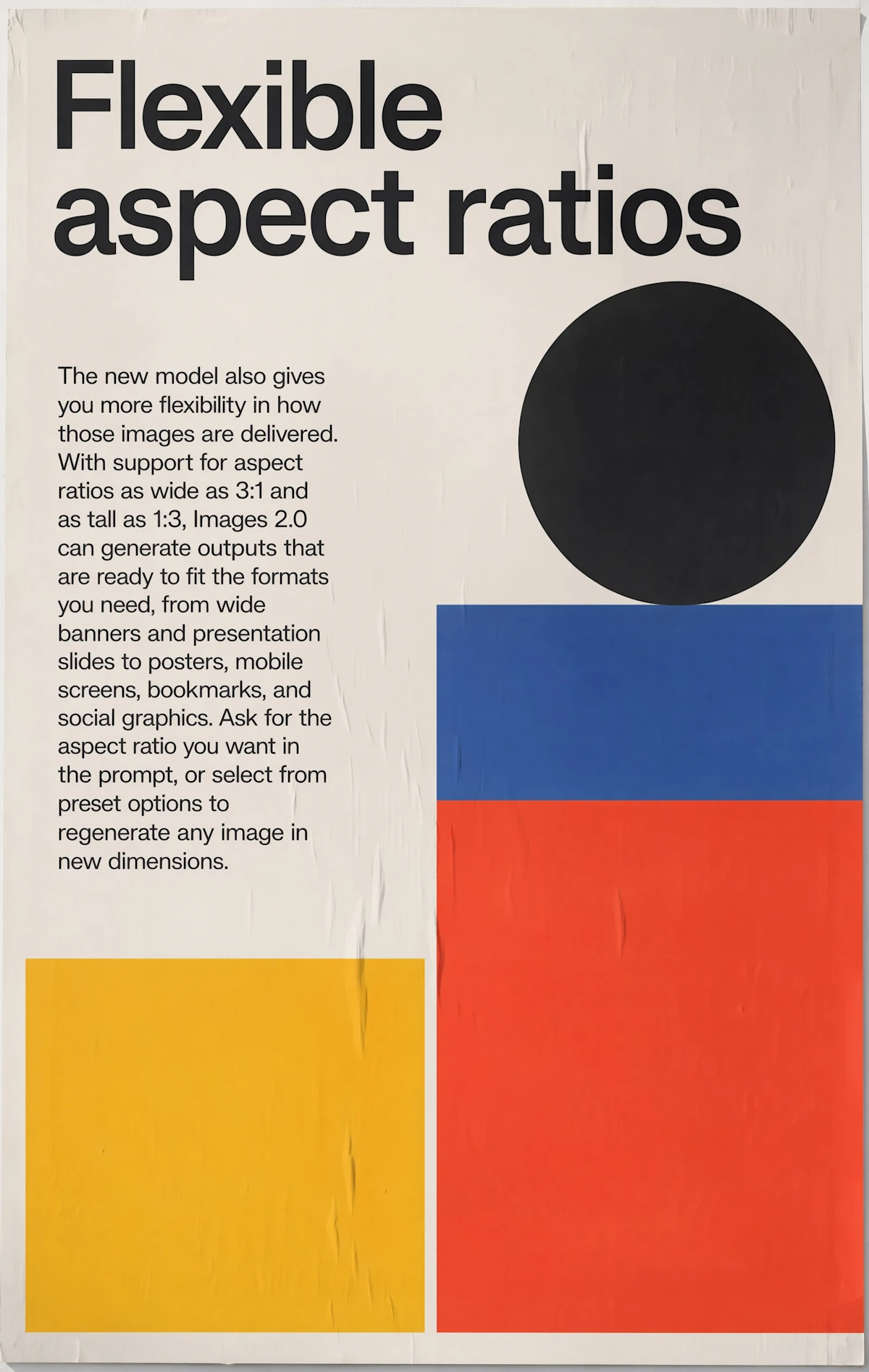
A Bauhaus-inspired poster titled "Any Ratio You Need" in thick geometric
sans-serif. Below the title, a graphic arrangement of six rectangles at
different proportions — 16:9, 9:16, 1:1, 4:5, 2:3, 21:9 — each labeled
with its ratio. Primary red, navy blue, mustard yellow, and black on
warm cream. Minimalist composition, offset heavy type, print-poster
aspect 3:4.
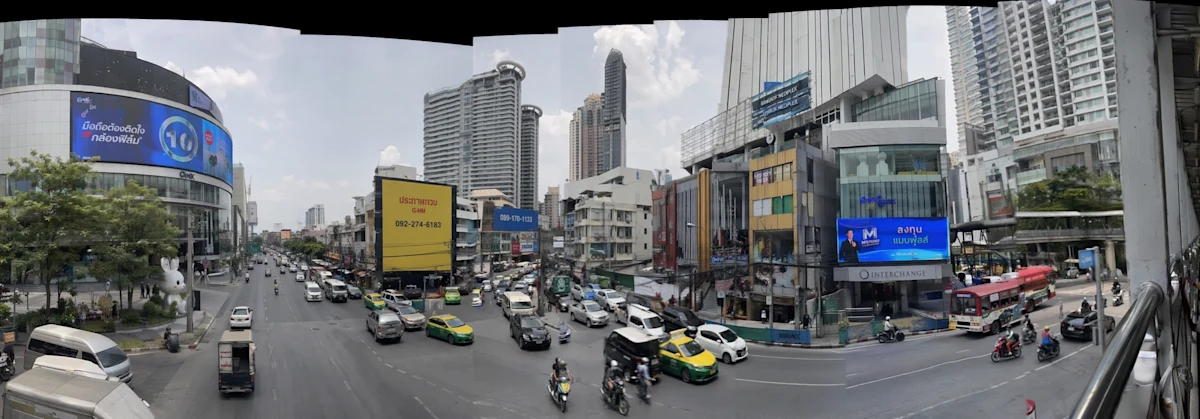
A wide panoramic photograph of a busy urban Thai street at midday —
3:1 aspect ratio. Multi-lane traffic with taxis, buses, and motorbikes
filling the lower third. High-rise buildings rise on both sides, with
Thai-language signage rendered accurately on several storefronts.
Bright daytime sky, slight atmospheric haze. Shot on wide-angle lens,
slight barrel distortion, documentary street photography feel.
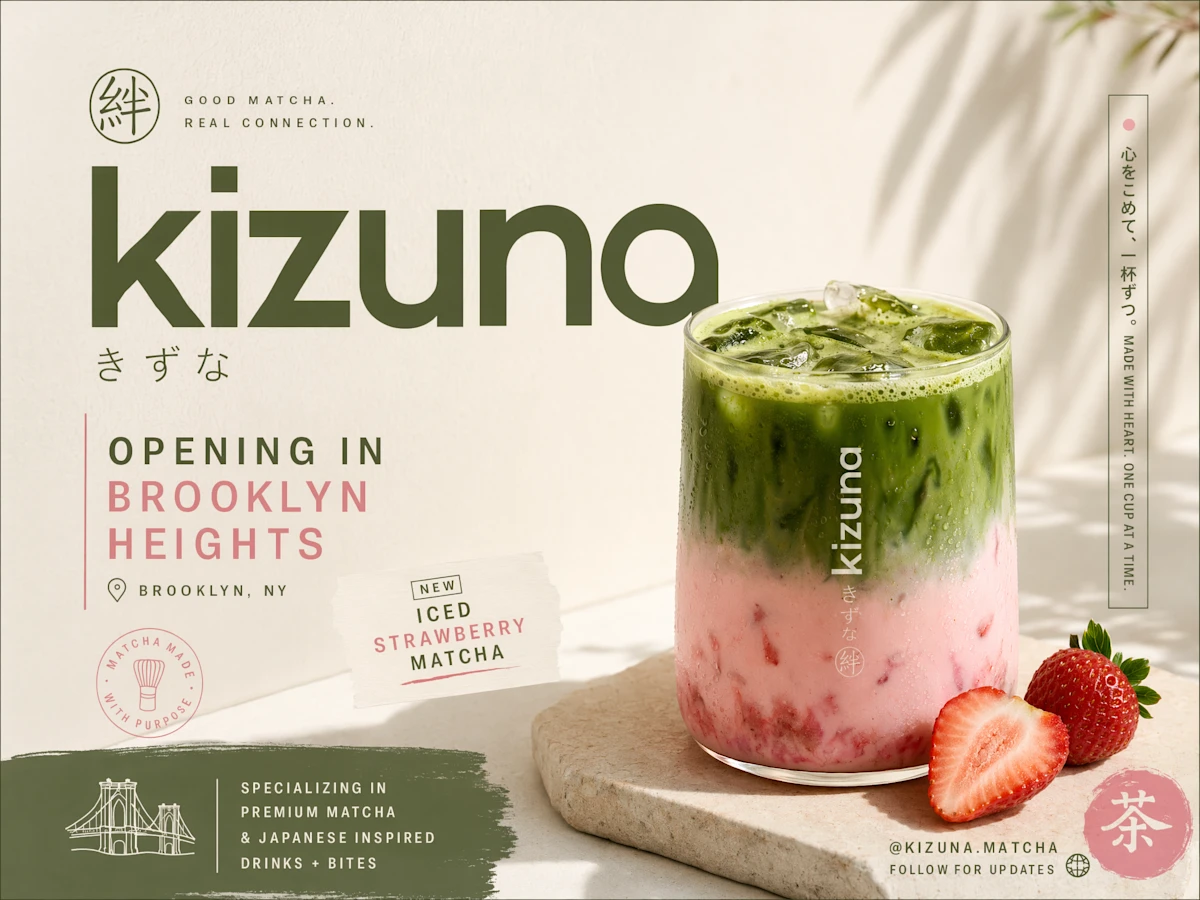
A launch poster for a Brooklyn café called "Kizuna Matcha." 4:3
horizontal layout. Hero lifestyle photo on the left — a frosted glass of
iced strawberry matcha with condensation beads, shallow depth of field,
natural window light. On the right, soft modern Japanese-inspired
branding — brush-style logo, product name in English and kana, short
address line "61 Atlantic Ave, Brooklyn Heights." Warm cream, matcha
green, and dusty pink palette. Editorial ad-campaign finish.
7. Thinking mode — the "visual thought partner"
When you want the model to reason, not just render, thinking mode does extra work before committing pixels. It's slower, but it produces outputs that feel less "AI image" and more "well-researched asset."
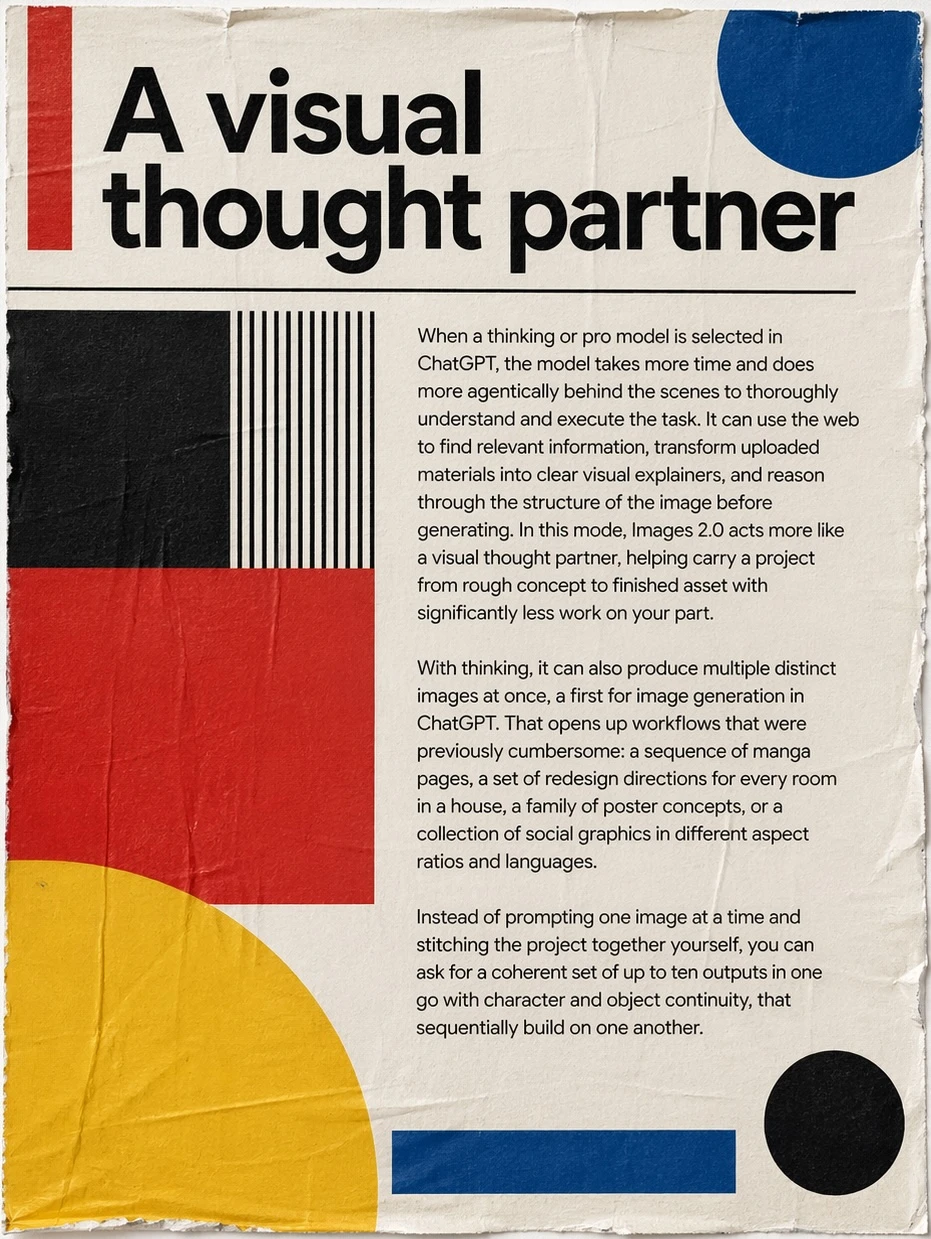
A clean Bauhaus-inspired poster titled "Your Visual Thought Partner."
Subheadline: "Research. Reason. Render." Below, a simple 4-step diagram
using geometric shapes — a question mark (gathering input), magnifying
glass (research), gears (reasoning), and a framed image (render). Thin
lines connect the four steps in sequence. Minimal typography, generous
whitespace, cream background, primary red and navy blue accents, 3:4
print aspect ratio.
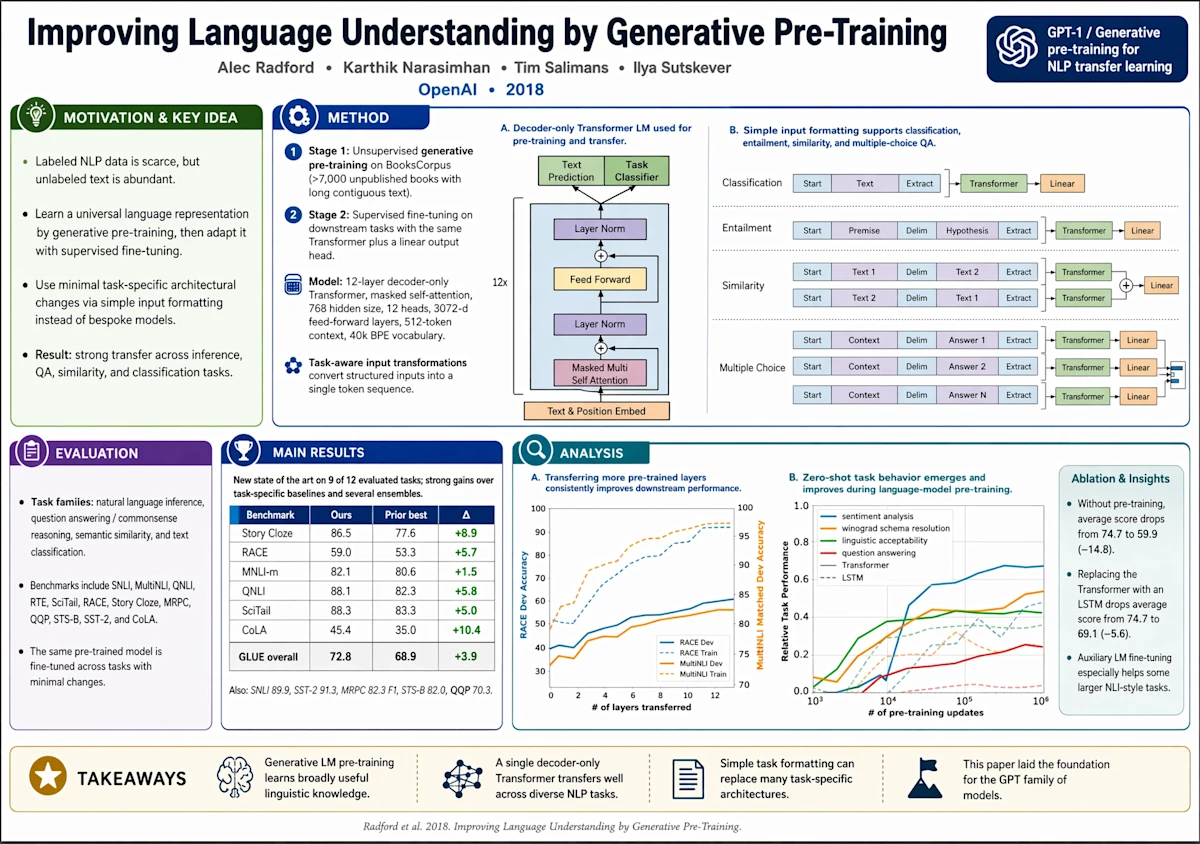
A publication-ready academic conference poster summarizing the paper
"Improving Language Understanding by Generative Pre-Training" (GPT-1).
Four labeled sections — Motivation, Method, Results, Impact — arranged
left to right. Each with a short paragraph, one small data-visualization
chart, and key numbers callouts. Title at top with authors and
affiliation. Clean academic typography, navy and cream palette, subtle
grid, 24x36 inch poster aspect ratio.
How to use these prompts on Oakgen
Every prompt in this gallery is a starting point. On Oakgen's GPT Image 2 generator, paste the prompt, generate once, then iterate on the dimensions that matter for your project — typography weight, palette, character details, layout proportions. Our guide to effective GPT Image 2 workflows covers the refinement loop; the prompt library adds 50 more copy-paste options across five use-case categories.
For testing capability depth against the model rather than adapting polished prompts, use our 25 methodical capability tests. For competitive context, see how GPT Image 2 compares to Nano Banana Pro, FLUX 2 Pro, and DALL-E 3.
A note on attribution
Every image in this gallery is the property of OpenAI, originally published at openai.com/index/introducing-chatgpt-images-2-0. We're showcasing them here as demonstrations of GPT Image 2's capability range with original analysis and prompts. Treat the images as reference for what the model can do, not as stock you can re-use — generate your own versions on Oakgen with the prompts above.