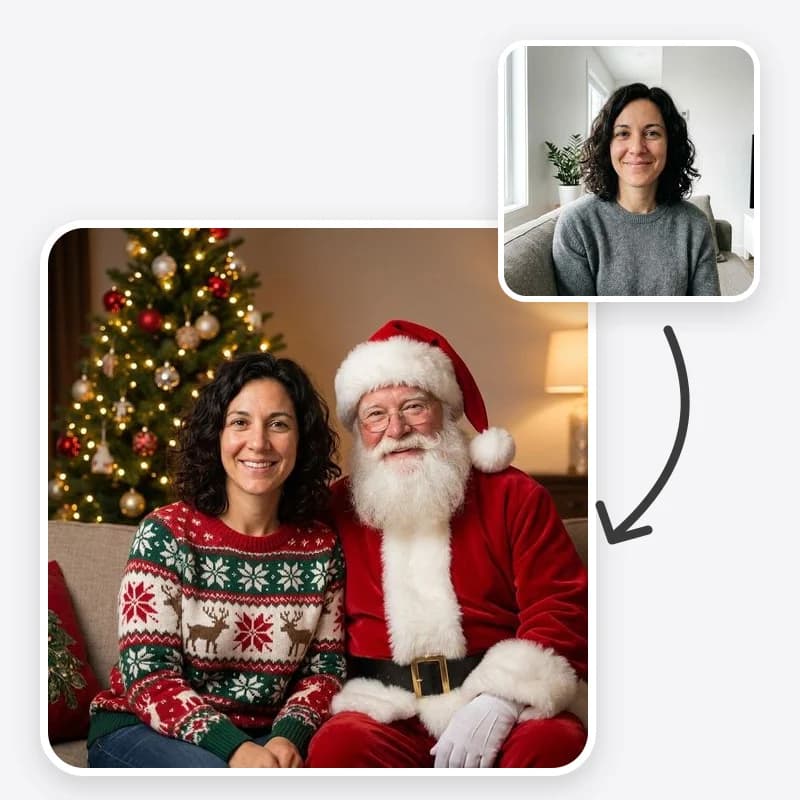
A creative AI agent should automate work that is low-risk, reversible, and based on approved inputs. It should prepare drafts, organize files, create options, run mechanical checks, and assemble review queues. It should not decide whether a product claim is substantiated, whether a person’s likeness may be used, whether source material is licensed, or whether reputation-sensitive creative is ready to publish.
The practical rule is simple: as consequence, ambiguity, cost, or irreversibility rises, human control should rise with it. Use the matrix below to design a human-in-the-loop AI creative workflow before you hand an agent a campaign.
After Agent Chat passes release verification, you can use it to structure this plan. Until then, apply the matrix in your current planning system and use Oakgen's verified pricing page to review generation costs.
Creative automation decision matrix
This matrix uses three states:
- Automate: the agent may complete the task inside a defined policy.
- Automate with review: the agent may prepare or execute the work, but a named human checks it before the next consequential step.
- Never automate the decision: the agent may organize supplied evidence, but it must not decide, approve, consent, or publish on a person's behalf.
| Creative task | State | Agent’s job | Human checkpoint | Stop condition |
|---|---|---|---|---|
| Organize approved briefs and assets | Automate | Label, group, summarize, and flag missing fields | Spot-check the intake policy | Unknown source or confidential material |
| Draft hooks, captions, concepts, and shot lists | Automate | Produce options from approved facts | Review only before external use | Agent invents facts, proof, or customer experience |
| Create low-fidelity moodboards and internal explorations | Automate | Generate directions for discussion | Team selects a direction | Real person, protected brand, or unclear rights appear |
| Resize or reformat an approved working asset | Automate | Prepare specified variants | Sample QA on crops and text | Meaning, claim, logo, or required disclosure changes |
| Generate final image, video, voice, or UGC-style assets | Automate with review | Produce against the approved brief | Creative owner checks accuracy and craft | Product, identity, disclosure, or brand mismatch |
| Product facts and objective advertising claims | Automate with review | Draft copy and map each claim to supplied evidence | Qualified owner verifies substantiation | No evidence, outdated evidence, or broader implied claim |
| Brand-safety screening | Automate with review | Flag prohibited themes, unsafe contexts, and policy terms | Brand owner reviews context and nuance | High-severity or ambiguous risk |
| Generation spend within an approved batch | Automate with review | Show proposed deliverables and estimated cost | Budget owner authorizes the bounded batch | Price, quantity, or scope changes |
| Accessibility drafts | Automate with review | Draft alt text, captions, transcripts, and contrast checks | Editor tests purpose and final context | Meaning depends on details the agent cannot infer |
| Final publishing of routine organic content | Automate with review | Prepare the post and destination | Named publisher gives explicit approval | Claims, controversy, sensitive timing, or integration uncertainty |
| Source rights and licensing | Never automate the decision | Preserve provenance and surface supplied terms or gaps | Rights owner or counsel decides permitted use | Unknown ownership, conflicting terms, or restricted use |
| Real-person likeness, voice, or identity | Never automate the decision | Record supplied consent evidence and intended context | Authorized person verifies permission and use | Missing, ambiguous, expired, or context-specific consent |
| Legal or regulated claims | Never automate the decision | Locate the proposed claim and supporting material | Qualified legal/compliance reviewer decides | Health, finance, safety, children, or regulated category uncertainty |
| Crisis, political, cultural, or reputation-sensitive creative | Never automate the decision | Offer options and risk notes | Accountable leader selects or rejects | Material harm cannot be confidently bounded |
| Final accountability for release | Never automate the decision | Present the asset, checks, unresolved issues, and destination | Named owner signs off | No owner, no evidence, no destination, or no rollback plan |
This is a policy template, not a description of controls that Oakgen currently enforces. Before publication, any claim about plan approval, credit approval, cancellation, record recovery, or binding a decision to exact generated work must be tested on the release candidate and documented.
Matrix CTA: Review generation costs before you define a paid approval gate, then assign the person who can approve that spend.
These are operator-managed approval records, not controls Oakgen is claiming to enforce today. Until release evidence proves otherwise, a chat approval is not immutable, bound to the final payload, or a cumulative budget ceiling. Reconfirm the authoritative payload and quote immediately before every paid call.
What I would automate first: intake cleanup, missing-field checks, low-fidelity options, resizing, and review-queue preparation. I would keep claims, likeness, source rights, meaningful spend changes, and final release with named people. That split produces useful speed without pretending a green button is judgment.
Who this is for
This guide is for agency owners, marketing leads, content operators, and creative directors who are introducing agents into weekly production.
You probably do not need an enterprise governance committee for every thumbnail. You do need an operating rule that prevents a draft caption from becoming an unsupported ad claim, a reference photo from becoming an unauthorized likeness, or an exploratory batch from consuming an unapproved budget.
The lead question is not, “Can the agent do this?” It is, “What happens if it does this incorrectly, and can we recover before someone is harmed?”
NIST’s voluntary AI Risk Management Framework is useful here because it treats risk management as an ongoing organizational job, not a one-time model choice. Its Generative AI Profile recommends evaluating output against known ground truth using human oversight alongside automated evaluation. That maps cleanly to creative work: the agent can run checks, but the business still needs an accountable reviewer with the evidence and context to judge the result.
Use a five-part risk test before assigning autonomy
Score the task before choosing an approval state. A task moves toward more human control when any of these factors rises.
1. Consequence
What is the cost of being wrong?
A rough internal moodboard has a low consequence. A paid health ad, a product-safety demonstration, or a public response during a crisis has a high consequence. “It is only creative” stops being true once the asset influences a purchase, represents a real person, or speaks for a client.
2. Reversibility
Can you undo the action cleanly?
You can discard a draft. You cannot reliably retrieve every impression after an ad runs, erase a copied social post, or undo reputational harm. Publishing, spending, sending to a client, and licensing an asset are consequential transitions even when the generation itself is easy.
3. Evidence
Does the agent have approved source material, and can the reviewer trace the output back to it?
Treat the product page, research file, approved testimonial, brand guide, and rights record as evidence. Treat the model’s prose as a proposal. The FTC says advertisers should have a reasonable basis for objective express and implied claims before dissemination. A polished sentence does not create that basis.
4. Ambiguity
Could reasonable people interpret the instruction differently?
“Make it premium” is creative ambiguity. “Make it look dermatologist-approved” is claim ambiguity with a legal edge. The first can produce options. The second needs a human to clarify whether approval exists and what the visual may communicate by implication.
5. Exposure
How many people, channels, dollars, or client relationships does this action affect?
A five-image internal test is different from a 50-variant paid campaign. The same task can change states as exposure changes. Drafting 50 hooks may be “automate”; attaching spend and publishing them is “automate with review” or “human decision.”
Do not average the five factors. One severe factor is enough to raise the approval level. Clear source rights do not make an unsupported health claim safe, and a small budget does not make unauthorized likeness use acceptable.
Automate low-risk drafts and production prep
Automation earns its keep on repetitive work where the source and expected output are clear.
Let the agent:
- turn an approved campaign brief into draft hooks, shot lists, visual directions, and format variants;
- group source assets by product, campaign, channel, and rights status;
- create a checklist of missing dimensions, captions, disclosures, or filenames;
- compare outputs against explicit requirements;
- deduplicate concept lists and cluster similar ideas;
- prepare a review packet with thumbnails, prompts, costs, and open questions.
The important boundary is “draft.” An agent can write “Clinically proven to…” as text. That ability says nothing about whether the claim is true, supported, appropriately qualified, or permissible in context.
For multi-step work, the agentic creative pipeline guide explains how planning, tool selection, generation, and correction fit together. Add the approval state beside each step instead of placing one vague “human in the loop” box at the end.
Workflow CTA after release verification: Use Oakgen Agent Chat to draft a bounded plan, then mark which steps may proceed, which require review, and which decisions must never be automated.
Review claim-bearing, identity-sensitive, and paid work
“Automate with review” is not a rubber stamp. A useful review has an object, evidence, acceptance criteria, and authority.
Product facts and advertising claims
The reviewer should see:
- the exact express claim;
- the likely implied claim created by words and visuals together;
- the source supporting it;
- the date and scope of that source;
- any qualification or disclosure;
- the final placement and audience.
For example, an agent may turn “battery tested for 12 hours under laboratory condition X” into “all-day power.” The shorter line may imply more than the evidence supports. The reviewer must compare the communication consumers receive with the actual substantiation, not merely check that the source file contains the word “battery.”
Brand safety
Automated brand checks are good at finding explicit prohibited terms, missing logos, or known category exclusions. They are weaker at sarcasm, cultural context, news timing, visual innuendo, and combinations that create an unintended meaning.
Have the agent flag. Have the brand owner interpret.
Generation spend
Approval should bind a specific batch: deliverables, quantity, quality setting, estimated cost, retry policy, and stop limit. If any of those change materially, request approval again.
Do not treat a broad instruction such as “finish the campaign” as unlimited budget authority. Review Oakgen pricing when estimating the batch, and verify the actual quoted cost in the product before generating. This draft does not claim that Oakgen currently enforces immutable approvals or cumulative budget ceilings.
Accessibility
An agent can draft alt text, captions, transcripts, and reading-order notes. A person should review them in the final context.
W3C guidance distinguishes informative, decorative, functional, text-bearing, and complex images because the right text alternative depends on the image’s purpose. “Woman holding a bottle” may be technically descriptive but useless when the asset’s purpose is to explain how the cap opens. Final accessibility review belongs with the final asset and placement.
Production CTA after release verification: After approving the facts and visual direction, prepare the reviewed image set in Agent Chat and keep the final release decision separate from generation.
Keep rights, likeness, legal judgment, and release accountability human
The following are internal risk-control recommendations, not conclusions about ownership, consent, licensing, or law. An agent cannot create authority it was never given, so route the decisions to the qualified owner for the relevant use and jurisdiction.
Source rights
An agent may record where an image came from and summarize supplied license terms. It should not infer ownership from file possession, assume web availability equals permission, or decide that a use is fair.
Ask the appropriate rights owner or counsel to document the controls relevant to the proposed use, which may include:
- who owns or licensed the source;
- which media and territories are permitted;
- whether modification or model input is allowed;
- attribution or disclosure requirements;
- duration and expiration;
- client-specific restrictions.
Likeness and voice
The presence of a headshot is not consent to synthesize a person in a new scene. A voice sample is not permission to clone a voice. A prior campaign approval may not cover a new product, message, territory, or duration.
As an internal control, require a named reviewer to verify the permission record for the proposed use. If the record is missing or ambiguous, pause the workflow and obtain qualified guidance.
Legal and compliance judgment
Agents can make issues easier to find. They cannot replace counsel or a qualified compliance reviewer. Laws and platform policies vary by product, claim, audience, and jurisdiction.
This article provides an operational risk framework, not legal advice. Have qualified counsel review your organization’s obligations, especially for regulated products, endorsements, privacy, intellectual property, children, likeness, and synthetic media disclosures.
Final accountability
Every external asset needs a person who can say:
- I know what version I am approving.
- I have seen the unresolved issues.
- I am authorized to approve the claim, spend, rights, and destination relevant to my role.
- I understand what happens next.
If nobody can say that, the workflow has a responsibility gap.
Make human approval meaningful
Approval fails when the reviewer gets a wall of outputs and a green button.
Give the reviewer a compact decision packet:
| Field | What the reviewer needs |
|---|---|
| Decision | Approve, reject, or return with changes |
| Asset/version | Exact item being reviewed |
| Intended destination | Internal, client, organic, paid, email, landing page, marketplace |
| Source facts | Evidence used for factual and implied claims |
| Rights status | Owned, licensed, consented, restricted, or unresolved |
| Changes since last review | What moved and what stayed fixed |
| Cost exposure | Batch quote, retries, and stop limit |
| Automated checks | What ran and what it found |
| Open issues | Ambiguities the agent did not resolve |
| Accountable owner | Person authorized to make this decision |
Reviewers should be able to reject a single item, stop a batch, ask a question, and see what their approval authorizes. If a system cannot make that scope clear, keep the transition manual.
Keep an audit trail that helps the next decision
An audit trail is not useful merely because it is long. It should answer:
- What did the team ask for?
- Which approved inputs were used?
- Which tool or model acted?
- What did it produce?
- What did it cost?
- What checks ran?
- Who reviewed the result?
- What did they approve, reject, or change?
- Where did the approved asset go?
NIST’s AI RMF Playbook includes suggested actions around documenting human oversight, accountability, exceptions, escalations, and go/no-go decisions. For a creative team, a practical record can be a controlled table or job ticket. It does not need to be a complex governance platform, but it must remain attached to the correct asset and version.
Do not claim that a chat transcript alone is a formal audit log. A transcript may be evidence, but only if the team can retrieve it, connect it to the exact asset and decision, and protect sensitive data appropriately.
Avoid approval fatigue with policy and batching
The answer to weak oversight is not approving every keystroke.
Use three levels:
- Policy approval: define approved sources, prohibited topics, brand rules, cost ceilings, destinations, and escalation owners.
- Batch approval: approve a bounded set of concepts or generations that share the same risk profile.
- Item approval: review individual claim-bearing, likeness-sensitive, expensive, or public assets.
This lets an agent automate 30 low-risk draft captions without asking 30 times, while still requiring a decision before five of them become paid ads.
The AI model selection and pricing guide can help teams separate creative-model choice from budget authorization. Model routing is an execution decision; accepting the spend and business risk is an owner decision.
Common mistakes
Adding one approval at the very end
By then the team may have spent the budget, multiplied an unsupported claim across formats, and anchored itself to a bad direction. Put approval before expensive or externally consequential transitions.
Treating a human click as human judgment
A reviewer who lacks evidence, time, authority, or a clear version is only moving the workflow along. Improve the decision packet.
Letting the agent approve its own evidence
The same system that generated a claim should not be the sole authority that the claim is supported. Compare against controlled sources and assign a human owner.
Using legal review as a substitute for product truth
Counsel should not have to discover that the source product fact is wrong. Product, brand, rights, accessibility, and legal reviews have different jobs.
Assuming automation settings are permanent safeguards
Tools, integrations, prices, and permissions change. Test rejection, cancellation, retries, refresh recovery, and failure behavior on the actual release candidate.
Publishing because nobody objected
Silence is not approval. Expired deadlines, missed messages, or an unresponsive stakeholder should move the item to “blocked,” not “approved.”
Frequently asked questions
What can a creative AI agent safely automate?
Low-risk, reversible work grounded in approved sources: organization, drafting, option generation, formatting, mechanical checks, and review preparation.
Does every generation need approval?
No. Approve policies and low-risk batches where appropriate. Require proportionate review before claim-bearing, paid, identity-sensitive, public, or hard-to-reverse actions.
Who owns AI-generated claims?
The advertiser or organization that approves and disseminates the claim remains accountable. Require evidence before publication; the output itself is not substantiation.
What about a real person’s likeness or voice?
Keep permission decisions human. Verify consent, identity, context, media, territory, and duration for the exact proposed use.
Should an agent publish automatically?
Only within a narrow, tested, low-risk policy. Most paid advertising and reputation-sensitive work should require explicit human approval.
How do I avoid approval fatigue?
Separate policy, batch, and item approvals. Escalate based on consequence, reversibility, evidence, ambiguity, and exposure.
What should an audit log contain?
The brief, sources, instructions, tool/model, outputs, costs, checks, reviewer, decision, changes, timestamp, and destination.
Sources and further reading
- NIST AI Risk Management Framework: Generative Artificial Intelligence Profile
- NIST AI RMF Playbook
- FTC Policy Statement Regarding Advertising Substantiation
- FTC Advertising and Marketing Basics
- FTC Consumer Reviews and Testimonials Rule: Questions and Answers
- W3C Web Accessibility Initiative: Images Tutorial
The sources above inform the policy framework. Exact duties vary by situation and jurisdiction, so complete legal and compliance review before publication.
Put a Real Number on the Approval Gate
Check current generation pricing, set a batch ceiling, and require a fresh quote before the paid request starts.
Frequently asked questions
Does every AI generation need human approval?
Not every internal draft needs individual approval, but claim-bearing, identity-sensitive, paid, public, or hard-to-reverse work should pass a proportionate human review.
Who owns claims written by an AI agent?
The accountable advertiser or publishing organization remains responsible for what it approves and distributes; an AI-generated sentence is not evidence for its own claim.
Can an agent use a real person's likeness?
A human should verify identity, consent, permitted use, territory, duration, and context before likeness-based work is generated or published.
Should a creative agent publish automatically?
Automatic publishing is appropriate only for narrowly defined, low-risk content with tested controls; most paid, claim-bearing, or reputation-sensitive work should require explicit human approval.
How do teams avoid approval fatigue?
Approve policies and low-risk batches rather than every tiny action, while reserving item-level review for claims, spend, rights, likeness, accessibility, and publication.
What should a creative AI audit log contain?
Record the source brief, source assets, prompt or instruction, model or tool, output, cost, reviewer, decision, timestamp, changes requested, and final destination.