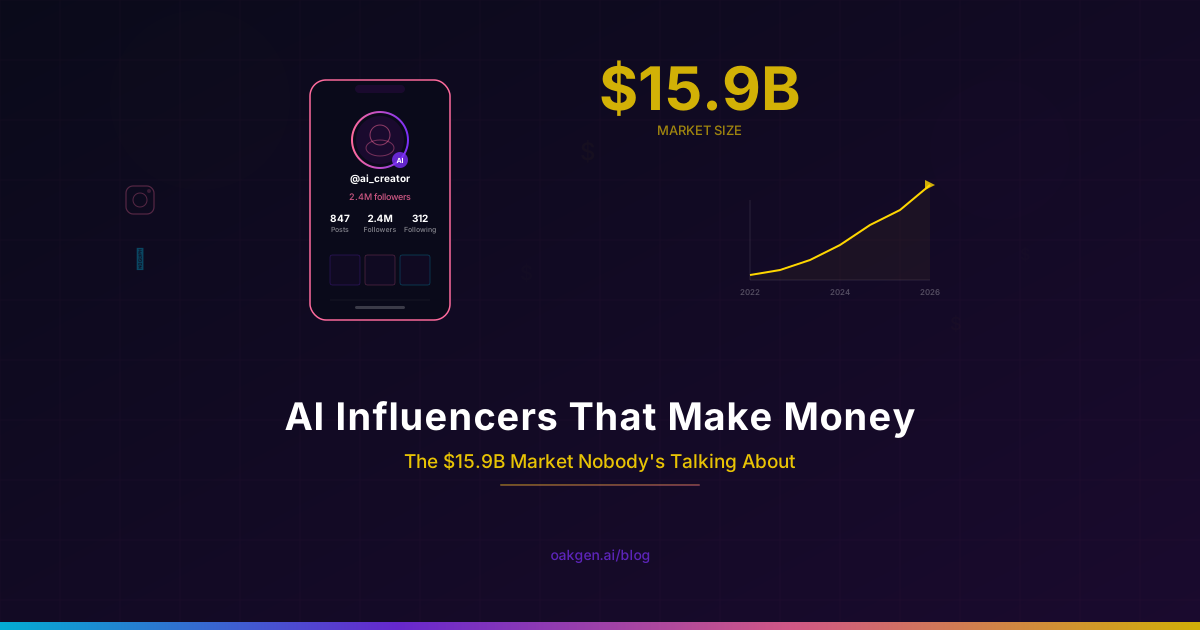
$15.9 billion. That's the AI influencer market in 2026, according to Grand View Research's updated forecast. Not the creator economy broadly. Not influencer marketing as a whole. Just the slice powered by AI-generated personas — characters who never existed, posting content that was never filmed, collecting brand deal checks that are very real.
And yet most people building AI influencers are doing it wrong. They generate a pretty face, post five images, get a brief dopamine hit from a few thousand likes, and then watch the account flatline. Virality is not a business model. Engagement without monetization is an expensive hobby.
This guide is about the money side. How to create an AI influencer that generates consistent revenue — from brand partnerships, affiliate income, digital products, and platform monetization. Specific numbers. Specific tools. Specific math on what it takes to turn followers into dollars.
Why AI Influencers Are a Legitimate Business in 2026
Three years ago, AI influencers were a novelty. Today they are a category. The economics shifted because the technology did.
Creating a virtual influencer like Lil Miquela in 2019 required a full CGI studio — 3D modelers, animators, voice actors, and a content team. The annual operating cost was $300,000-500,000 minimum. That put virtual influencers in the same budget category as a Super Bowl ad campaign: interesting if you're Prada, irrelevant if you're not.
In 2026, the stack looks different. An AI image generator produces consistent character faces for pennies. An AI video generator animates those faces into Reels and TikToks. A talking photo tool adds lip-synced speech to any still image. Text-to-speech generates the character's voice. The total cost to launch and run an AI influencer account for a month is $200-2,000, depending on posting volume and content format mix. That is a 95-99% cost reduction from the CGI era.
The revenue opportunity caught up to the cost reduction. Brands spent $21.1 billion on influencer marketing in 2025 (Influencer Marketing Hub). A growing share of that budget is flowing to AI creators — not because brands prefer artificial over authentic, but because AI influencers solve specific problems that human influencers create: missed deadlines, contract renegotiations, PR controversies, and the simple fact that a human creator can only be in one brand deal at a time.
The AI influencer space is not saturated — it is crowded with low-effort accounts and nearly empty of well-monetized ones. HypeAuditor's 2026 analysis found over 200,000 active AI influencer accounts across Instagram and TikTok, but fewer than 2,000 generate more than $1,000/month in revenue. The gap between "exists" and "earns" is where the opportunity sits.
Step 1: Build a Persona That Brands Will Pay For
The single biggest mistake in AI influencer creation is starting with aesthetics instead of economics. "She's beautiful" is not a monetization strategy. "She's a 28-year-old sustainable fashion advocate who reviews ethical brands and has a 4.2% engagement rate among women aged 22-34" is.
Choose a Monetizable Niche
Not all niches pay equally. Brand deal rates are driven by three variables: category CPM (how much advertisers pay per thousand impressions in that vertical), audience purchase intent (how close to buying the followers are), and competition density (how many influencers already serve that niche).
The highest-paying AI influencer niches in 2026:
- Fashion and beauty: $500-5,000 per brand deal at 50K followers. High volume of deals, strong visual fit for AI content.
- Fitness and wellness: $400-3,000 per deal at 50K. Supplement and activewear brands spend aggressively.
- Tech and gadgets: $600-4,000 per deal at 50K. Higher CPMs, more sophisticated audience.
- Travel and lifestyle: $300-2,500 per deal at 50K. Volume-dependent; works best with destination and hospitality brands.
- Finance and investing: $800-6,000 per deal at 50K. Highest CPMs but hardest to build trust as an AI persona.
- Gaming: $400-3,500 per deal at 50K. Strong engagement, receptive to AI personas.
Pick a niche where you have genuine knowledge or interest. You will be writing captions, scripting videos, and responding to comments in character for months. If you pick finance because the CPMs are high but you don't understand financial products, the content will be shallow and the audience will leave.
Design for Consistency, Not Perfection
Your AI influencer needs to look the same in every post. Not similar — the same. Audiences tolerate a lot, but they will not tolerate a character whose face drifts between posts. This is the hardest technical challenge in AI influencer creation, and it is where most accounts fail.
The workflow that works:
- Generate a base face using Oakgen's image generator with FLUX 2 Pro or a similar high-fidelity model. Generate 20-30 variations and select the one with the most distinctive, memorable features.
- Create a reference library of 10-15 images showing the character in different poses, lighting conditions, and outfits. Use IP-Adapter and face consistency techniques to lock the identity.
- Build an avatar through the avatar generator to establish a reusable face identity that carries across all future generations.
- Test consistency by generating 50 images and checking them side by side. If the character is recognizable across all 50, the identity is locked. If not, refine the reference set.
Use Oakgen's avatar generator to create a persistent character identity, then feed your best reference image into a reference-based editing model like Nano Banana Pro Edit or FLUX 2 Pro Edit to place that character into new scenes, outfits, or environments. Reusing the same reference keeps the face consistent across the scenes you generate around it. It is the fastest path to a recognizable AI persona.
Give Them a Story, Not Just a Face
The AI influencers that monetize have backstories, opinions, and personality quirks. Not a 10-page biography — just enough that the content feels like it comes from a person with a point of view.
Define these five things before you post anything:
- Voice: How do they write captions? Formal or casual? Sarcastic or earnest? Long-form or punchy?
- Values: What do they care about? Sustainability? Innovation? Accessibility? Self-expression?
- Aesthetic: What is their visual signature? Color palette, fashion style, environment preferences?
- Boundaries: What will they NOT promote? (This matters for brand deal credibility.)
- Arc: How will the character evolve over 6-12 months? Static personas stagnate.
Use Oakgen's agent chat to develop and refine the character's voice by workshopping captions, responses, and story beats in conversation before publishing anything.
Step 2: Content Production Pipeline
An AI influencer that posts twice a week will never monetize. The content volume threshold for Instagram monetization is 4-7 posts per week plus daily Stories. For TikTok, it is 1-3 videos per day. The good news: AI makes this volume achievable by one person.
The Weekly Content Calendar
A production pipeline that supports monetization looks like this:
Instagram (7 posts/week):
- 3 static image posts (outfit showcases, lifestyle shots, product features)
- 2 Reels (15-30 seconds, talking to camera or set to trending audio)
- 2 carousel posts (tips, reviews, or behind-the-scenes of the AI creation process)
- Daily Stories (quick takes, polls, Q&A)
TikTok (7-14 videos/week):
- 3-5 talking-head videos using AI video generator with lip-sync
- 2-3 trend participation videos
- 2-3 educational or review content pieces
- 2-3 lifestyle or aesthetic videos
Batch Production
Do not create content one piece at a time. Batch production is the only way to sustain this volume without burning out.
Image batching: Generate 20-30 images in one session (2-3 hours). Stage them across the coming week. Every image uses the same character reference to maintain consistency.
Video batching: Script 5-7 videos in one sitting. Generate all video clips in a second session using Oakgen's video tools. Edit and schedule in a third session. Total time: 4-6 hours for a week's worth of video content.
Caption and engagement batching: Write all captions for the week in one block. Pre-write responses to predictable comments. Schedule engagement time in two 30-minute blocks per day rather than constant monitoring.
At Oakgen's Pro plan ($19/month), you get enough credits to generate roughly 200-400 images and 30-60 video clips per month — more than enough for a full content calendar across Instagram and TikTok. At the Ultimate tier ($29/month), you have headroom for higher-resolution outputs and more video generation. The content production cost for a full-time AI influencer is under $30/month in platform fees. The real cost is your time: 10-15 hours per week for content production and community management. See full plan details on pricing.
Step 3: Growth Strategy — From Zero to Monetizable
An AI influencer needs a minimum audience before any revenue stream activates. The thresholds vary by platform and monetization type, but here is the realistic baseline:
- Brand deals: 10,000+ followers with 2%+ engagement rate
- Affiliate marketing: 5,000+ followers (lower threshold because you're paid on conversions, not impressions)
- Digital products: 3,000+ followers with high niche relevance
- Platform monetization (TikTok Creator Fund, Instagram bonuses): 10,000+ followers
The First 10K: What Actually Works
Growth tactics for AI influencers are not fundamentally different from human creators, with one critical advantage: you can post at superhuman volume without burnout.
Trend-jacking at speed. When a visual trend hits TikTok, human creators need hours to film, edit, and post. An AI influencer can generate and post a response in 20 minutes. Speed matters because the algorithm rewards early participation in trends.
Niche authority content. Educational and review content in your chosen niche builds followers who care about the topic, not just the face. These followers are the ones brands want to reach. Ten posts reviewing sustainable fashion brands attract a more valuable audience than a hundred "look at my outfit" posts.
Cross-platform recycling. Every Instagram Reel becomes a TikTok. Every TikTok becomes a YouTube Short. Every carousel becomes a LinkedIn post. Every image post becomes a Pinterest pin. One piece of content, five placements.
Transparency as a growth lever. Counter-intuitively, being open about the AI nature of your influencer often accelerates growth. "AI influencer" is a novelty that earns press coverage, subreddit features, and curiosity follows. Several AI influencers have grown to 100K+ by leaning into the "made by AI" angle rather than hiding it. Audiences punish deception; they reward novelty.
Collaboration with human creators. Human creators in your niche who collaborate with your AI persona get exposure to your audience and vice versa. The "human meets AI influencer" angle generates high-engagement content for both parties.
Step 4: Monetization — The Five Revenue Streams
This is where most AI influencer guides stop being useful, because they list "brand deals" and "affiliate marketing" without telling you what the actual numbers look like. Here is the real math.
Revenue Stream 1: Brand Deals and Sponsorships
Brand deals are the primary revenue source for AI influencers over 25K followers. The rates depend on follower count, engagement rate, niche, and content format.
| Follower Count | Avg. Engagement Rate | Rate per Instagram Post | Rate per TikTok Video | Rate per Story Set (3-5) |
|---|---|---|---|---|
| 10K-25K | 3-5% | $100-400 | $100-300 | $50-150 |
| 25K-50K | 2.5-4% | $300-1,000 | $250-800 | $100-400 |
| 50K-100K | 2-3.5% | $800-2,500 | $500-2,000 | $300-800 |
| 100K-250K | 1.8-3% | $2,000-5,000 | $1,500-4,000 | $500-1,500 |
| 250K-500K | 1.5-2.5% | $4,000-10,000 | $3,000-8,000 | $1,000-3,000 |
| 500K+ | 1-2% | $8,000-25,000+ | $5,000-20,000+ | $2,000-8,000 |
How to land deals at small scale. Do not wait for brands to find you. At 10-25K followers, you pitch. Create a media kit showing your audience demographics, engagement rate, and content examples. Email marketing managers at brands you've already featured organically. A DM or email that says "I featured your product in three posts last month and the engagement was 4.3% — here's what a paid partnership would look like" converts far better than a cold pitch.
The AI disclosure factor. Every brand deal must disclose the AI-generated nature of the influencer. This is not optional — the FTC, ASA, and EU AI Act all require it. The good news: brands that work with AI influencers know they're working with AI influencers. The disclosure is a feature, not a bug. Position it as "always on-brand, zero PR risk, unlimited content variations."
Revenue Stream 2: Affiliate Marketing
Affiliate marketing is the fastest path to first revenue because there is no negotiation, no minimum follower count, and no waiting for brand approval. You sign up for affiliate programs, share links, and earn a commission on every sale.
Realistic affiliate earnings by follower count:
- 5K-10K followers: $100-500/month (niche-dependent)
- 10K-50K followers: $500-2,000/month
- 50K-100K followers: $1,500-5,000/month
- 100K+ followers: $3,000-15,000/month
The key variable is not follower count — it is purchase intent. An AI influencer with 15K followers in a high-intent niche like tech gadgets or skincare will out-earn one with 100K followers in a low-intent niche like aesthetic photography.
Best affiliate programs for AI influencers in 2026: Amazon Associates (4-10% commissions, massive product catalog), ShareASale and CJ Affiliate (brand-specific programs with higher commissions), LTK (fashion and beauty focused, 10-25% commissions), and direct brand affiliate programs (often 15-30% for smaller DTC brands).
Revenue Stream 3: Digital Products
AI influencers can sell products that align with their persona and expertise. This is where the "persona with a point of view" work from Step 1 pays off.
Products that AI influencers sell successfully:
- Preset packs and filters ($9-29): "My editing style in a pack"
- Style guides and lookbooks ($15-49): Curated fashion or design collections
- Prompt packs ($7-19): The actual prompts used to generate the influencer's content
- Courses and tutorials ($29-199): Teaching followers how to create their own AI personas
- Membership communities ($9-29/month): Exclusive content, early access, community
- Print-on-demand merchandise (variable margins): Character-branded clothing, accessories, art prints
A fashion AI influencer with 30K followers selling a $19 style guide to 2% of their audience earns $11,400. Selling a $9 preset pack to 5% earns $13,500. These are one-time creation efforts with recurring sales — the closest thing to passive income in the AI influencer playbook.
Revenue Stream 4: Platform Monetization
TikTok's Creator Fund and Creativity Program, Instagram's performance bonuses, and YouTube's Partner Program all pay creators directly for views and engagement. The rates are modest — $0.50-3.00 per thousand views depending on the platform and niche — but at high content volume, they add up.
- TikTok Creativity Program: $0.50-1.50 per 1K qualified views (videos must be 1+ minute). An AI influencer posting 10 videos/week averaging 50K views each earns roughly $250-750/month.
- YouTube Shorts: $0.01-0.06 per 1K views from the Shorts revenue sharing pool. Lower rates but massive reach potential.
- Instagram bonuses: Periodic programs paying $100-1,000/month for Reels performance. Inconsistent but worth enabling.
Platform monetization alone will not sustain a business. But it compounds on top of brand deals, affiliate income, and product sales, adding $200-1,500/month in passive income at the 50K+ follower level.
Revenue Stream 5: Licensing and IP
As an AI influencer's brand value grows, the character itself becomes licensable IP. This includes:
- Brand ambassadorships (long-term contracts): $5,000-50,000/year for exclusive category representation
- Character licensing for merchandise, games, or media: Revenue share or flat licensing fees
- Content licensing: Brands pay to use the influencer's likeness in their own campaigns
- White-label services: Creating and managing AI influencers for brands as a paid service
This revenue stream activates primarily at the 100K+ follower level, but it is worth building toward because it represents the highest per-deal value in the AI influencer business.
The Revenue Math: Month 1 to Month 12
Here is a realistic revenue trajectory for an AI influencer built with intent, not hope. This assumes consistent effort — 10-15 hours per week — and a monetizable niche.
Months 1-3 (Building Phase):
- Followers: 0 → 5,000-10,000
- Revenue: $0-200/month (early affiliate income)
- Focus: Content production, audience growth, consistency
- Total investment: ~$100 in tools, 120-180 hours of time
Months 4-6 (First Monetization):
- Followers: 10,000-25,000
- Revenue: $500-2,000/month
- Sources: Affiliate marketing ($200-800), first brand deals ($200-800), digital product launch ($100-400)
- Focus: Outreach to brands, affiliate optimization, first product creation
Months 7-9 (Growth Phase):
- Followers: 25,000-50,000
- Revenue: $2,000-6,000/month
- Sources: Brand deals ($1,000-3,000), affiliate ($500-1,500), digital products ($300-1,000), platform monetization ($200-500)
- Focus: Scaling brand partnerships, expanding product line, cross-platform growth
Months 10-12 (Scale Phase):
- Followers: 50,000-100,000
- Revenue: $5,000-15,000/month
- Sources: Brand deals ($2,500-8,000), affiliate ($1,000-3,000), digital products ($500-2,000), platform monetization ($300-1,000), first licensing ($500-1,000)
- Focus: Rate increases, exclusive partnerships, team building, second persona launch
These numbers are not guaranteed. They represent the trajectory of the top 10-15% of AI influencers who execute consistently. The median outcome is lower. The point is that the ceiling is real — and significantly higher than what most people assume when they hear "AI influencer."
The Honest Challenges
No guide that hides the hard parts is worth reading. Here is what will test you.
Account suspensions. Instagram and TikTok have evolving policies on AI-generated content. Some AI influencer accounts have been flagged, restricted, or suspended — sometimes temporarily, sometimes permanently. Mitigate this by always disclosing the AI nature of the content, avoiding any impersonation of real people, and keeping backup accounts and content archives. Platform policies are a moving target in 2026; stay current.
Audience trust erosion. Some portion of any audience will leave when they learn the influencer is AI-generated. This is normal and healthy — the followers who stay despite knowing are more valuable than the ones who followed under false assumptions. Transparency from day one avoids the catastrophic trust collapse that comes from a late reveal.
Creative fatigue. Even with AI handling image and video generation, you still need to write scripts, craft captions, develop story arcs, and manage community engagement. The content strategy is human work. Plan for this by batching aggressively and taking genuine breaks.
Commoditization. As tools improve, more people will launch AI influencers. The accounts that survive commoditization are the ones with genuine niche authority, strong audience relationships, and diversified revenue — not the ones that rely solely on looking pretty.
The number one reason AI influencers fail to monetize is not bad content, platform algorithms, or market saturation. It is inconsistency. Posting 14 times in week one, five times in week two, and zero times in week three tells the algorithm — and the audience — that the account is unreliable. Brands will not partner with inconsistent creators. Set a sustainable cadence and maintain it for 90 days before adjusting. Consistency beats quality at every follower count below 100K.
Tools That Work: The Oakgen Stack for AI Influencers
Building an AI influencer requires tools for image generation, video creation, voice synthesis, and face consistency. Running these as separate subscriptions across five platforms is expensive and workflow-breaking. Oakgen consolidates the entire pipeline.
- Character creation: Image generator with FLUX 2 Pro, GPT Image 2, and 30+ models for creating your persona's face and body
- Video content: AI video generator with Kling, Seedance, and other leading models for Reels and TikToks
- Talking-head content: Talking photo for lip-synced speaking videos from a single image
- Face consistency: Reference-based editing with Nano Banana Pro Edit or FLUX 2 Pro Edit to keep the same face across scenes and outfits
- Avatar identity: Avatar generator for creating a persistent, reusable character identity
- Scriptwriting: Agent chat for developing character voice, writing captions, and brainstorming content
The full pipeline runs on a single credit system. No juggling five subscriptions. No re-uploading assets between platforms. For content creators and social media managers running multiple AI personas, the consolidated workflow saves 5-10 hours per week compared to a multi-tool setup.
Earn 25% recurring on every referral.
Share Oakgen, get paid every month they stay.
FAQ
How much does it cost to start an AI influencer? The tool costs are minimal — $19-29/month on Oakgen covers all image and video generation needs. The real investment is time: 10-15 hours per week for content production, community management, and brand outreach. Total first-year cost including tools, scheduling software, and incidentals: $500-1,500. Compare that to a human influencer's first-year investment in camera equipment, lighting, editing software, and wardrobe: $3,000-15,000.
Can brands tell if an influencer is AI? Most brands working with AI influencers in 2026 know exactly what they are buying. The AI influencer market is an established category with dedicated agencies and platforms. You should disclose the AI nature proactively in every brand pitch and every piece of published content. Deception is both unethical and strategically stupid — one reveal can destroy months of audience and brand relationship building.
What platforms work best for AI influencers? Instagram and TikTok are the primary platforms, with Instagram stronger for static image content and TikTok for video. YouTube Shorts is growing fast as AI video quality improves. Pinterest works well for fashion and lifestyle AI influencers as a traffic and discovery channel. LinkedIn is emerging for AI-generated professional personas, though audience reception is more skeptical. Start with one platform, reach 10K followers, then expand.
Is it legal to run an AI influencer? Yes, with disclosure requirements. The FTC (US), ASA (UK), and EU AI Act all require clear labeling of AI-generated commercial content. The legal risk is not in running an AI influencer — it is in failing to disclose its nature, especially in sponsored content. Follow the same disclosure rules that apply to human influencers (#ad, #sponsored) and add AI-specific disclosures (#AIgenerated, "Virtual Creator" in bio). Consult a lawyer if operating across multiple jurisdictions.
How long before an AI influencer makes money? The earliest revenue typically comes from affiliate marketing at 2-4 months in, once the account reaches 3,000-5,000 followers with genuine engagement. First brand deals usually arrive at months 4-7 at the 10,000-25,000 follower range. Meaningful revenue ($2,000+/month) typically takes 6-9 months of consistent work. Accounts that monetize faster almost always have operators with prior marketing or influencer experience.
Can I run multiple AI influencers at once? Yes, and this is one of the strongest advantages of AI influencers over human ones — you can scale horizontally. However, do not start a second persona until the first is generating consistent revenue ($1,000+/month). Each additional persona adds 5-8 hours of weekly work for content production and community management. The operators running five or more profitable AI influencers are typically working full-time on the business with systems for batched content production.
What to Read Next
- The Influencer Economy Meets AI Avatars — the brand perspective on working with AI influencers, including engagement benchmarks, case studies, and ethical considerations.
- AI Product Photography for E-Commerce — if your AI influencer promotes physical products, this guide covers how to generate product shots that meet marketplace standards.
- UGC Ads Without Influencers — the adjacent business model: creating AI-generated UGC ads for brands as a service rather than building an influencer persona.