A Palo Alto startup with no fanfare, no viral launch, and no celebrity investors quietly climbed to the #1 spot on the Artificial Analysis Image Arena -- beating Midjourney v6.1, Google Imagen 3, Flux 1.1 Pro, and every other model in blind head-to-head evaluations.
Its name is Reve Image 1.0, and most people in the AI space still have not heard of it.
This review covers what makes Reve exceptional, where it falls short, and how it compares to the models you are probably already using.
What Is Reve AI?
Reve AI (styled as "Rêve") is a small AI research company based in Palo Alto, California. Unlike competitors backed by billions in funding -- OpenAI, Google DeepMind, Black Forest Labs -- Reve has maintained an unusually low profile. No splashy launch events. No waitlists generating hype. No celebrity endorsements.
What they did instead was build a model so good that the benchmarks spoke for themselves.
Reve Image 1.0 first appeared on the Artificial Analysis Image Arena, a crowdsourced Elo-based ranking system where human evaluators compare image outputs in blind A/B tests -- similar to how Chatbot Arena ranks language models. Users see two images generated from the same prompt and pick which one they prefer, with no knowledge of which model produced which output.
Reve climbed to the top of this leaderboard and stayed there.
How Good Is It, Actually?
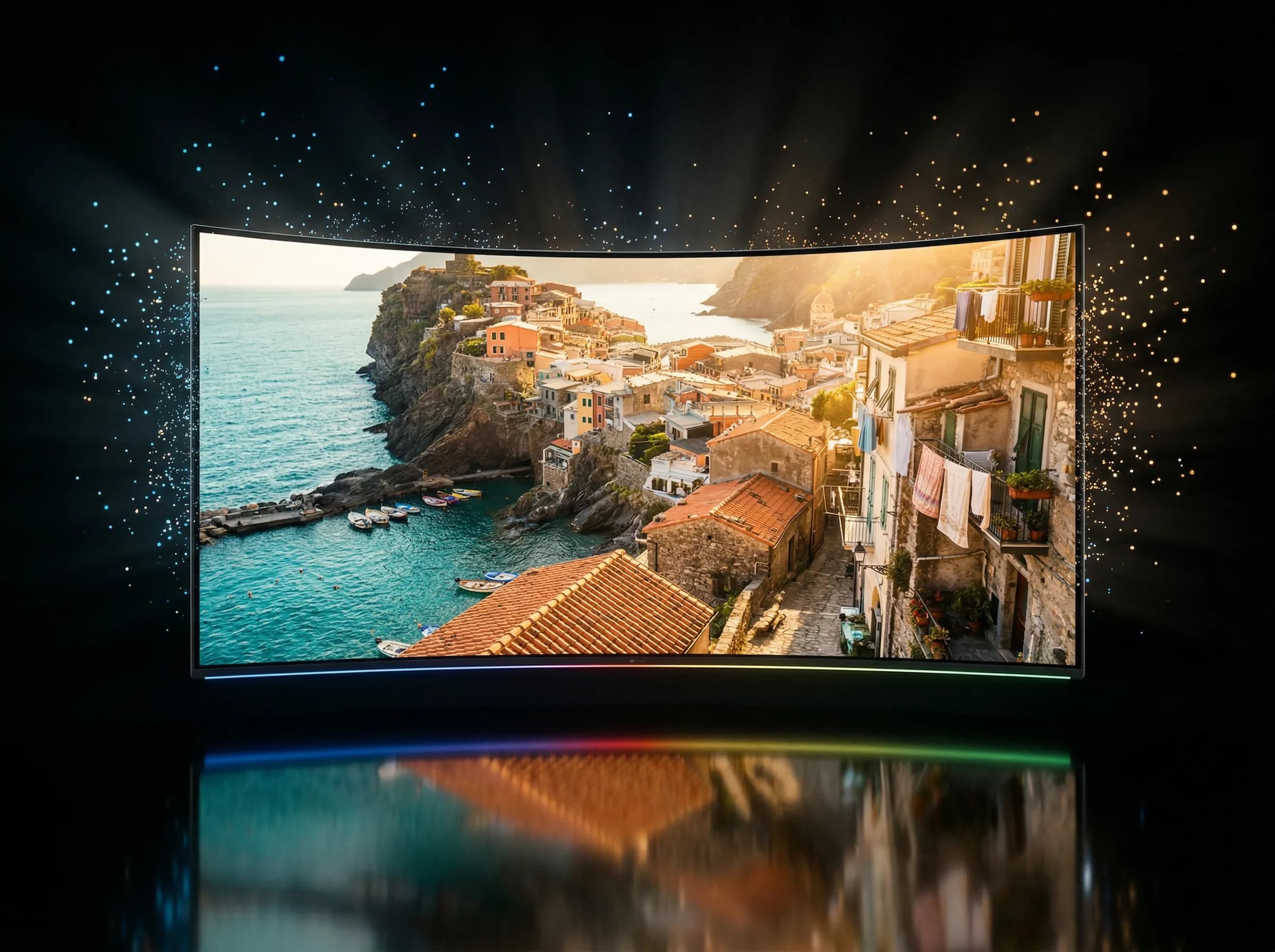
The short answer: Reve Image 1.0 produces some of the most photorealistic AI-generated images available in 2026.
Photorealism
This is Reve's defining strength. Generated images -- particularly of people, environments, and everyday objects -- are frequently indistinguishable from actual photographs. The model renders:
- Skin textures with pore-level detail, natural subsurface scattering, and realistic blemishes
- Hair with individual strand rendering, natural flyaways, and accurate lighting interaction
- Eyes with reflections that match the environment, proper specular highlights, and natural moisture
- Materials like fabric, metal, glass, and wood with physically accurate surface properties
Where most AI models produce images with a telltale "AI sheen" -- everything a little too clean, a little too perfect -- Reve outputs look like they were captured with an actual camera. Subtle depth of field, natural lens distortion, film grain, and organic color grading contribute to what reviewers call "hyper-authenticity."
Text Rendering
Reve handles text in images competently. Signs, labels, logos, and short text strings render legibly and accurately. For longer passages, accuracy degrades -- but this is true of every model except GPT Image 1.5 and Ideogram V3, which were specifically optimized for typography.
Prompt Adherence
Reve follows complex, multi-element prompts faithfully. It handles spatial relationships ("a cat sitting on a red chair to the left of a fireplace"), specific quantities, and nuanced descriptions without the common failure modes of ignoring or misinterpreting prompt elements.
Human Anatomy
Reve produces notably fewer anatomical errors than most competitors. Hands, fingers, and body proportions are consistently correct -- an area that has historically been the Achilles' heel of AI image generation.
Reve vs. The Competition
Reve vs. Midjourney
Midjourney has dominated the "aesthetic quality" conversation since V4. Its images have a distinctive artistic polish -- dramatic lighting, cinematic framing, emotional depth -- that many creators find irreplaceable.
Reve beats Midjourney on raw photorealism. If you need an image that looks like a photograph, Reve produces more convincing results. But Midjourney beats Reve on artistic and stylized outputs. Midjourney's ability to produce images with mood, atmosphere, and visual storytelling remains unmatched.
Choose Reve when: You need photorealistic content -- product shots, realistic portraits, environmental photography, architectural visualization.
Choose Midjourney when: You need artistic compositions, cinematic scenes, concept art, editorial illustration, or anything where "vibes" matter more than photographic accuracy.
Reve vs. Flux 2 Pro
Flux 2 Pro from Black Forest Labs is Reve's closest competitor in the photorealism category. Both models produce exceptional realistic outputs with accurate material rendering and natural lighting.
The differences are subtle:
- Reve edges ahead on skin textures and the overall "camera-captured" quality
- Flux 2 Pro is faster (8-12 seconds vs. Reve's slightly longer generation times), has a more mature ecosystem, and offers variants for different needs (Max, Klein, Turbo, Kontext for editing)
- Flux 2 Pro has better developer tooling and is available on more platforms
For most users, the quality difference between Reve and Flux 2 Pro is marginal. The choice often comes down to ecosystem and pricing.
Reve vs. GPT Image 1.5
GPT Image 1.5 from OpenAI takes a fundamentally different approach. As a natively multimodal model (the same model that handles text also generates images), it excels at complex prompt comprehension and conversational editing.
- GPT Image 1.5 is the clear winner for text rendering, complex multi-step instructions, and iterative editing in conversation
- Reve produces more photorealistic results, especially for portraits and environmental scenes
- GPT Image 1.5 benefits from ChatGPT integration, making it more accessible to non-technical users
| Feature | Reve Image 1.0 | Midjourney V8 | Flux 2 Pro | GPT Image 1.5 |
|---|---|---|---|---|
| Photorealism | Best | Very Good | Excellent | Very Good |
| Artistic/Stylized | Good | Best | Very Good | Good |
| Text Rendering | Good | Fair | Very Good | Best |
| Speed | Medium | Fast | Fast | Medium |
| Prompt Adherence | Excellent | Good | Excellent | Best |
| Human Anatomy | Excellent | Very Good | Very Good | Good |
| Ecosystem/Tooling | Limited | Mature | Mature | Mature |
| Available on Oakgen | ✓ | ✗ | ✓ | ✓ |
Where Reve Falls Short
No model is perfect. Reve's limitations are real and worth understanding:
- Artistic versatility. Reve is optimized for photorealism. If you need painterly, abstract, or highly stylized outputs, Midjourney or even Flux produce better results.
- Ecosystem maturity. Reve lacks the editing suite, community tools, and extensive documentation that Midjourney and Flux offer. No equivalent of Midjourney's
--stylize,--chaos, or--weirdparameters. - Speed. Generation times are competitive but not class-leading. For rapid iteration workflows, Flux Schnell or Nano Banana Pro are faster.
- Character consistency. Like most models without dedicated consistency features, maintaining the same character across multiple generations requires workarounds. Flux Kontext and Midjourney's
--crefhandle this better. - Limited creative controls. Fewer style knobs, aspect ratio options, and post-processing controls compared to mature platforms.
Using Reve on Oakgen
Reve Image 1.0 is available on Oakgen with two model variants:
- Reve (
reve) -- Standard text-to-image generation. The full Reve Image 1.0 model for photorealistic image generation from text prompts. - Reve Reference (
reve-reference) -- Reference-based editing. Provide a reference image alongside your prompt to maintain visual consistency while changing context, pose, or setting.
Both are accessible through Oakgen's Image Generator with credit-based pricing. No separate Reve subscription required.
Generate your first Reve images with Oakgen's free starting credits. Compare Reve's photorealism against Flux 2 Pro, GPT Image 1.5, and 30+ other models -- all from one account.
Who Should Use Reve?
Reve is ideal for:
- Product photographers who need studio-quality AI shots
- Marketing teams creating realistic lifestyle imagery
- Architectural visualization professionals
- Anyone whose workflow demands images that look like actual photographs
Reve is not ideal for:
- Artists seeking stylized, painterly, or abstract outputs (use Midjourney)
- Designers needing precise text in images (use GPT Image 1.5 or Ideogram V3)
- Developers wanting extensive API tooling and ecosystem (use Flux)
- Teams needing character consistency across many images (use Flux Kontext or FLUX.2)
The Bigger Picture
Reve's rise is significant beyond one model's performance. It demonstrates that the AI image generation market is no longer a three-horse race between OpenAI, Midjourney, and Stability AI. A small, well-focused team can build a model that outperforms billion-dollar competitors on the metrics that matter most.
For users, this means more options, more competition on quality, and -- critically -- falling prices. For platforms like Oakgen that aggregate multiple models, it means users always have access to the best tool for each specific task without betting on a single provider.
The era of one model dominating everything is over. The era of choosing the right model for the right job has begun.