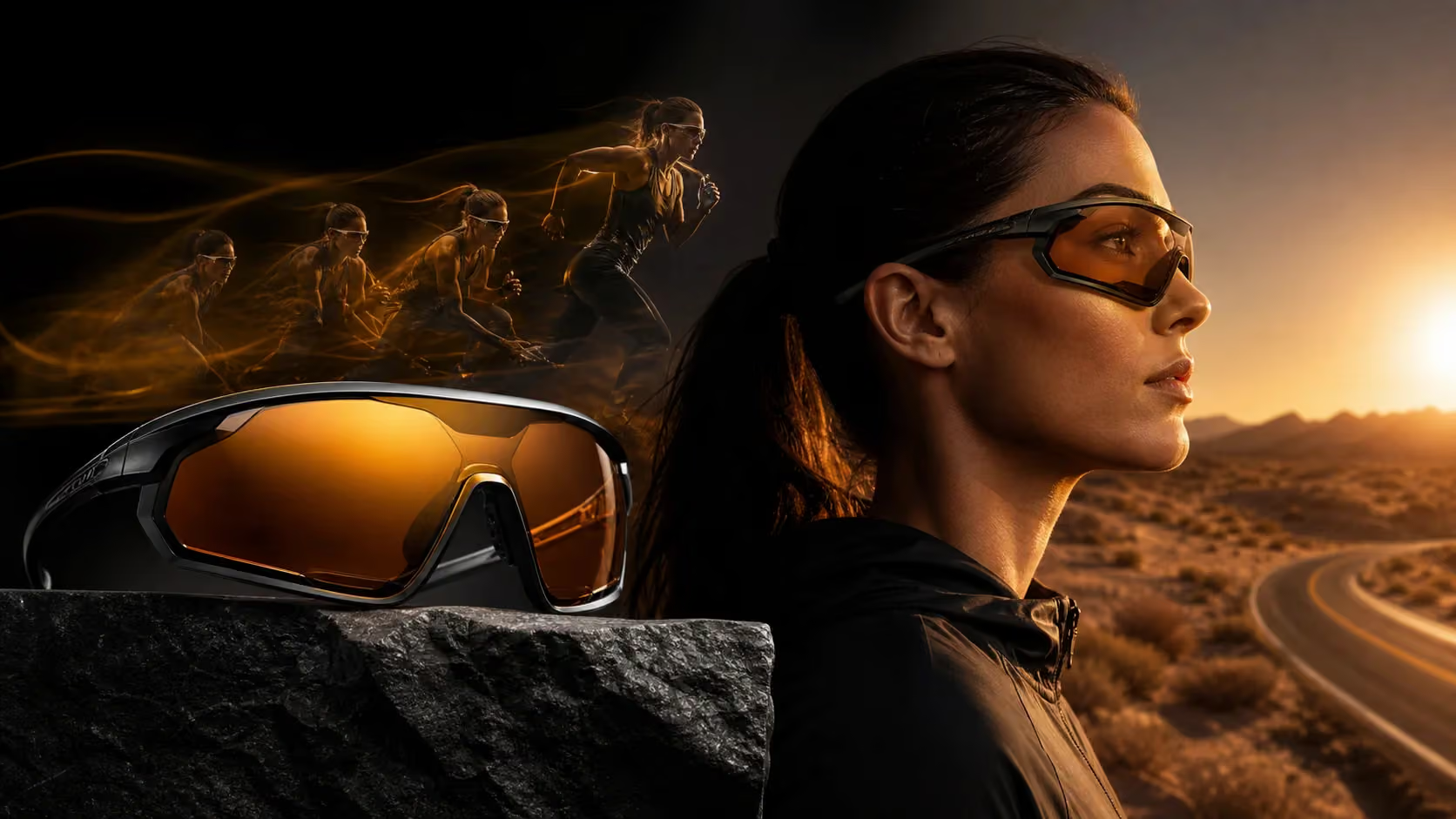
AI product photography is replacing traditional studio shoots for thousands of e-commerce brands in 2026. Where a single professional product image used to cost $25 to $150 -- and a full-day studio rental ran $1,500 or more -- AI-generated product photos now cost as little as $0.05 per image. For small businesses and solo entrepreneurs, this is not an incremental improvement. It is a category shift.
This guide walks through exactly how to use AI photo studio tools to create professional e-commerce photos that sell, covering everything from initial upload to final export for Amazon, Shopify, and social media platforms.
The Real Cost of Traditional Product Photography
Before diving into the AI approach, let's be honest about what traditional product photography costs:
| Cost Item | Traditional Photography | AI on Oakgen |
|---|---|---|
| Per-image cost | $25 - $150 | $0.05 - $0.50 |
| Studio rental (full day) | $1,500 - $5,000 | $0 (not needed) |
| Photographer (full day) | $500 - $2,500 | $0 (not needed) |
| Props and styling | $200 - $1,000 | $0 (AI-generated) |
| Post-production editing | $10 - $50/image | Included |
| Turnaround time | 3 - 14 days | Under 60 seconds |
| Revisions | $25 - $75 each | Re-generate for pennies |
| 10-product catalog (5 shots each) | $1,250 - $7,500 | $25 - $250 |
For a brand launching 50 products on Amazon, traditional photography could easily exceed $30,000. With AI, the same catalog costs under $500 -- an 80% or greater reduction in photography spend.
How Oakgen's Photo Studio Works
Oakgen's Photo Studio uses trained AI models to generate photorealistic product images from a single reference photo. Unlike generic image generators, Photo Studio understands product photography conventions: clean backgrounds, consistent lighting, natural shadows, and platform-specific aspect ratios.
Here is the process:
Step 1: Upload Your Product Image
Start with a clear photo of your product. This does not need to be professional -- a well-lit smartphone photo against a plain background works. The AI uses this as a reference to understand your product's shape, color, texture, and proportions.
For the best results, photograph your product against a white or neutral background with even lighting. Avoid harsh shadows, extreme angles, or cluttered backgrounds. A simple phone photo on a white table works well.
Step 2: Choose Your Background and Scene
Select from preset backgrounds or describe your own:
- Pure white -- Amazon main image standard
- Lifestyle context -- Kitchen counter, office desk, outdoor setting
- Gradient -- Clean studio gradient for premium feel
- Custom scene -- Describe any environment in your prompt
Step 3: Configure Generation Settings
Adjust parameters to match your needs:
- Aspect ratio -- 1:1 (Amazon/Instagram), 4:5 (Pinterest), 16:9 (website hero)
- Lighting style -- Soft studio, dramatic, natural daylight, backlit
- Camera angle -- Front, 45-degree, top-down, three-quarter
- Number of variations -- Generate 4-8 options per setup
Step 4: Generate and Download Variations
Hit generate and receive multiple variations in under 60 seconds. Pick the best ones, download at full resolution, and upload directly to your e-commerce platform.
Tips for Best Results
After generating thousands of AI product photos, here are the techniques that consistently produce the best output:
Lighting Consistency
When generating multiple images for the same product listing, specify the same lighting in every prompt. "Soft studio lighting from upper left at 45 degrees" gives you consistent shadows across all your shots.
Angle Consistency
Amazon requires a main image on pure white, but your secondary images can show lifestyle contexts. Keep the product at the same angle in at least 3-4 of your listing images so shoppers build a coherent mental model of your product.
The White Background Rule
For Amazon main images and many other marketplaces, you need a pure white background (RGB 255, 255, 255). AI generates this cleanly -- just specify "product on pure white background, no shadows" in your prompt.
Reference Multiple Angles
If your product has distinct features on different sides, upload reference photos from multiple angles. Generate separate image sets for each angle, then combine the best results.
Batch Processing
For catalogs with many products, develop a prompt template and run through your products systematically. Oakgen's interface makes it easy to adjust the product reference while keeping all other settings constant.
Use Cases by Platform
Amazon Listings
Amazon requires 7-9 images per listing. A typical AI-generated set:
- Main image -- Pure white background, product fills 85% of frame
- Feature callouts -- Product with text overlays highlighting key features
- Lifestyle shot -- Product in natural use context
- Scale reference -- Product next to common objects for size context
- Detail shots -- Close-ups of texture, material, or unique features
- Infographic -- Dimensions, specs, what is included
- Packaging -- Product in its packaging (generate or photograph)
AI handles images 1-5 natively. For infographics and packaging shots, generate the base image and add text overlays in a tool like Canva or Oakgen's Image Editor.
Shopify and D2C Stores
Shopify stores benefit from consistent, branded product photography across every product page. AI excels here because you can lock in a visual style and apply it uniformly:
- Consistent background color or gradient across all products
- Same lighting angle and intensity
- Matched color temperature
- Uniform aspect ratios
This level of consistency is expensive with traditional photography (requiring the same studio setup for every shoot) but trivial with AI.
Social Media Content
Product photography for Instagram, Pinterest, and TikTok needs a different approach than marketplace listings:
- Instagram -- Lifestyle context, aspirational settings, 1:1 or 4:5 aspect ratio
- Pinterest -- Tall 2:3 images, text overlay space at top, lifestyle context
- TikTok/Reels thumbnails -- Bold, eye-catching, product as hero with dynamic background
- Facebook ads -- Clean product shot with ample negative space for ad copy
Generate platform-specific variations from the same product reference in minutes.
For even more engaging product content, use Oakgen's AI Video Generator to create product reveal animations and lifestyle clips from your AI-generated product images.
Real Cost Breakdown: A 20-Product Launch
Let's calculate the actual savings for a realistic scenario -- launching 20 new products with 6 images each (120 total images):
Traditional approach:
- Photographer: $1,500 (full day)
- Studio rental: $2,000
- Props and styling: $500
- Post-production: $1,200 (120 images x $10/image)
- Total: $5,200
Oakgen AI approach:
- Pro plan: $19/month (5,000 credits)
- 120 images at ~10-15 credits each: 1,200-1,800 credits
- Total: $19 (with credits to spare for revisions and additional generations)
That is a 99.6% cost reduction for this scenario. Even accounting for some re-generations and experimentation, the AI approach costs under $50 compared to $5,000+.
When Traditional Photography Still Wins
AI product photography is not a silver bullet for every situation:
- Luxury goods requiring tactile texture representation (high-end watches, jewelry with intricate settings)
- Products where exact color accuracy is legally required (cosmetics, paint)
- Food photography where steam, drips, and imperfections convey freshness
- Apparel on real models where fit and drape matter to customers
For these categories, consider using AI for your initial mockups and secondary images, then investing in traditional photography for hero shots.