Every performance marketer knows the uncomfortable truth: creative is the biggest lever in paid media, and most teams are barely pulling it.
Meta's own research shows that creative quality accounts for 56% of the auction outcome on Facebook and Instagram ads. Google's data indicates that creative drives 70% of ad performance on YouTube. TikTok's creative best practices documentation states that the top-performing 1% of ads have been tested against dozens of variations before scaling.
The evidence is overwhelming. More creative variations tested means faster winner identification, lower CPAs, higher ROAS, and longer campaign lifespans before fatigue sets in. The platforms' algorithms are explicitly designed to reward creative diversity -- Meta's Advantage+ shopping campaigns, for example, perform best with 50-150 creative variations loaded simultaneously.
But here is the gap: the average performance marketing team tests 3-5 creative variations per campaign per week. Not 50. Not 150. Three to five.
The bottleneck is not strategy, budget, or platform knowledge. It is production capacity.
Before producing a larger asset set, use the ad angle generator to review six distinct editorial angles or twenty timing/platform variants from one supplied brief.
The Creative Production Bottleneck
The Designer Dependency
Most ad creative flows through a design team -- either in-house designers or external agency creatives. The typical workflow: the media buyer identifies a creative angle to test, writes a brief, submits it to the design queue, waits 2-5 business days for a first draft, provides feedback, waits 1-3 days for revisions, and finally receives the finished asset.
Best case: 3 days from idea to live ad. Typical case: 5-10 business days. In that time, the campaign has been running suboptimal creative while the improvement sits in someone's to-do list.
And that is for one variation. When the media buyer wants 10 variations to test different headlines, color schemes, imagery, and layouts simultaneously, the design queue becomes a multi-week project. The designer has other projects. Other teams need creative too. The design capacity ceiling becomes the performance ceiling for the entire paid media program.
The Cost of Creative at Scale
Hiring designers to solve the scale problem gets expensive fast. A mid-level graphic designer costs $55,000-$85,000 per year (fully loaded). A senior designer or motion graphics specialist runs $80,000-$120,000. At a production rate of 5-10 polished ad creatives per designer per day, scaling from 5 variations per week to 50 requires hiring 2-3 additional designers -- a $150,000-$300,000 annual investment.
Agencies charge $500-$5,000 per ad creative depending on complexity. Static display ads run $500-$1,500 each. Video ads run $2,000-$10,000 each. At 50 variations per week, agency creative costs become absurd.
Freelance designers on platforms like Fiverr or Upwork are cheaper per unit ($25-$200 per ad creative) but introduce quality inconsistency, communication overhead, and turnaround unpredictability.
The Testing Math Nobody Does
Let us quantify what proper creative testing actually requires.
A single product campaign on Meta with Advantage+ optimization works best with at least 50 creative variations across different:
- Visual styles (5 variations: lifestyle photo, product-only, text-heavy, illustrated, video)
- Headlines (5 variations per visual style)
- Color schemes (2 variations per visual/headline combination)
That is 5 x 5 x 2 = 50 variations for one product, one audience, one platform.
Now multiply across 3 products, 2 platforms (Meta + TikTok), and refresh every 2 weeks. You need 600 ad creatives per month. At even $50 per creative (the rock-bottom freelancer rate), that is $30,000/month in creative production -- before a single dollar of ad spend.
A 2025 survey by Motion (the creative analytics platform) found that the top 10% of DTC advertisers test 10x more creative variations per month than the median advertiser. These top testers consistently achieve 30-50% lower CPAs. The difference is not talent or strategy -- it is creative volume. They simply test more, learn faster, and iterate quicker.
| Creative Volume | Designer Team Cost | Agency Cost | AI Generation (Oakgen) |
|---|---|---|---|
| 10 static ads/week | $1,100-$1,700/week (partial FTE) | $5,000-$15,000/week | $1-$5/week |
| 50 static ads/week | $5,500-$8,500/week (2-3 FTEs) | $25,000-$75,000/week | $5-$25/week |
| 10 video ads/week | $2,200-$3,400/week (motion designer) | $20,000-$100,000/week | $5-$20/week |
| 50 video ads/week | $11,000-$17,000/week (3-5 FTEs) | Not feasible | $25-$100/week |
| Monthly creative budget (200 assets) | $22,000-$34,000 | $100,000-$300,000 | $100-$500 |
| Turnaround per variation | 3-10 business days | 5-15 business days | 30 seconds - 5 minutes |
How AI Solves the Creative Scale Problem
AI creative generation does not replace your design team or your creative strategy. It eliminates the production bottleneck between having an idea and testing it. Your strategists still identify angles, your brand guidelines still govern quality, and your performance data still drives decisions. The AI handles the mechanical production at a speed and cost that makes large-scale testing viable.
AI Image Generation for Static Ads
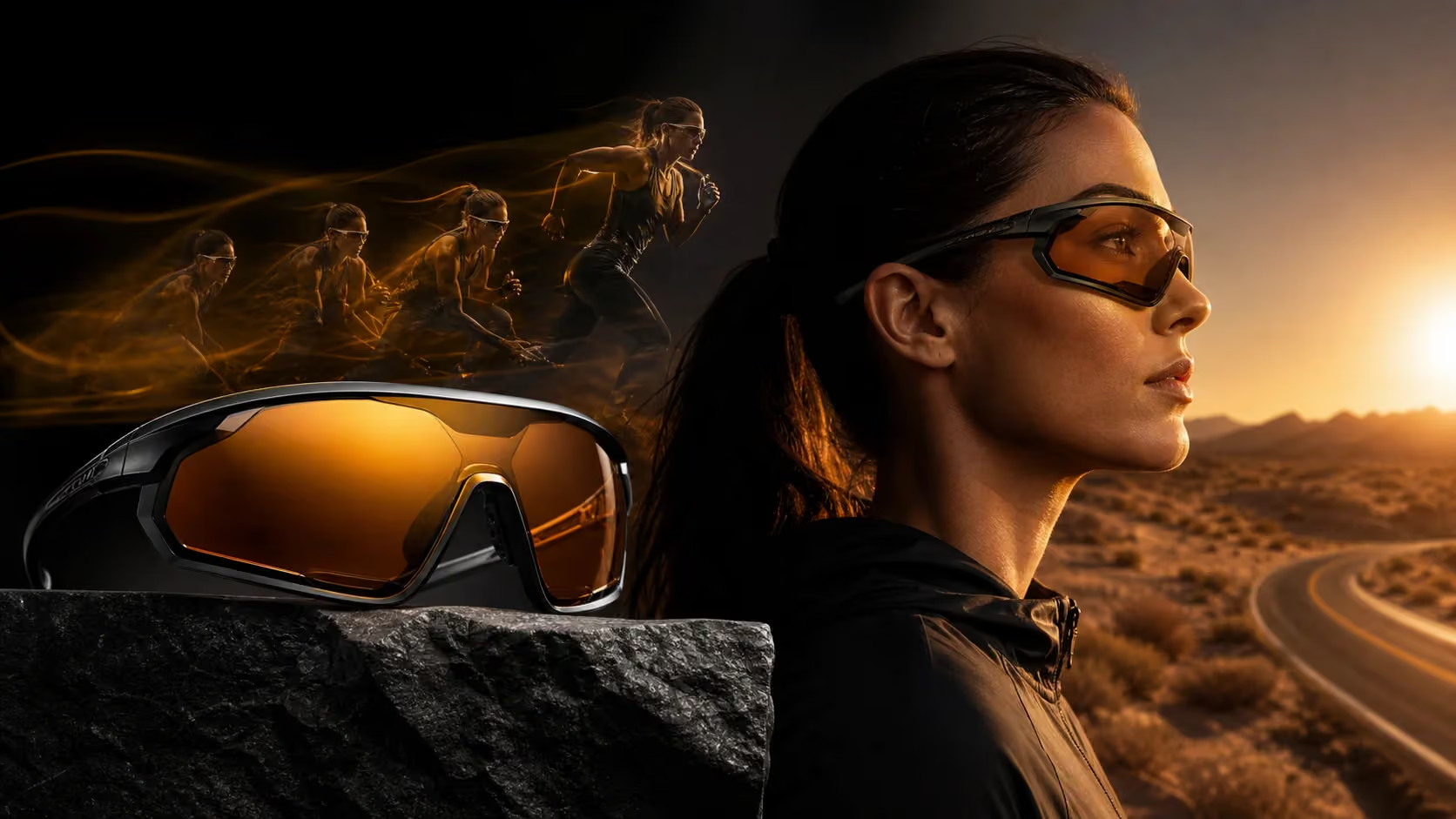
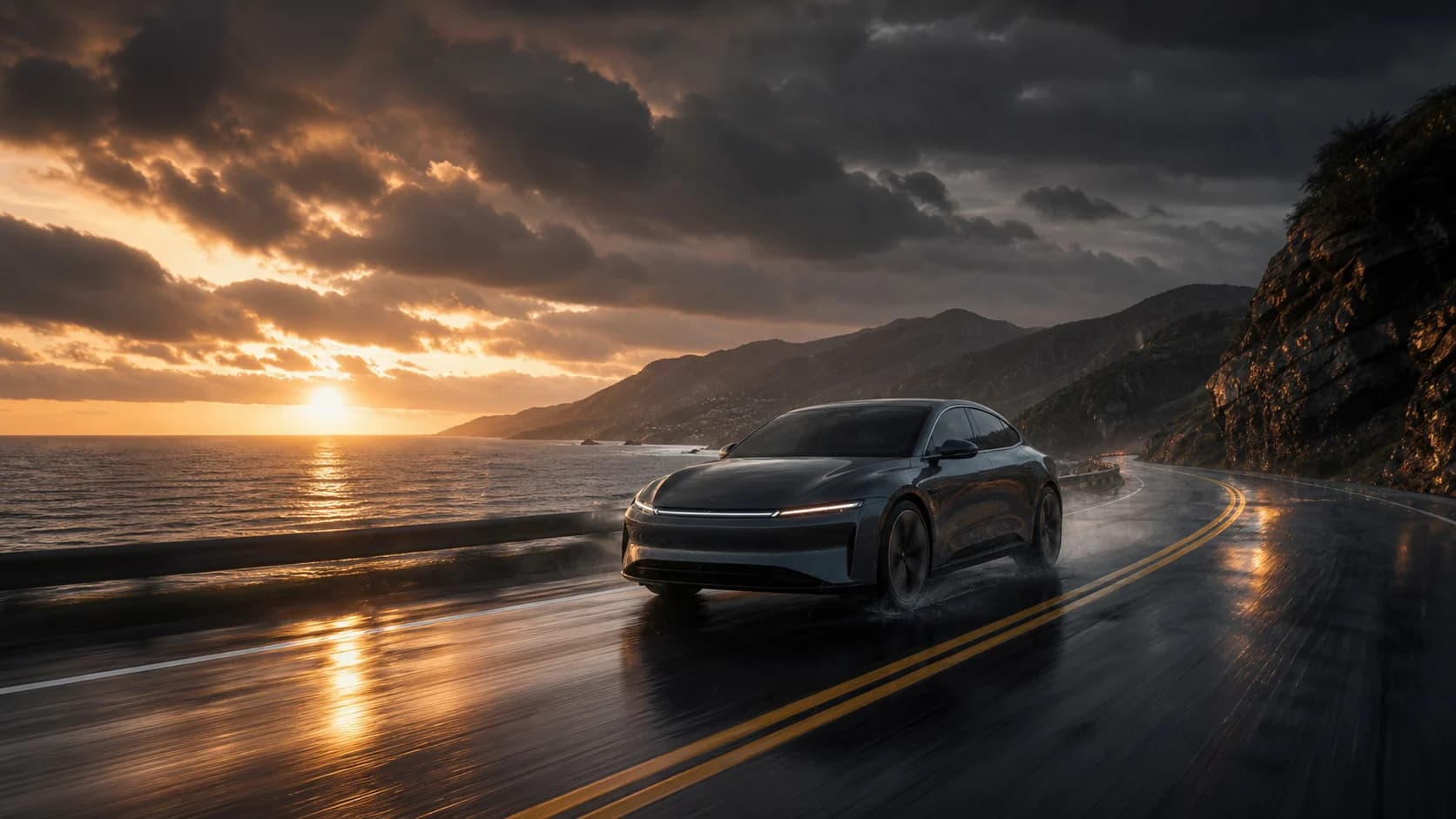
Oakgen's image generator produces ad-ready visuals from text descriptions. Need a lifestyle image of someone using your product in a modern kitchen with warm lighting? Describe it, generate it in seconds, download it. Need five variations with different settings, angles, and compositions? Generate all five in under two minutes.
For performance marketers, the key models include:
- Flux Pro -- Photorealistic images with exceptional text rendering (critical for ads with embedded headlines)
- GPT Image 1.5 -- Strong compositional understanding and text generation for complex ad layouts
- Reve Image 1 -- Fast generation with high visual quality for rapid iteration
Each model produces slightly different aesthetics, which itself creates variation for testing.
AI Video Generation for Video Ads
Video ads consistently outperform static ads on engagement metrics but cost 5-10x more to produce traditionally. Oakgen's video generator closes that gap, generating short-form video content suitable for social media ad placements.
Generate product showcase videos, lifestyle clips, animated text overlays, and visual effects that would require a motion designer and After Effects license. A 15-second video ad that traditionally costs $2,000-$5,000 to produce generates for a few credits.
AI-Generated Music for Video Ads
Video ads need audio. Licensing music costs $15-$50 per track per platform per duration. Using popular music risks copyright claims. Oakgen's music generator creates custom background tracks matched to your ad's mood and pacing -- no licensing fees, no copyright risk, unlimited usage.
Variations at the Speed of Thought
The transformative capability is not generating a single good ad. It is generating 20 variations of a concept in the time it takes to brief a designer on one.
Media buyer has an insight at 2 PM: "Our best-performing ad uses a sunset lifestyle image. Let's test 10 variations of that angle with different products, settings, and copy." By 3 PM, all 10 variations are generated, loaded into the ad platform, and live. By the next morning, performance data identifies 2-3 winners to scale and 7-8 losers to kill.
That cycle -- insight to test to data to decision -- used to take 2 weeks. Now it takes hours.
Structure AI creative testing in three tiers. Tier 1: Generate 20-30 broad concept variations to identify winning visual styles and angles. Tier 2: Take the top 3-5 concepts and generate 10 variations of each, testing specific elements (headline, CTA, color, layout). Tier 3: Take the top 1-2 winners and generate 5-10 micro-variations for maximum optimization. This funnel approach ensures you test broadly before investing deeply.
Step-by-Step: Building a Creative Testing Machine
Step 1: Define Your Testing Variables (30 Minutes)
Before generating anything, map out what you are testing. The most impactful creative variables for ad performance:
Visual style: Product-only, lifestyle, user-generated style, text-overlay, illustrated/graphic, before/after, comparison
Headline/copy angle: Problem-aware, solution-aware, social proof, urgency, curiosity, benefit-focused, feature-focused
Color palette: Brand colors, high-contrast, warm tones, cool tones, monochromatic, seasonal
Layout/composition: Centered product, rule-of-thirds, split-screen, text-dominant, image-dominant
Format: Static image, carousel, short video (6-15 seconds), GIF/animation
Create a testing matrix with 3-5 options per variable. This matrix becomes your generation blueprint.
Step 2: Batch-Generate Visual Variations (1-2 Hours)
Using Oakgen's image generator, systematically generate visuals for each cell in your testing matrix.
Prompt structure for ad images:
[Product/subject description] + [setting/environment] + [lighting/mood] +
[composition style] + [any text overlay instructions]
Generate each variation, then generate 2-3 sub-variations of each with different models (Flux Pro, GPT Image 1.5, Reve Image 1) for additional diversity. For text overlays, use models with strong text rendering (Flux Pro excels here) to generate images with embedded headlines directly in the visual.
Step 3: Generate Video Variations (1-2 Hours)
For video ads, use Oakgen's video generator to create:
- Product showcase videos: Product rotating, zooming, or being used
- Lifestyle clips: People interacting with the product in natural settings
- Text animation videos: Key selling points appearing sequentially with dynamic text
- Unboxing-style clips: Product emerging from packaging
For video ads with voiceover, generate narration using the voice generator. Write 3-5 different voiceover scripts testing different hooks and angles, then generate audio for each.
Layer the voiceover with AI-generated background music from the music generator for complete, ready-to-deploy video ads.
Step 4: Assemble and Format (1-2 Hours)
Export all generated assets in the formats required by each platform: 1080x1080 and 1080x1920 for Meta, 1080x1920 for TikTok, standard display sizes for Google, and 1920x1080 for YouTube. Use the image generator to produce each asset at the correct dimensions. For video ads, trim and format using CapCut or Canva.
Step 5: Deploy and Measure (Ongoing)
Load all variations into your ad platform. For Meta Advantage+ campaigns, upload all creatives into a single campaign and let Meta's algorithm distribute budget to top performers. For manual campaigns, distribute variations across ad sets for controlled testing.
Key metrics to track per creative:
- CTR (click-through rate) -- measures hook effectiveness
- CPC (cost per click) -- measures engagement efficiency
- CVR (conversion rate) -- measures persuasion effectiveness
- CPA (cost per acquisition) -- the bottom-line metric
- ROAS (return on ad spend) -- revenue impact
- Frequency -- fatigue indicator (replace creatives above 3-4 frequency)
Kill underperformers within 48-72 hours (or after statistically significant data). Double down on winners. Feed insights back into the next generation cycle.
The Compound Effect of Creative Volume
Faster Learning Loops
Testing 5 creatives per week generates one data point per creative -- 5 learnings per week. Testing 50 creatives per week generates 50 learnings per week. Over a quarter, that is 65 learnings versus 650. The team testing at 10x volume does not just find winners faster -- they develop a deeper, more nuanced understanding of what resonates with their audience.
Extended Campaign Lifespan
Creative fatigue is the number one killer of campaign performance. An ad that performs brilliantly in week one delivers diminishing returns by week three as the audience sees it repeatedly. The only cure is fresh creative.
At traditional production rates, refreshing creative takes weeks. The campaign fatigues faster than new creative arrives, creating performance valleys. At AI production rates, you can refresh creative faster than fatigue sets in -- maintaining performance peaks continuously.
Platform Algorithm Advantages
Meta's and TikTok's ad algorithms explicitly reward creative diversity. More creative variations give the algorithm more options to match the right creative to the right user at the right moment. Campaigns with 50+ creative variations consistently outperform campaigns with 5 variations on algorithmic efficiency metrics (lower CPM, higher delivery rate, better cost per result).
| Testing Approach | Creatives/Month | Typical CPA | Learning Speed | Fatigue Resistance |
|---|---|---|---|---|
| Minimal testing | 10-20 | Baseline | Slow (months) | Low (frequent fatigue) |
| Standard testing | 50-100 | 15-25% below baseline | Moderate (weeks) | Moderate |
| Aggressive testing (AI-powered) | 200-500 | 30-50% below baseline | Fast (days) | High (constant refresh) |
| Elite testing (AI + systematic framework) | 500-1,000+ | 40-60% below baseline | Very fast (hours) | Very high (never fatigues) |
Industry-Specific Applications
E-commerce / DTC
DTC brands benefit most from creative volume testing. Product-focused imagery, lifestyle contexts, UGC-style content, seasonal variations, and promotional overlays -- each variable multiplied across SKUs creates enormous testing surface area. A DTC brand with 20 SKUs running on Meta and TikTok could reasonably test 1,000+ creative variations per month with AI production.
SaaS / B2B
B2B ad creative testing is often neglected because creative production costs are hard to justify against longer sales cycles. AI generation makes B2B creative testing as economically viable as B2C. Test different hero images for landing pages, different visual metaphors for product benefits, and different styles for LinkedIn and Google display campaigns.
Local / SMB
Small businesses running local ads on Meta and Google typically use 1-3 creatives because they cannot afford designer time. AI gives a local restaurant, gym, or salon the same creative testing capability as a funded DTC brand. Generate 20 variations of a promotion, let the algorithm find the winner, and outperform local competitors who run the same tired ad for months.
Agencies
Agencies can deliver 10x the creative volume per client without scaling headcount proportionally. A single media strategist equipped with AI generation tools can manage the creative output that previously required a dedicated designer per client. This improves margins, client results, and agency competitiveness.
Volume testing does not mean abandoning brand guidelines. Before generating at scale, establish clear guardrails: approved color palettes, typography styles, image aesthetics, and messaging boundaries. Use these as consistent elements in your prompts so that every generated variation is on-brand even as individual elements vary. The goal is controlled experimentation within brand boundaries, not random generation.
FAQ
How do I maintain brand consistency when generating hundreds of AI creatives?
Build your brand guidelines into your prompt templates. Create a base prompt that includes your brand's visual style, color palette, and aesthetic preferences, then vary only the testing elements (imagery, headline, layout). Save winning prompts as templates for future generations. On Oakgen, you can refine prompts iteratively -- start with a base that captures your brand, then branch into variations. Most teams establish 3-5 base prompt templates that cover their core brand aesthetics and modify from there.
Will AI-generated ad creatives perform as well as designer-created ones?
In aggregate, yes -- often better. Not because individual AI creatives are superior to expert designer work, but because volume enables faster testing and optimization. A designer might create 5 brilliant ads, 3 of which perform well. AI generation lets you create 50 variations, find the 5 best performers, and achieve results that match or exceed the designer's best -- while also discovering unexpected winning angles the designer would never have tried. The winning strategy is AI volume for testing plus designer refinement for scaling proven winners.
How much does it cost to generate 100 ad creatives on Oakgen?
Approximately 300-1,000 credits depending on model choice and resolution. On the Pro plan ($19/month with 5,000 credits), that is $1.14-$3.80 for 100 static ad images. Video ads cost more per unit (roughly 15-50 credits each for short-form clips) but are still dramatically cheaper than traditional production. A month of aggressive creative testing (200 static + 50 video ads) might consume 2,500-5,000 credits -- one month of a Pro subscription.
Should I still hire designers if I am using AI for creative testing?
Yes, but their role shifts. Instead of producing individual ad creatives, designers focus on high-value work: establishing brand visual identity, creating design systems and templates that inform AI generation, refining and polishing top-performing AI creatives for scaling, and producing hero content (brand campaigns, launch assets) where bespoke design quality matters. AI handles the volume testing; designers handle the strategic and brand-defining work.
What metrics should I use to evaluate AI-generated creative performance?
Use the same metrics you use for any ad creative: CTR for top-of-funnel engagement, CPC for efficiency, CVR for persuasion, CPA for bottom-line performance, and ROAS for revenue impact. Add creative-specific metrics: view-through rate for video, thumb-stop rate (3-second video views / impressions) for TikTok and Reels, and creative fatigue rate (performance decline over time). Compare AI-generated creative performance against your historical benchmarks to quantify the impact of increased testing volume.
Scale Your Creative Testing 10x
Generate hundreds of ad creatives -- images, videos, and music -- in hours instead of weeks. Find winning ads faster, spend less on production.